


Genome Size Diversity and Its Impact on the Evolution of Land Plants
- PMID: 29443885
- PMCID: PMC5852584
- DOI: 10.3390/genes9020088
Genome Size Diversity and Its Impact on the Evolution of Land Plants
Abstract
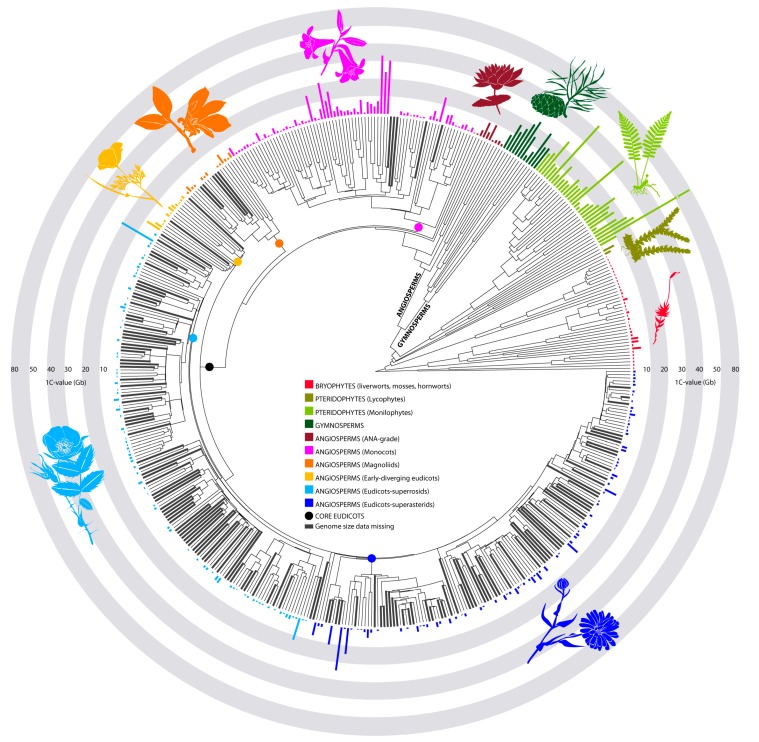
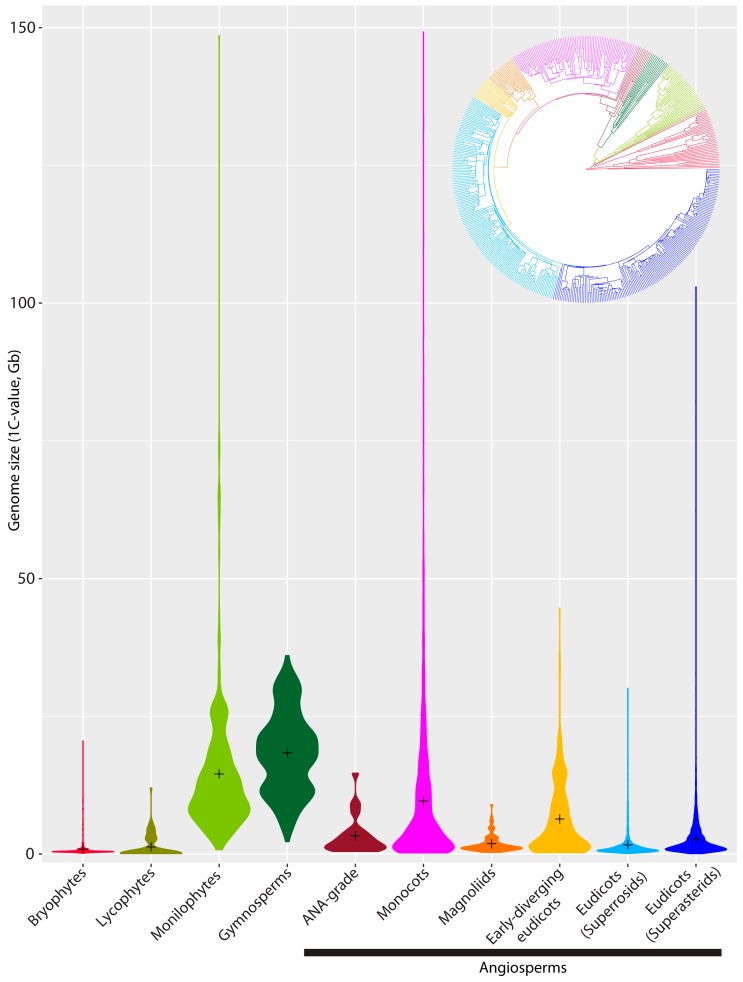
Genome size is a biodiversity trait that shows staggering diversity across eukaryotes, varying over 64,000-fold. Of all major taxonomic groups, land plants stand out due to their staggering genome size diversity, ranging ca. 2400-fold. As our understanding of the implications and significance of this remarkable genome size diversity in land plants grows, it is becoming increasingly evident that this trait plays not only an important role in shaping the evolution of plant genomes, but also in influencing plant community assemblages at the ecosystem level. Recent advances and improvements in novel sequencing technologies, as well as analytical tools, make it possible to gain critical insights into the genomic and epigenetic mechanisms underpinning genome size changes. In this review we provide an overview of our current understanding of genome size diversity across the different land plant groups, its implications on the biology of the genome and what future directions need to be addressed to fill key knowledge gaps.
Keywords: C-value; genome size; giant genome; polyploidy; transposable elements.
Conflict of interest statement
The authors declare no conflict of interest.
Figures
References
-
- Leitch I.J., Johnston E., Pellicer J., Hidalgo O., Bennett M.D. Angiosperm DNA C-values database (release 7.0) [(accessed on 29 November 2017)];2017 Available online: http://data.kew.org/cvalues/
-
- Gregory T.R. Animal Genome Size Database. [(accessed on 3 January 2018)];2018 Available online: http://www.genomesize.com.
-
- Kullman B., Tamm H., Kullman K. Fungal Genome Size Database. [(accessed on 14 November 2017)];2005 Available online: http://www.zbi.ee/fungal-genomesize.
Publication types
LinkOut - more resources
Full Text Sources
Other Literature Sources
Research Materials
