


Mosquitoes as Suitable Vectors for Alphaviruses
- PMID: 29443908
- PMCID: PMC5850391
- DOI: 10.3390/v10020084
Mosquitoes as Suitable Vectors for Alphaviruses
Abstract
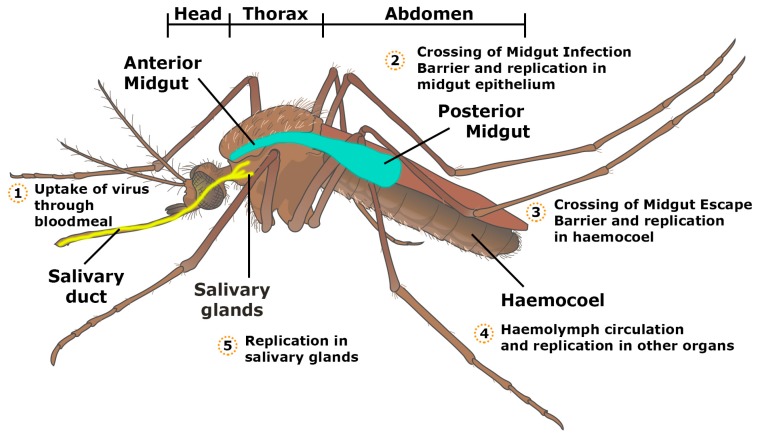
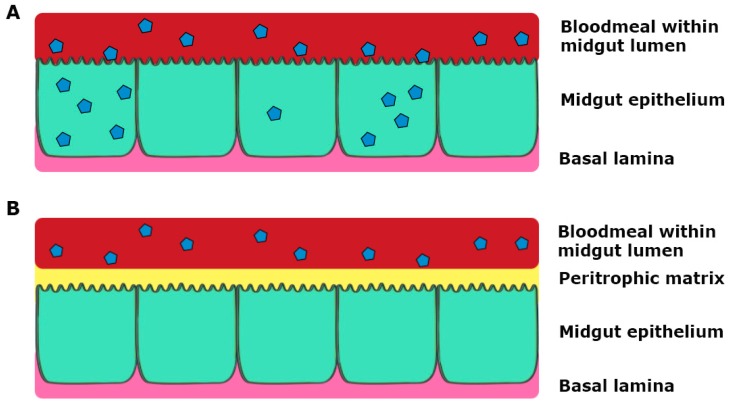
Alphaviruses are arthropod-borne viruses and are predominantly transmitted via mosquito vectors. This vector preference by alphaviruses raises the important question of the determinants that contribute to vector competence. There are several tissue barriers of the mosquito that the virus must overcome in order to establish a productive infection. Of importance are the midgut, basal lamina and the salivary glands. Infection of the salivary glands is crucial for virus transmission during the mosquito's subsequent bloodfeed. Other factors that may contribute to vector competence include the microflora and parasites present in the mosquito, environmental conditions, the molecular determinants of the virus to adapt to the vector, as well as the effect of co-infection with other viruses. Though mosquito innate immunity is a contributing factor to vector competence, it will not be discussed in this review. Detailed understanding of these factors will be instrumental in minimising transmission of alphaviral diseases.
Keywords: Wolbachia; arbovirus; barriers; infection; microfilaria; mosquito; parasites; vector competence.
Conflict of interest statement
The authors declare no conflict of interest. The founding sponsors had no role in the design of the study; in the collection, analyses, or interpretation of data; in the writing of the manuscript, and in the decision to publish the results.
Figures

References
Publication types
MeSH terms
Substances
LinkOut - more resources
Full Text Sources
Other Literature Sources
Medical
