Review
. 2018 Feb 14;14(3):236-243.
doi: 10.1038/nchembio.2568.

Insights into the biogenesis, function, and regulation of ADP-ribosylation

Affiliations
Review

Insights into the biogenesis, function, and regulation of ADP-ribosylation

Michael S Cohen et al. Nat Chem Biol. .

Abstract

ADP-ribosylation-the transfer of ADP-ribose (ADPr) from NAD+ onto target molecules-is catalyzed by members of the ADP-ribosyltransferase (ART) superfamily of proteins, found in all kingdoms of life. Modification of amino acids in protein targets by ADPr regulates critical cellular pathways in eukaryotes and underlies the pathogenicity of certain bacteria. Several members of the ART superfamily are highly relevant for disease; these include the poly(ADP-ribose) polymerases (PARPs), recently shown to be important cancer targets, and the bacterial toxins diphtheria toxin and cholera toxin, long known to be responsible for the symptoms of diphtheria and cholera that result in morbidity. In this Review, we discuss the functions of amino acid ADPr modifications and the ART proteins that make them, the nature of the chemical linkage between ADPr and its targets and how this impacts function and stability, and the way that ARTs select specific amino acids in targets to modify.


Conflict of interest statement

Competing financial interests

The authors declare competing financial interests: details accompany the online version of the paper.

Figures
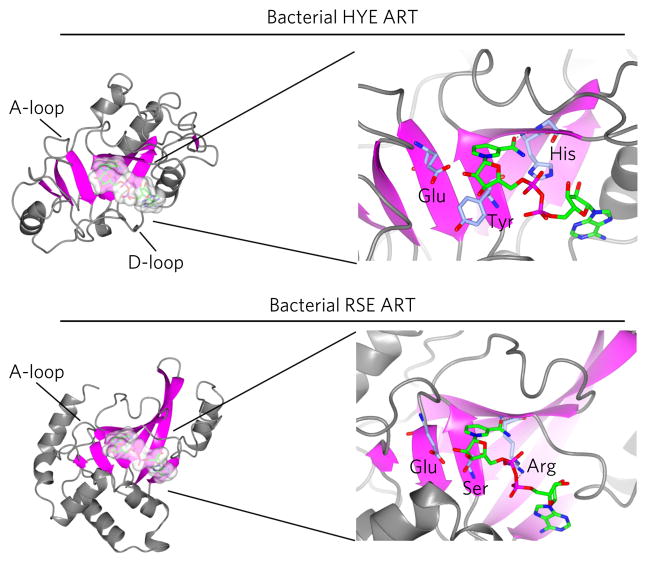
Figure 1
Figure 1. Structure of the HYE and RSE ART folds
Shown are the crystal structures of the bacterial HYE ART ExoA (PDB ID 2ZIT; upper panel) and the structure of RSE ART Iota toxin (PDB ID 4H03; lower panel). The β-sheets of the ART fold are shown in magenta. NAD+ (shown in green) binds in a similar orientation in both types of bacterial ARTs. The conserved catalytic amino acids in both the bacterial HYE (His440, Tyr470 and Glu553) and RSE (Arg295, Ser338 and Glu380) ARTs are shown in purple.
Figure 2
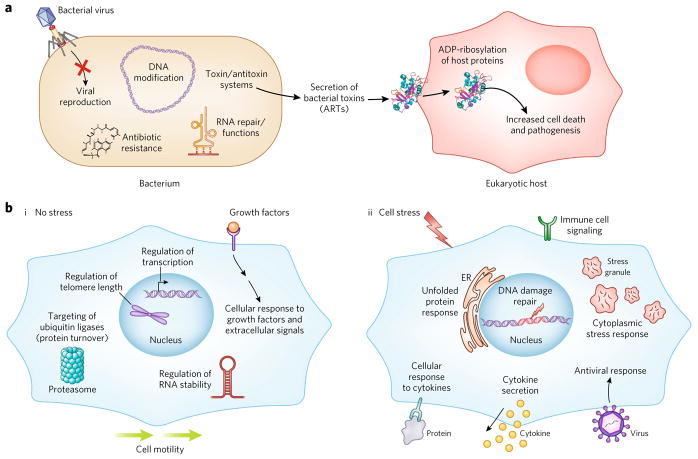
Figure 2. Key cellular functions of ARTs in bacteria and humans
(a) Bacterial ART proteins play important cellular-defense functions that protect against viruses and antimicrobial molecules. They also play less defined roles in DNA modification, RNA repair and tRNA function. Their best understood functions involve their roles as toxins, whereby they act as pathogenicity factors in the host–pathogen response. (b) In eukaryotes, ARTs play important non-stress functions in the cell (i). They regulate telomere length, transcription, RNA stability and cell motility, and target proteins for degradation via the proteasome. They also play roles in the cellular response to extracellular signals such as growth factors. Under stress conditions (ii), eukaryotic ARTs regulate the unfolded protein response, the DNA damage response, the cytoplasmic stress response, and the cellular response to viruses. They also play important roles in immune cell signaling and activation, and regulate both the cellular response to cytokines and the expression and secretion of cytokines. Please note that not all ART functions are described.
Figure 3
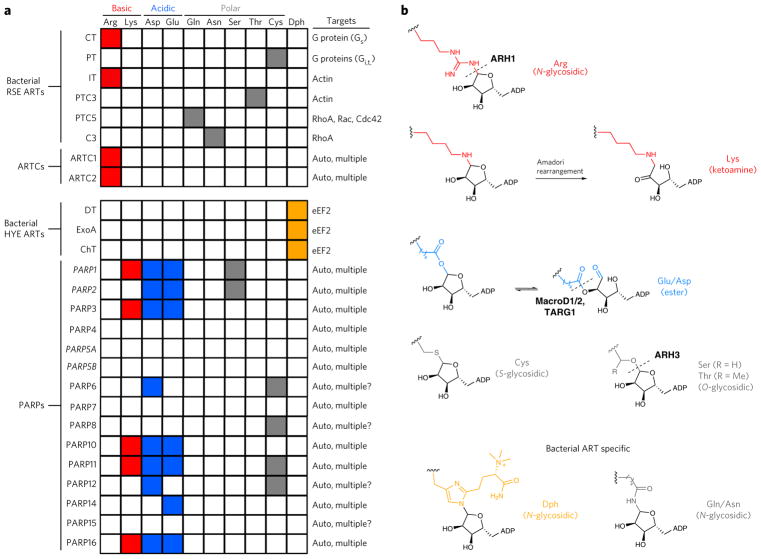
Figure 3. Amino acid targeting in bacterial ARTs, ARTCs and PARPs
(a) In general, bacterial ARTs have a single target protein and target a single amino acid with high specificity. Eukaryotic ARTCs modify multiple protein targets, but appear to specifically modify arginine. PARPs also have multiple targets and have been shown to ADP-ribosylate multiple types of amino acids. PARPs shown in italic catalyze PARylation. PT, pertussis toxin; CT, cholera toxin; ChT, cholix toxin; DT, diphtheria toxin; IT, iota toxin; ARTC, ADP-ribosyltransferase cholera-toxin like. (b) Types of aa-ADPr bonds generated by bacterial ARTs and human ARTCs and PARPs. ADP, ADP-ribose. Dph, diphthamide. Known amino acid–specific hydrolyzing enzymes; sites of hydrolysis are shown as dotted lines.
Figure 4
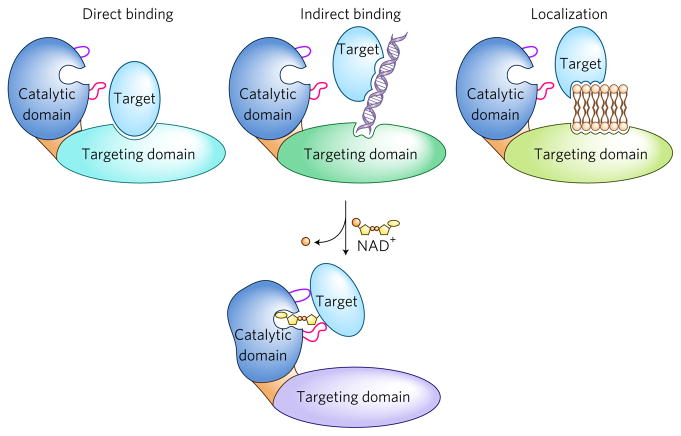
Figure 4. Mechanisms of substrate targeting
Two-step model for substrate targeting. Step 1: targeting domains found in ART proteins bring the ART catalytic domain in close proximity to the target protein. Targeting can occur by direct binding of the targeting domain to the target protein, by indirect binding through other molecules including nucleic acids, or by concentrating the ART to specific organelles to which the targets are sequestered, including membranes. Step 2: structural features within the catalytic domains including the A-loop (purple) and D-loop (magenta), play additional roles in substrate targeting including amino acid selection.

References

    1. Aravind L, Zhang D, de Souza RF, Anand S, Min Iyer L. In: Endogenous ADP-Ribosylation. Koch-Nolte F, editor. Springer International Publishing; 2015. pp. 3–32.
    1. Bazan JF, Koch-Nolte F. Sequence and structural links between distant ADP-ribosyltransferase families. Adv Exp Med Biol. 1997;419:99–107. - PubMed
    1. Culver GM, et al. An NAD derivative produced during transfer RNA splicing: ADP-ribose 1″-2″cyclic phosphate. Science. 1993;261:206–208. - PubMed
    1. Spinelli SL, Kierzek R, Turner DH, Phizicky EM. Transient ADP-ribosylation of a 2′-phosphate implicated in its removal from ligated tRNA during splicing in yeast. J Biol Chem. 1999;274:2637–2644. - PubMed
    1. Lyons B, et al. Scabin, a novel DNA-acting ADP-ribosyltransferase from Streptomyces scabies. J Biol Chem. 2016;291:11198–11215. - PMC - PubMed