


Frequency, trends, and antecedents of severe maternal depression after three million U.S. births
- PMID: 29444165
- PMCID: PMC5812647
- DOI: 10.1371/journal.pone.0192854
Frequency, trends, and antecedents of severe maternal depression after three million U.S. births
Abstract
Background: Postpartum depression carries adverse consequences for mothers and children, so widespread screening during primary care visits is recommended. However, the rates, timing, and factors associated with significant depressive episodes are incompletely understood.
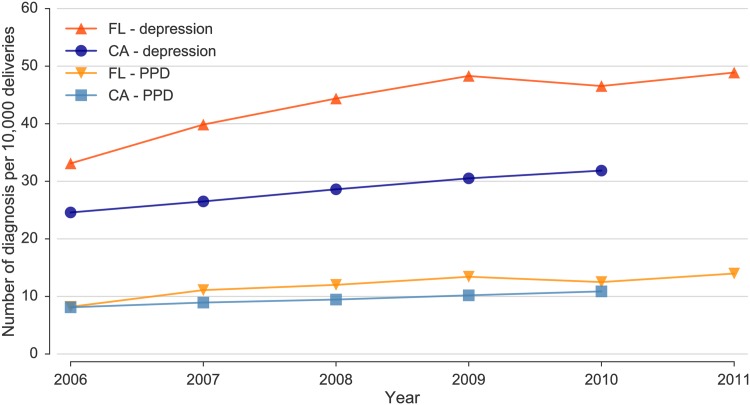
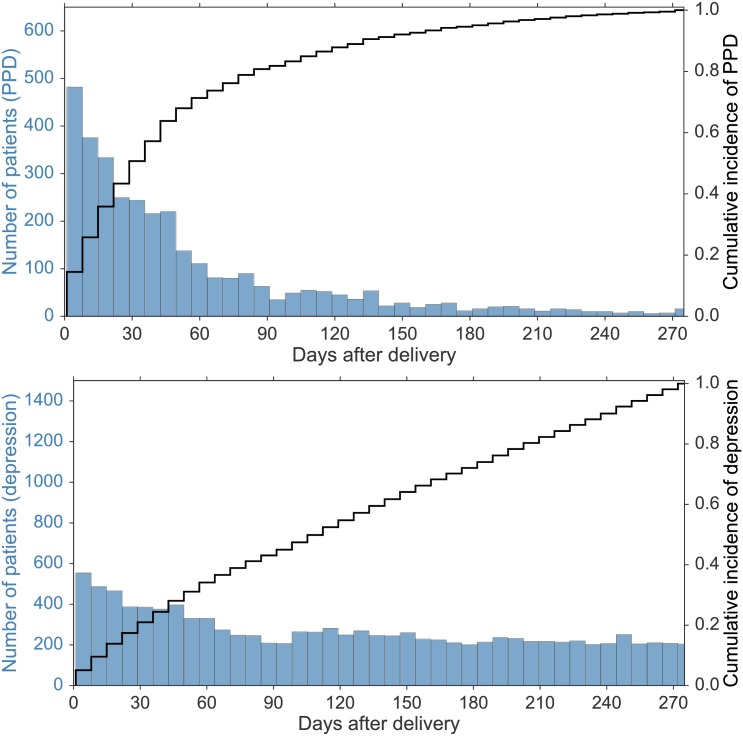
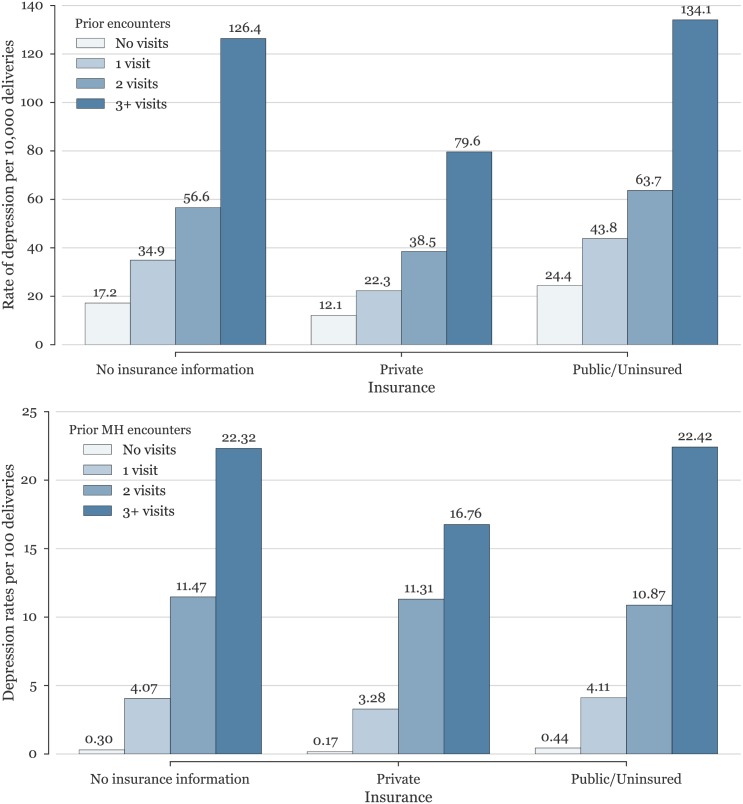
Methods and findings: We examined the Healthcare Cost and Utilization Project (HCUP) State Inpatient, Emergency Department, and Ambulatory Surgery and Services Databases from California (2005-2011) and Florida (2005-2012). Within 203 million records, we identified 3,213,111 births and all mothers who had hospital encounters for severe depression within 40 weeks following delivery. We identified 15,806 episodes of postpartum depression after 11,103 deliveries among 10,883 unique women, and calculated an overall rate of 36.7 depression- associated hospital visits per 10,000 deliveries. Upward trends were observed in both states, with combined five-year increases of 34%. First depressive events were most common within 30 days of delivery, but continued for the entire observation period. About half (1,661/3,325) of PPD first episodes occurred within 34 days of delivery, 70% (2,329/3,325) by the end of the second month, and 87% (2,893/3,325) before four-months of the delivery. Women with private insurance were less likely to have hospital encounters for depression than women with public insurance and women with depression were much more likely to have had some kind of hospital encounter at some time during their pregnancies. Rates of depression increased with the number of prenatal hospital encounters in a "dose-dependent" fashion: the rate of depression was 17.2/10,000 for women with no prenatal hospital visits, doubling for women with at least one encounter (34.9/10,000), and increasing 7-fold to 126/10,000 for women with three or more encounters during their pregnancies.
Conclusions: Our findings suggest that (1) hospital encounters for post-partum depression are increasing, (2) screening should begin very early and continue for the first year after delivery, and (3) added attention should be given to women who had hospital encounters during their pregnancies.
Conflict of interest statement
Figures

References
-
- Shonkoff JP, Duncan GJ, Yoshikawa H, Guyer B, Magnuson K, Phillips D. Maternal Depression Can Undermine the Development of Young Children: Working Paper No. 8. 2009:1–16.
-
- Siu AL, US Preventive Services Task Force (USPSTF), Bibbins-Domingo K, et al. Screening for Depression in Adults: US Preventive Services Task Force Recommendation Statement. JAMA. 2016;315(4):380–387. doi: 10.1001/jama.2015.18392 - DOI - PubMed
-
- Earls MF, The Committee on Psychosocial Aspects of Child and Family Health. Incorporating Recognition and Management of Perinatal and Postpartum Depression Into Pediatric Practice. Pediatrics. 2010;126(5):1032–1039. - PubMed
-
- Wachino V. Maternal Depression Screening and Treatment: a Critical Role for Medicaid in the Care of Mothers and Children CMCS Informational Bulletin, Department of Health and Human Services, Centers for Medicare and Medicaid Services, Baltimore; 2016:1–6.
-
- Stewart DE, Vigod S. Postpartum Depression. N Engl J Med 2016; 375:2177–2186 doi: 10.1056/NEJMcp1607649 - DOI - PubMed
MeSH terms
LinkOut - more resources
Full Text Sources
Other Literature Sources
Medical
