Treatment of Infections Caused by Extended-Spectrum-Beta-Lactamase-, AmpC-, and Carbapenemase-Producing Enterobacteriaceae
- PMID: 29444952
- PMCID: PMC5967687
- DOI: 10.1128/CMR.00079-17
Treatment of Infections Caused by Extended-Spectrum-Beta-Lactamase-, AmpC-, and Carbapenemase-Producing Enterobacteriaceae
Abstract
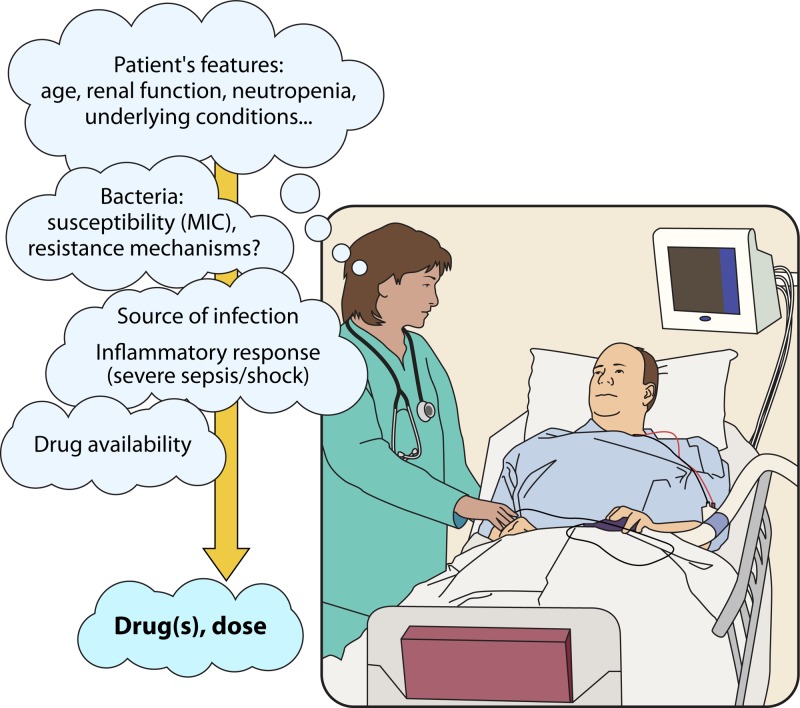
Therapy of invasive infections due to multidrug-resistant Enterobacteriaceae (MDR-E) is challenging, and some of the few active drugs are not available in many countries. For extended-spectrum β-lactamase and AmpC producers, carbapenems are the drugs of choice, but alternatives are needed because the rate of carbapenem resistance is rising. Potential active drugs include classic and newer β-lactam-β-lactamase inhibitor combinations, cephamycins, temocillin, aminoglycosides, tigecycline, fosfomycin, and, rarely, fluoroquinolones or trimethoprim-sulfamethoxazole. These drugs might be considered in some specific situations. AmpC producers are resistant to cephamycins, but cefepime is an option. In the case of carbapenemase-producing Enterobacteriaceae (CPE), only some "second-line" drugs, such as polymyxins, tigecycline, aminoglycosides, and fosfomycin, may be active; double carbapenems can also be considered in specific situations. Combination therapy is associated with better outcomes for high-risk patients, such as those in septic shock or with pneumonia. Ceftazidime-avibactam was recently approved and is active against KPC and OXA-48 producers; the available experience is scarce but promising, although development of resistance is a concern. New drugs active against some CPE isolates are in different stages of development, including meropenem-vaborbactam, imipenem-relebactam, plazomicin, cefiderocol, eravacycline, and aztreonam-avibactam. Overall, therapy of MDR-E infection must be individualized according to the susceptibility profile, type, and severity of infection and the features of the patient.
Keywords: antimicrobial therapy; bloodstream infections; carbapenemases; extended-spectrum β-lactamases; mortality; multidrug resistance.
Copyright © 2018 American Society for Microbiology.
Figures




References
-
- ECDC/EMEA. 2009. ECDC/EMEA joint technical report. The bacterial challenge: time to react. A call to narrow the gap between multidrug-resistant bacteria in the EU and the development of new antibacterial agents. European Centre for Disease Prevention and Control, Stockholm, Sweden: https://ecdc.europa.eu/sites/portal/files/media/en/publications/Publicat....
-
- Magiorakos AP, Srinivasan A, Carey RB, Carmeli Y, Falagas ME, Giske CG, Harbarth S, Hindler JF, Kahlmeter G, Olsson-Liljequist B, Paterson DL, Rice LB, Stelling J, Struelens MJ, Vatopoulos A, Weber JT, Monnet DL. 2012. Multidrug-resistant, extensively drug-resistant and pandrug-resistant bacteria: an international expert proposal for interim standard definitions for acquired resistance. Clin Microbiol Infect 18:268–281. doi: 10.1111/j.1469-0691.2011.03570.x. - DOI - PubMed
Publication types
MeSH terms
Substances
LinkOut - more resources
Full Text Sources
Other Literature Sources
Medical
Research Materials
Miscellaneous