


Case Reports
doi: 10.1002/ccr3.1288.
eCollection 2018 Feb.
Stevens-Johnson syndrome/toxic epidermal necrolysis associated with zonisamide
Affiliations
- PMID: 29445458
- PMCID: PMC5799627
- DOI: 10.1002/ccr3.1288
Item in Clipboard
Case Reports
Stevens-Johnson syndrome/toxic epidermal necrolysis associated with zonisamide
Clin Case Rep.
.
Abstract
This report highlights zonisamide as a potential cause of serious cutaneous reactions as well as its cross-reactivity with other sulfonamides. Here, we present a case of SJS-TEN due to zonisamide, which was effectively treated with IVIg. Subsequently, the patient was transitioned to levetiracetam for seizure control.
Keywords: Drug rash; Stevens–Johnson syndrome; pediatric; toxic epidermal necrolysis; zonisamide.
Figures
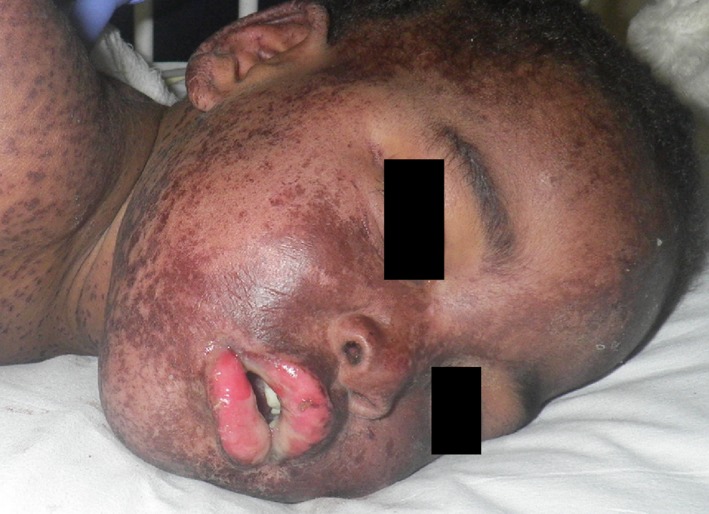
Clinical photograph of patient demonstrating dusky, erythematous macules, and papules as well as crusting and erosions of the lips.
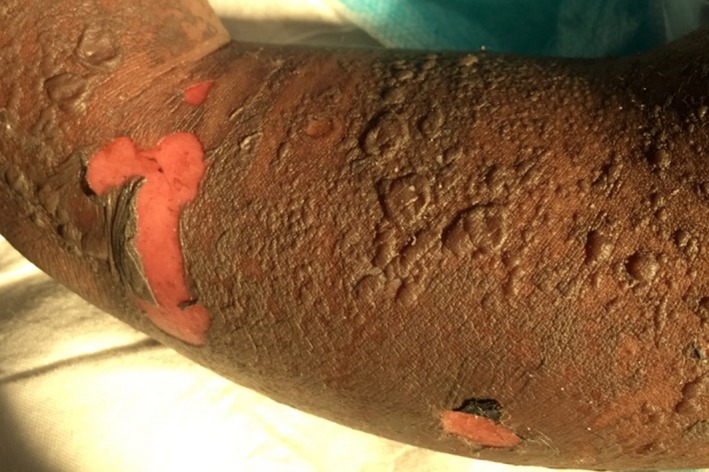
Clinical photograph of patient's bullae and full‐thickness epidermal desquamation.
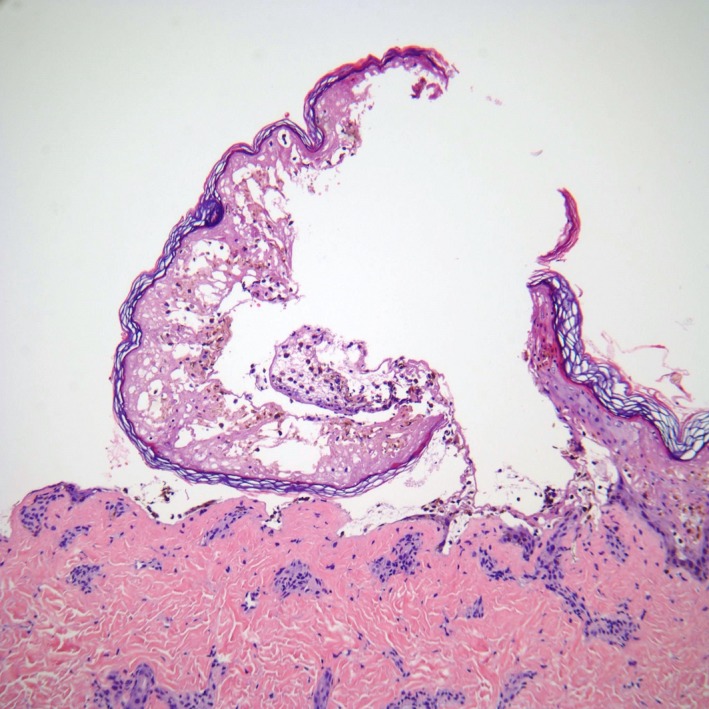
Biopsy specimen demonstrating full‐thickness epidermal necrosis, 100X.
References
-
- U.S. Food and Drug Administration, Center for Drug Evaluation and Research . Zonegran NDA 20‐789 approval letter, March 27, 2000. Available at https://www.accessdata.fda.gov/drugsatfda_docs/nda/2000/020789_Zonegran_... (accessed 9 May 2017).
-
- Biton, V. 2007. Clinical pharmacology and mechanism of action of zonisamide. Clin. Neuropharmacol. 30:230–240. - PubMed
-
- Baulac, M. , Brodie M. J., Patten A., Segieth J., and Giorgi L.. 2012. Efficacy and tolerability of zonisamide versus controlled‐release carbamazepine for newly diagnosed partial epilepsy: a phase 3, randomized, double‐blind, non‐inferiority trial. Lancet Neurol. 11:579–588. - PubMed
-
- Buoli, M. , Grassi S., Ciappolino V., Serati M., and Altamura A. C.. 2017. The use of zonisamide for the treatment of psychiatric disorders: a systematic review. Clin. Neuropharmacol. 40:85–92. - PubMed
-
- Baulac, M. , Patten A., and Giorgi L.. 2014. Long‐term safety and efficacy of zonisamide versus carbamazepine monotherapy for treatment of partial seizures in adults with newly diagnosed epilepsy: results of a phase III, randomized, double‐blind study. Epilepsia 55:1534–1543. - PubMed
Publication types
LinkOut - more resources
Full Text Sources
Other Literature Sources
