


Comparison of viral infection in healthcare-associated pneumonia (HCAP) and community-acquired pneumonia (CAP)
- PMID: 29447204
- PMCID: PMC5813982
- DOI: 10.1371/journal.pone.0192893
Comparison of viral infection in healthcare-associated pneumonia (HCAP) and community-acquired pneumonia (CAP)
Abstract
Background: Although viruses are known to be the second most common etiological factor in community-acquired pneumonia (CAP), the respiratory viral profile of the patients with healthcare-associated pneumonia (HCAP) has not yet been elucidated. We investigated the prevalence and the clinical impact of respiratory virus infection in adult patients with HCAP.
Methods: Patients admitted with HCAP or CAP, between January and December 2016, to a tertiary referral hospital in Korea, were prospectively enrolled, and virus identification was performed using reverse-transcription polymerase chain reaction (RT-PCR).
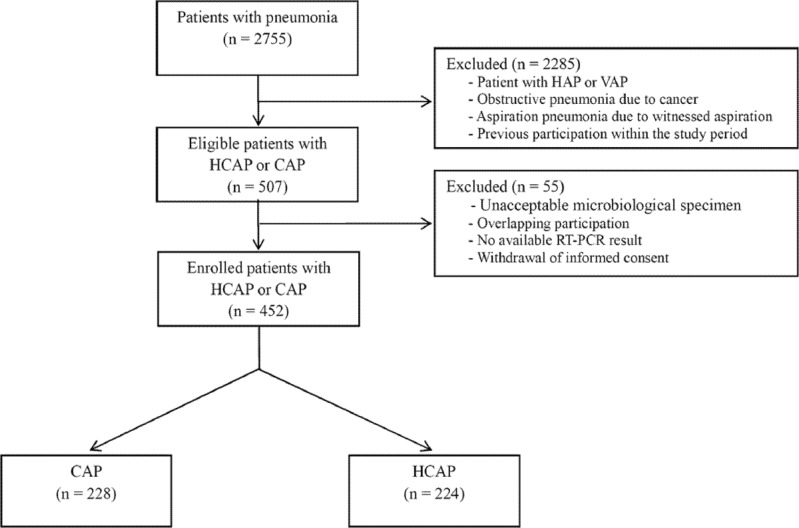
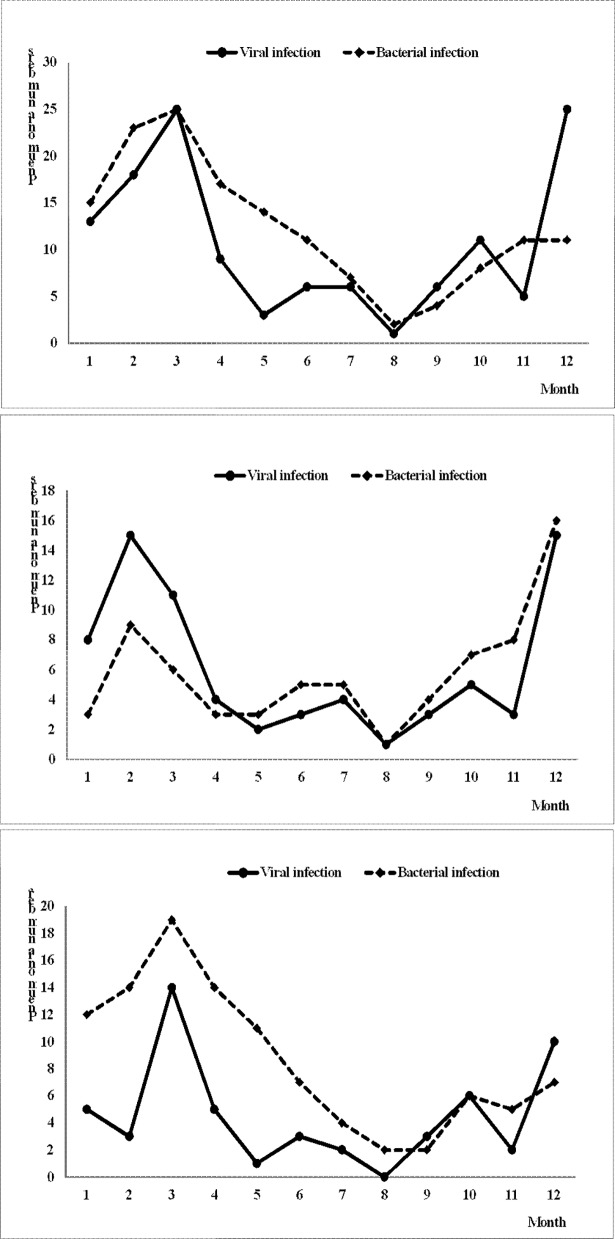
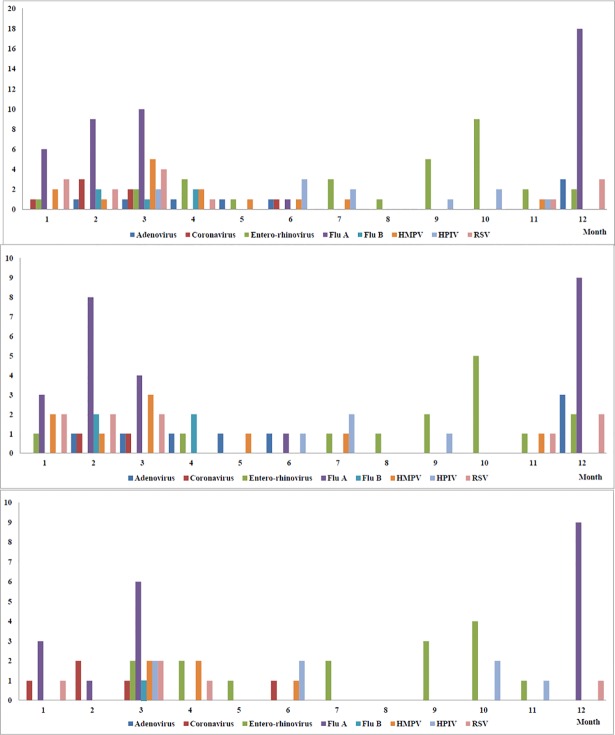
Results: Among 452 enrolled patients (224 with HCAP, 228 with CAP), samples for respiratory viruses were collected from sputum or endotracheal aspirate in 430 (95.1%) patients and from nasopharyngeal specimens in 22 (4.9%) patients. Eighty-seven (19.2%) patients had a viral infection, and the proportion of those with viral infection was significantly lower in the HCAP than in the CAP group (13.8% vs 24.6%, p = 0.004). In both the HCAP and CAP groups, influenza A was the most common respiratory virus, followed by entero-rhinovirus. The seasonal distributions of respiratory viruses were also similar in both groups. In the HCAP group, the viral infection resulted in a similar length of hospital stay and in-hospital mortality as viral-bacterial coinfection and bacterial infection, and the CAP group showed similar results.
Conclusions: The prevalence of viral infection in patients with HCAP was lower than that in patients with CAP, and resulted in a similar prognosis as viral-bacterial coinfection or bacterial infection.
Conflict of interest statement
Figures
References
-
- Kollef MH. Health care-associated pneumonia: perception versus reality. Clinical infectious diseases: an official publication of the Infectious Diseases Society of America. 2009;49(12):1875–7. doi: 10.1086/648430 . - DOI - PubMed
-
- Kollef MH, Napolitano LM, Solomkin JS, Wunderink RG, Bae IG, Fowler VG, et al. Health care-associated infection (HAI): a critical appraisal of the emerging threat-proceedings of the HAI Summit. Clinical infectious diseases: an official publication of the Infectious Diseases Society of America. 2008;47 Suppl 2:S55–99; quiz S100-1. doi: 10.1086/590937 . - DOI - PubMed
-
- American Thoracic S, Infectious Diseases Society of A. Guidelines for the management of adults with hospital-acquired, ventilator-associated, and healthcare-associated pneumonia. Am J Respir Crit Care Med. 2005;171(4):388–416. doi: 10.1164/rccm.200405-644ST PMID: 15699079. - DOI - PubMed
-
- Kollef MH, Shorr A, Tabak YP, Gupta V, Liu LZ, Johannes RS. Epidemiology and outcomes of health-care-associated pneumonia: results from a large US database of culture-positive pneumonia. Chest. 2005;128(6):3854–62. doi: 10.1378/chest.128.6.3854 . - DOI - PubMed
-
- Mandell LA, Wunderink RG, Anzueto A, Bartlett JG, Campbell GD, Dean NC, et al. Infectious Diseases Society of America/American Thoracic Society consensus guidelines on the management of community-acquired pneumonia in adults. Clinical infectious diseases: an official publication of the Infectious Diseases Society of America. 2007;44 Suppl 2:S27–72. doi: 10.1086/511159 . - DOI - PMC - PubMed
Publication types
MeSH terms
LinkOut - more resources
Full Text Sources
Other Literature Sources
Medical
Miscellaneous
