


The impact of the maternal-foetal environment on outcomes of surgery for congenital heart disease in neonates
- PMID: 29447332
- PMCID: PMC6454438
- DOI: 10.1093/ejcts/ezy015
The impact of the maternal-foetal environment on outcomes of surgery for congenital heart disease in neonates
Abstract
Objectives: Pregnancies with congenital heart disease in the foetus have an increased prevalence of pre-eclampsia, small for gestational age and preterm birth, which are evidence of an impaired maternal-foetal environment (MFE).
Methods: The impact of an impaired MFE, defined as pre-eclampsia, small for gestational age or preterm birth, on outcomes after cardiac surgery was evaluated in neonates (n = 135) enrolled in a study evaluating exposure to environmental toxicants and neuro-developmental outcomes.
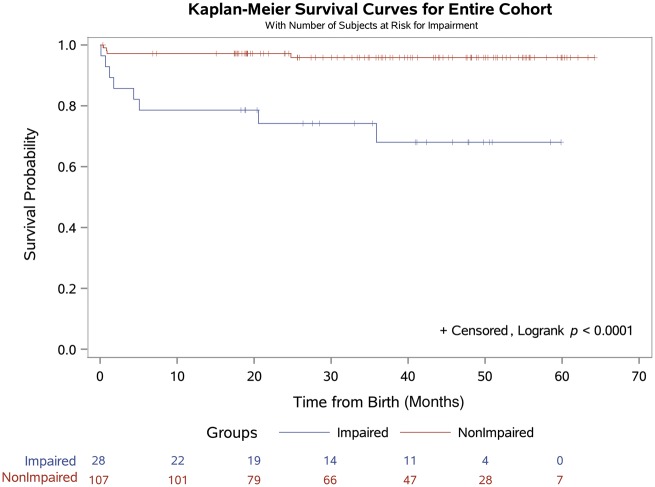
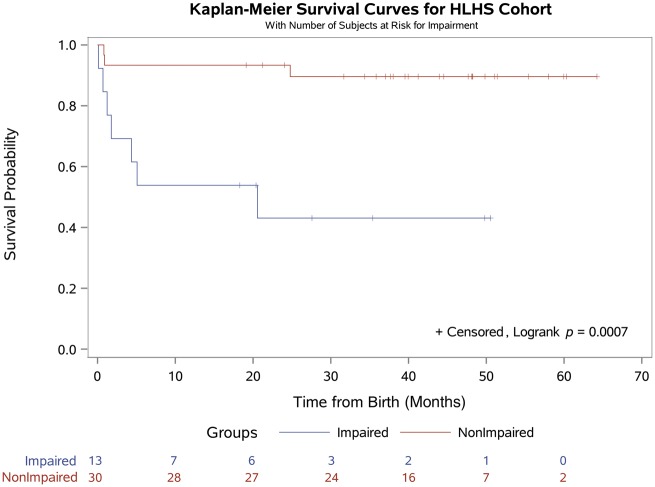
Results: The most common diagnoses were transposition of the great arteries (n = 47) and hypoplastic left heart syndrome (n = 43). Impaired MFE was present in 28 of 135 (21%) subjects, with small for gestational age present in 17 (61%) patients. The presence of an impaired MFE was similar for all diagnoses, except transposition of the great arteries (P < 0.006). Postoperative length of stay was shorter for subjects without an impaired MFE (14 vs 38 days, P < 0.001). Hospital mortality was not significantly different with or without impaired MFE (11.7% vs 2.8%, P = 0.104). However, for the entire cohort, survival at 36 months was greater for those without an impaired MFE (96% vs 68%, P = 0.001). For patients with hypoplastic left heart syndrome, survival was also greater for those without an impaired MFE (90% vs 43%, P = 0.007).
Conclusions: An impaired MFE is common in pregnancies in which the foetus has congenital heart disease. After cardiac surgery in neonates, the presence of an impaired MFE was associated with lower survival at 36 months of age for the entire cohort and for the subgroup with hypoplastic left heart syndrome.
Figures
References
-
- Khankin EV, Royle C, Karumanchi SA.. Placental vasculature in health and disease. Semin Thromb Hemost 2010;36:309–20. - PubMed
-
- Sahni R, Polin RA.. Physiologic underpinnings for clinical problems in moderately preterm and late preterm infants. Clin Perinatol 2013;40:645–63. - PubMed
-
- Perez-Cruz M, Cruz-Lemini M, Fernandez MT, Parra JA, Bartrons J, Gomez-Roig MD. et al. Fetal cardiac function in late-onset intrauterine growth restriction vs small-for-gestational age, as defined by estimated fetal weight, cerebroplacental ratio and uterine artery Doppler. Ultrasound Obstet Gynecol 2015;46:465–71. - PubMed
MeSH terms
Grants and funding
LinkOut - more resources
Full Text Sources
Other Literature Sources
Medical
