. 2018 Feb 15;8(1):3114.
doi: 10.1038/s41598-018-20409-x.

Polygonum aviculare L. extract and quercetin attenuate contraction in airway smooth muscle

Affiliations

Polygonum aviculare L. extract and quercetin attenuate contraction in airway smooth muscle

Xi Luo et al. Sci Rep. .

Abstract

Because of the serious side effects of the currently used bronchodilators, new compounds with similar functions must be developed. We screened several herbs and found that Polygonum aviculare L. contains ingredients that inhibit the precontraction of mouse and human airway smooth muscle (ASM). High K+-induced precontraction in ASM was completely inhibited by nifedipine, a selective blocker of L-type voltage-dependent Ca2+ channels (LVDCCs). However, nifedipine only partially reduced the precontraction induced by acetylcholine chloride (ACH). Additionally, the ACH-induced precontraction was partly reduced by pyrazole-3 (Pyr3), a selective blocker of TRPC3 and stromal interaction molecule (STIM)/Orai channels. These channel-mediated currents were inhibited by the compounds present in P. aviculare extracts, suggesting that this inhibition was mediated by LVDCCs, TRPC3 and/or STIM/Orai channels. Moreover, these channel-mediated currents were inhibited by quercetin, which is present in P. aviculare extracts. Furthermore, quercetin inhibited ACH-induced precontraction in ASM. Overall, our data indicate that the ethyl acetate fraction of P. aviculare and quercetin can inhibit Ca2+-permeant LVDCCs, TRPC3 and STIM/Orai channels, which inhibits the precontraction of ASM. These findings suggest that P. aviculare could be used to develop new bronchodilators to treat obstructive lung diseases such as asthma and chronic obstructive pulmonary disease.


Conflict of interest statement

The authors declare no competing interests.

Figures
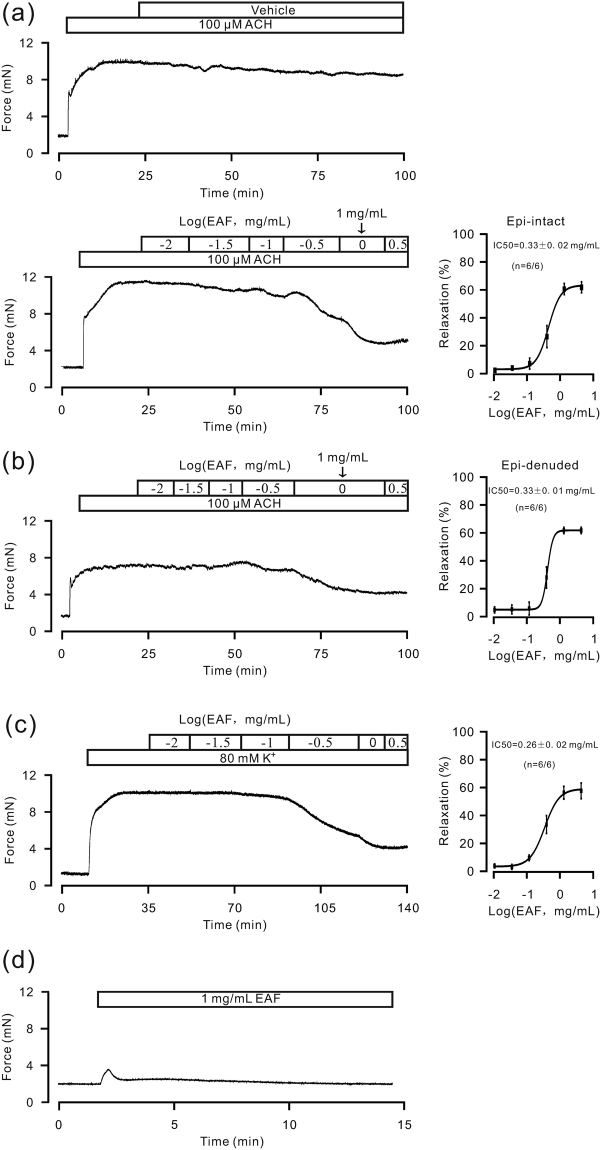
Figure 1
Figure 1
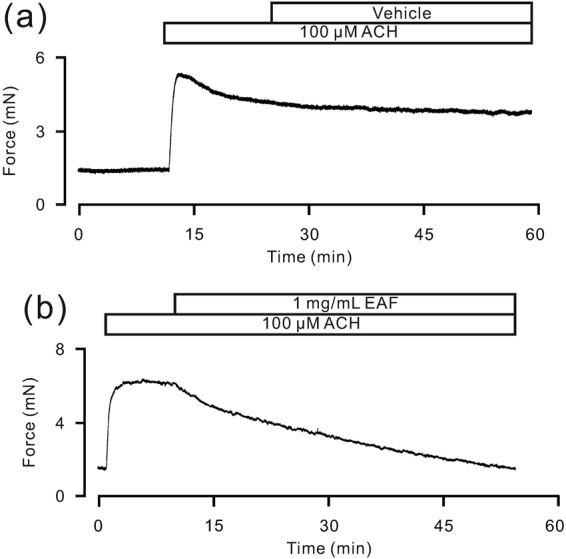
Effects of EAF on mouse tracheal smooth muscle contraction force. (a) ACH (100 μM) induced sustained contractions in mouse TRs. The effects of EAF and vehicle were observed. EAF induced relaxation, while the vehicle did not. (b) The same experiments were repeated in epithelium-denuded TRs. (c) Similar inhibitory effects of EAF on high K+-induced contraction were observed in TRs. (d) EAF induced a small contraction in resting TRs. These data indicate that EAF attenuates precontraction in ASM and it does not increase the resting tension of ASM.
Figure 2
Figure 2
EAF attenuates ACH-induced contraction in human bronchial ASM. ACH was used to induce contractions in human bronchial ASM strips, which were markedly inhibited by EAF but not by the vehicle.
Figure 3
Figure 3
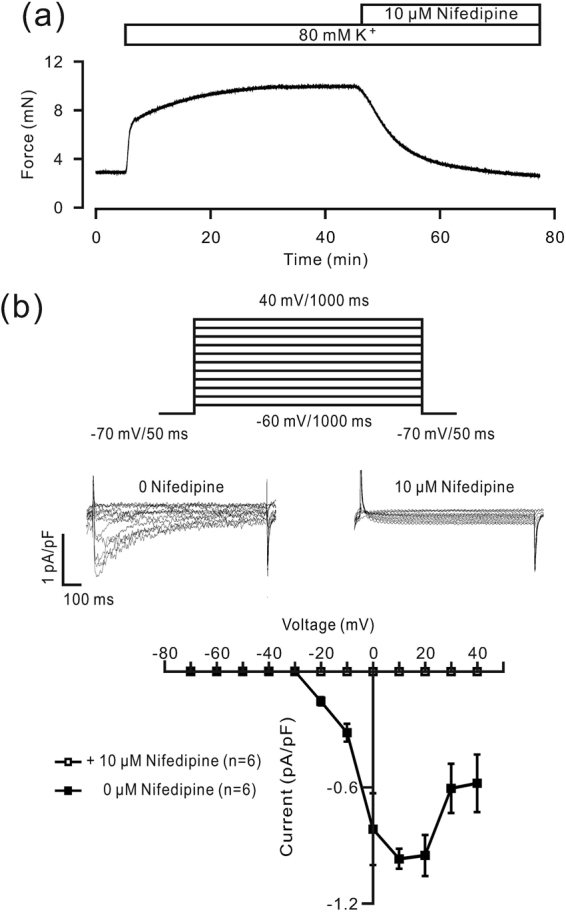
Nifedipine blocks LVDCC-mediated contraction and current. (a) A high concentration of K+ (80 mM) induced a contraction in a mouse TR, which was almost blocked by the LVDCC inhibitor nifedipine. (b) The protocol used to record the LVDCC-mediated current in single mouse tracheal ASM cells (top). The current was completely blocked by nifedipine (middle). Current-voltage curves (bottom). These results indicate that high K+-induced contraction might be completely mediated by LVDCCs.
Figure 4
Figure 4
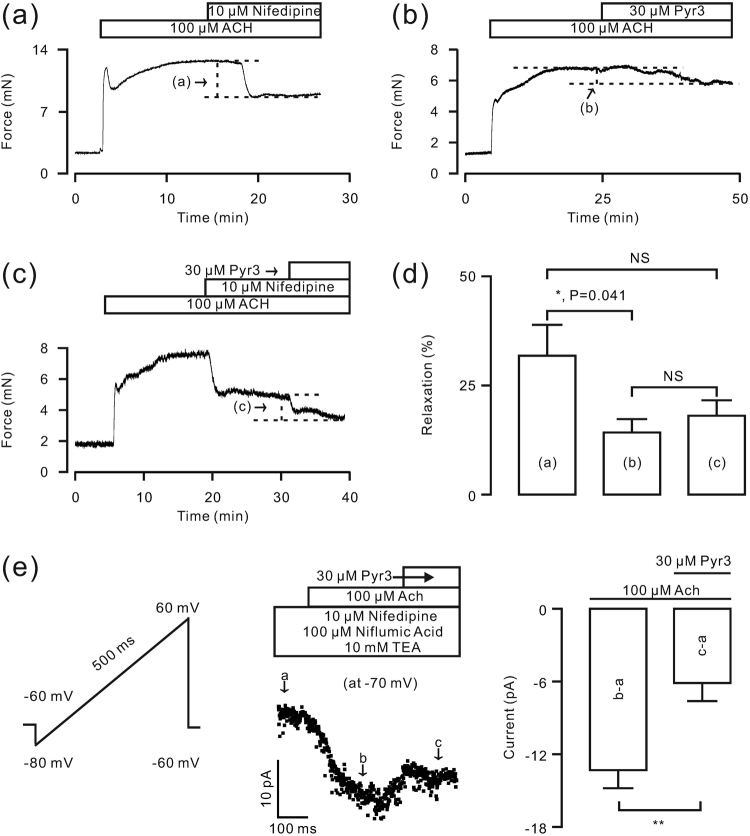
ACH-induced contractions in mouse TRs are inhibited by nifedipine and Pyr3. (ac) ACH (100 μM) induced contractions in TRs, which were inhibited by nifedipine and/or Pyr3. (d) Summary of results. *P < 0.05. (e) In the presence of nifedipine, Pyr3 and NA, ACH-induced NSCC-mediated currents were recorded using a ramp. The values at −70 mV were extracted and used to plot a current-time trace, showing that Pyr3 partially reduced the ACH-induced current. These data suggest that LVDCCs, TRPC3 and/or STIM/Orai channels contribute to the ACH-induced contraction of mouse TRs.
Figure 5
Figure 5
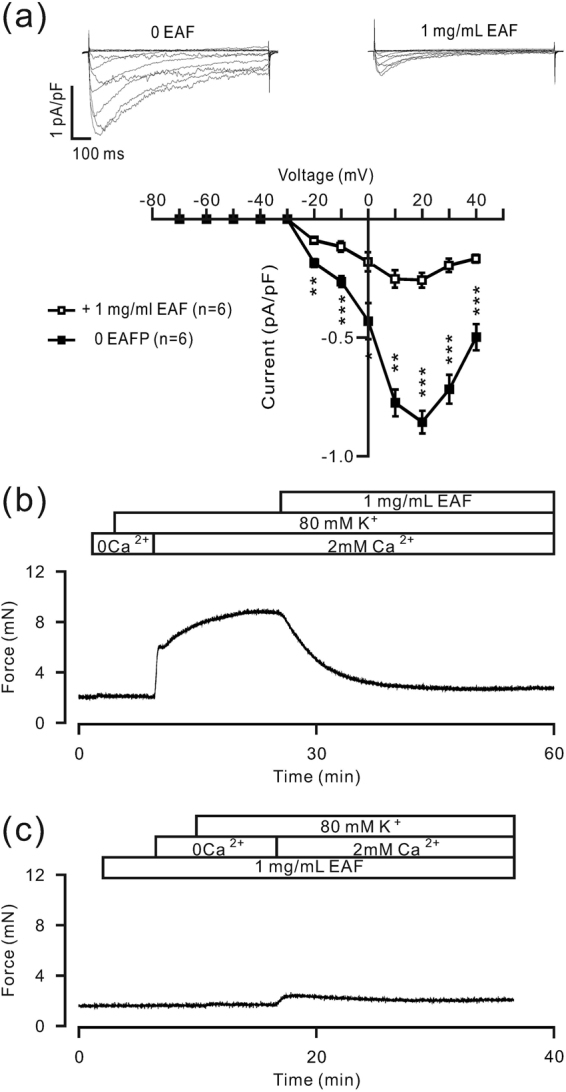
EAF reduces LVDCC-mediated current and TR contraction. (a) The LVDCC-mediated currents were recorded as shown in Fig. 3b. The currents were partially inhibited by EAF. The current-voltage curves were plotted. P-values evaluated with paired t-test from left to right are 1.6E-3, 1.8E-4, 1.2E-3, 1.3E-5, 6.1E-5, 9.7E-5 and 1.2E-3 between the currents before and after EAF administration. **P < 0.01; ***P < 0.001. (b) Under Ca2+-free conditions (0 Ca2+  + 0.5 mM EGTA), 80 mM K+ failed to induce contractions. However, upon the addition of 2 mM Ca2+, contractions were observed, which were markedly inhibited by 1 mg/mL EAF. (c) When TRs were incubated with EAF, contractions induced by 2 mM Ca2+ were substantially inhibited. These data indicate that the EAF-induced relaxation may be due to its inhibition of LVDCC-mediated Ca2+ influx.
Figure 6
Figure 6
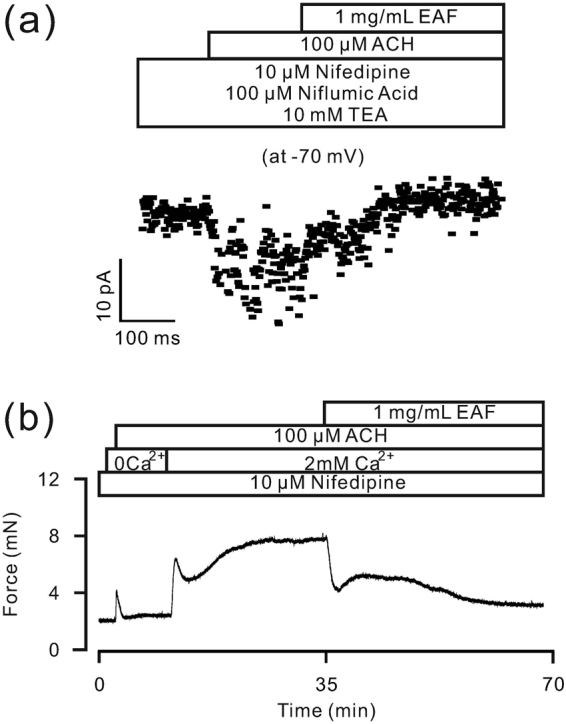
EAF attenuates ACH-induced current and TR contraction. (a) ACH-induced currents, similarly recorded as shown in Fig. 4E, were completely blocked by EAF. (b) Under Ca2+-free conditions (0 Ca2+  + 0.5 mM EGTA), ACH induced transient contractions in a TR incubated in nifedipine. After the addition of 2 mM Ca2+, a large sustained contraction was observed in the TR, which was attenuated by EAF. These results indicate that TRPC3 and/or STIM/Orai channels are likely blocked by EAF and contribute to EAF-induced relaxation.
Figure 7
Figure 7
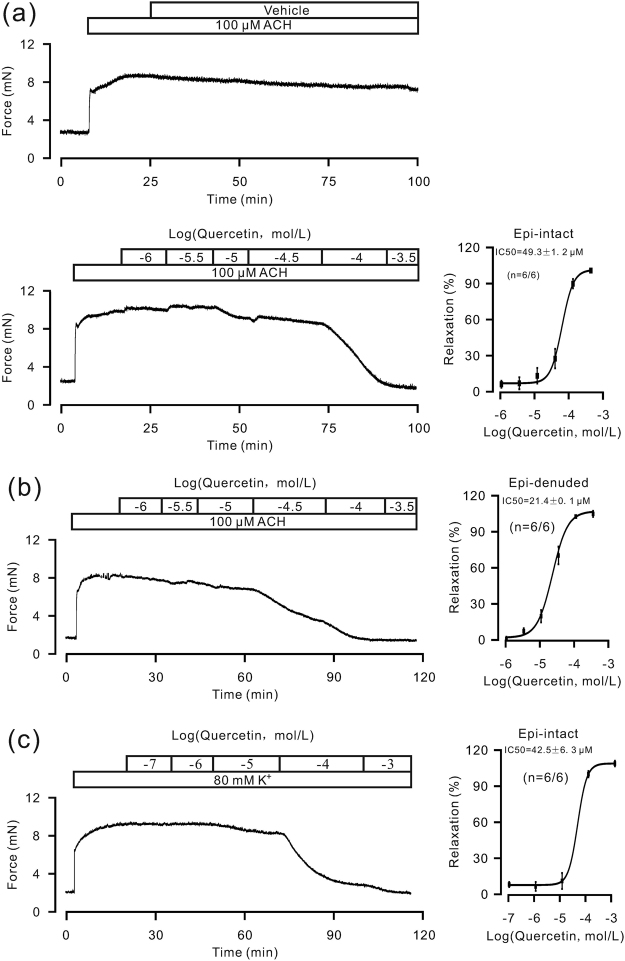
ACH-induced TR contractions are inhibited by quercetin. (a,b) Quercetin markedly inhibited ACH-induced precontraction in mouse TRs with or without epithelium, but the vehicle had no such effect. (c) Quercetin had a similar inhibitory effect on high K+-induced contraction in TRs.
Figure 8
Figure 8
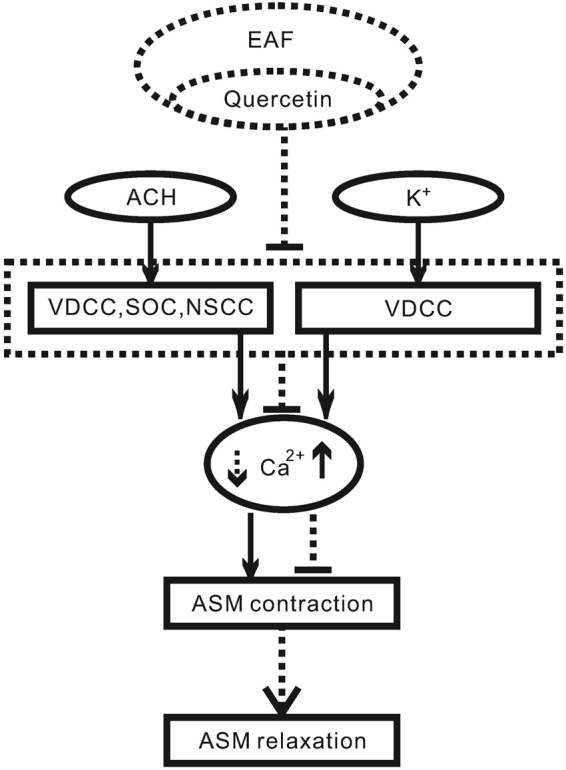
Mechanism of EAF- and quercetin-induced inhibition of TR precontraction. ACH or high levels of K+ induces precontractions in ASM by increasing intracellular Ca2+ via Ca2+-permeant ion channels. The channels are blocked by EAF and quercetin, resulting in a decrease in Ca2+, leading to ASM relaxation.

References

    1. Braman SS. The global burden of asthma. Chest. 2006;130:4S–12S. doi: 10.1378/chest.130.1_suppl.4S. - DOI - PubMed
    1. Vos T, et al. Years lived with disability (YLDs) for 1160 sequelae of 289 diseases and injuries 1990-2010: a systematic analysis for the Global Burden of Disease Study 2010. Lancet. 2012;380:2163–2196. doi: 10.1016/S0140-6736(12)61729-2. - DOI - PMC - PubMed
    1. Dekhuijzen PN. Guidance on handheld inhalers in asthma and COPD guidelines: An update. Respir Med. 2015;109:1592–1593. doi: 10.1016/j.rmed.2015.10.017. - DOI - PubMed
    1. Abramson MJ, Walters J, Walters EH. Adverse effects of beta-agonists: are they clinically relevant? Am J Respir Med. 2003;2:287–297. doi: 10.1007/BF03256657. - DOI - PubMed
    1. Cazzola M, Matera MG, Donner CF. Inhaled beta2-adrenoceptor agonists: cardiovascular safety in patients with obstructive lung disease. Drugs. 2005;65:1595–1610. doi: 10.2165/00003495-200565120-00001. - DOI - PubMed

Publication types

LinkOut - more resources