


Pharmacogenomics in diabetes: outcomes of thiamine therapy in TRMA syndrome
- PMID: 29450569
- PMCID: PMC6449001
- DOI: 10.1007/s00125-018-4554-x
Pharmacogenomics in diabetes: outcomes of thiamine therapy in TRMA syndrome
Abstract
Aims/hypothesis: Diabetes is one of the cardinal features of thiamine-responsive megaloblastic anaemia (TRMA) syndrome. Current knowledge of this rare monogenic diabetes subtype is limited. We investigated the genotype, phenotype and response to thiamine (vitamin B1) in a cohort of individuals with TRMA-related diabetes.
Methods: We studied 32 individuals with biallelic SLC19A2 mutations identified by Sanger or next generation sequencing. Clinical details were collected through a follow-up questionnaire.
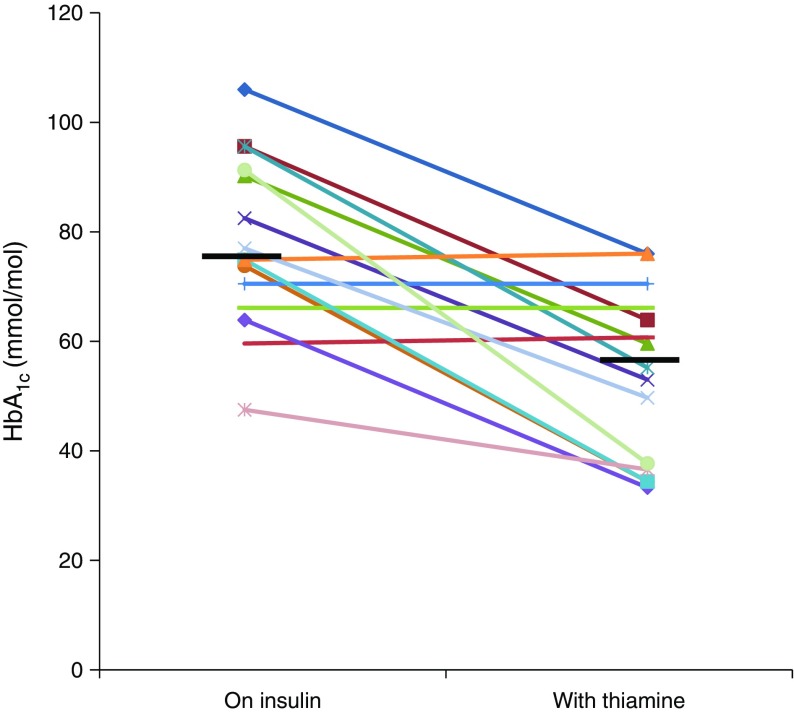
Results: We identified 24 different mutations, of which nine are novel. The onset of the first TRMA symptom ranged from birth to 4 years (median 6 months [interquartile range, IQR 3-24]) and median age at diabetes onset was 10 months (IQR 5-27). At presentation, three individuals had isolated diabetes and 12 had asymptomatic hyperglycaemia. Follow-up data was available for 15 individuals treated with thiamine for a median 4.7 years (IQR 3-10). Four patients were able to stop insulin and seven achieved better glycaemic control on lower insulin doses. These 11 patients were significantly younger at diabetes diagnosis (p = 0.042), at genetic testing (p = 0.01) and when starting thiamine (p = 0.007) compared with the rest of the cohort. All patients treated with thiamine became transfusion-independent and adolescents achieved normal puberty. There were no additional benefits of thiamine doses >150 mg/day and no reported side effects up to 300 mg/day.
Conclusions/interpretation: In TRMA syndrome, diabetes can be asymptomatic and present before the appearance of other features. Prompt recognition is essential as early treatment with thiamine can result in improved glycaemic control, with some individuals becoming insulin-independent.
Data availability: SLC19A2 mutation details have been deposited in the Decipher database ( https://decipher.sanger.ac.uk/ ).
Keywords: Pharmacogenomics; TRMA-related diabetes; Thiamine therapy; Vitamin B1.
Conflict of interest statement
The authors declare no conflict of interest.
Figures


References
Publication types
MeSH terms
Substances
Supplementary concepts
Grants and funding
LinkOut - more resources
Full Text Sources
Other Literature Sources
Medical
