


Sexual orientation disparities in the co-occurrence of substance use and psychological distress: a national population-based study (2008-2015)
- PMID: 29450600
- PMCID: PMC5862943
- DOI: 10.1007/s00127-018-1491-4
Sexual orientation disparities in the co-occurrence of substance use and psychological distress: a national population-based study (2008-2015)
Abstract
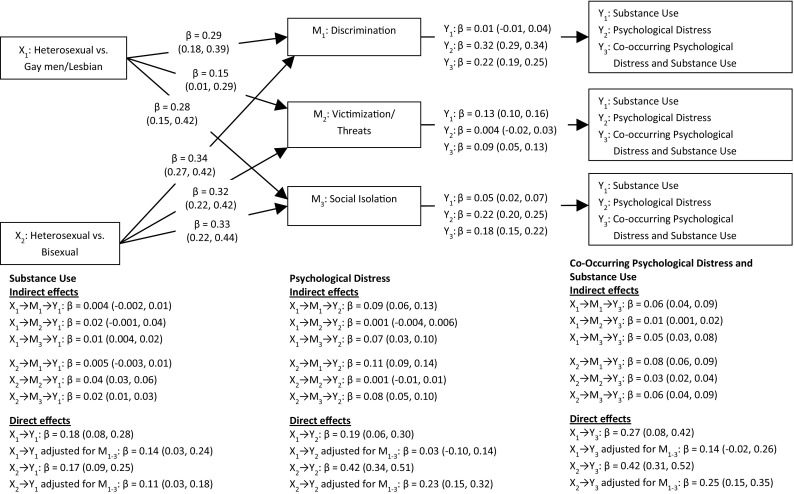
Purpose: Although strong evidence documents the elevated prevalence of both substance use and mental health problems among sexual minorities (i.e., gay, lesbian, and bisexuals), relatively less research has examined whether risk of the co-occurrence of these factors is elevated among sexual minorities compared to heterosexuals. The object of this study was to (1) explore sexual orientation-based differences in substance use, psychological distress, and their co-occurrence in a representative sample in Sweden, and (2) examine if greater exposure to stressors, such as discrimination, victimization/threats, and social isolation, could explain these potential disparities and their co-occurrence.
Methods: Data come from the cross-sectional Swedish National Public Health Survey, which collected random samples of individuals (16-84 years of age) annually from 2008 to 2015, with an overall response rate of 49.7% (n = 79,568 individuals; 1673 self-identified as lesbian, gay, or bisexual). Population-level sexual orientation differences in substance use (i.e., alcohol, tobacco, and cannabis) and psychological distress were examined.
Results: Our findings showed significantly elevated prevalence of high-risk alcohol use, cannabis use, and daily tobacco smoking, among sexual minorities compared to heterosexuals. These substantial disparities in substance use more often co-occurred with psychological distress among sexual minorities than among heterosexuals. The elevated risk of co-occurring psychological distress and substance use was most notable among gay men relative to heterosexual men (adjusted odds ratio [AOR] = 2.65, CI 1.98, 3.55), and bisexual women relative to heterosexual women (AOR = 3.01, CI 2.43, 3.72). Multiple mediation analyses showed that experiences of discrimination, victimization, and social isolation partially explained the sexual orientation disparity in these co-occurring problems.
Conclusions: This study adds to a growing body of research showing that sexual minorities experience multiple threats to optimal health and points toward future interventions that address the shared sources of these overlapping health threats in stigma-related stress.
Keywords: Minority stress; Psychological distress; Sexual minorities; Substance use; Syndemic.
Conflict of interest statement
Conflict of interest
The authors have no conflict of interest to disclose.
Ethical approval
The study has been approved by the Regional Ethics Committee in Stockholm (No. 2013/2200-31/2).
Figures
References
Publication types
MeSH terms
Grants and funding
LinkOut - more resources
Full Text Sources
Other Literature Sources
Medical
