


Mesenchymal Stem Cells Protect Against Hypoxia-Ischemia Brain Damage by Enhancing Autophagy Through Brain Derived Neurotrophic Factor/Mammalin Target of Rapamycin Signaling Pathway
- PMID: 29451335
- PMCID: PMC6657778
- DOI: 10.1002/stem.2808
Mesenchymal Stem Cells Protect Against Hypoxia-Ischemia Brain Damage by Enhancing Autophagy Through Brain Derived Neurotrophic Factor/Mammalin Target of Rapamycin Signaling Pathway
Abstract
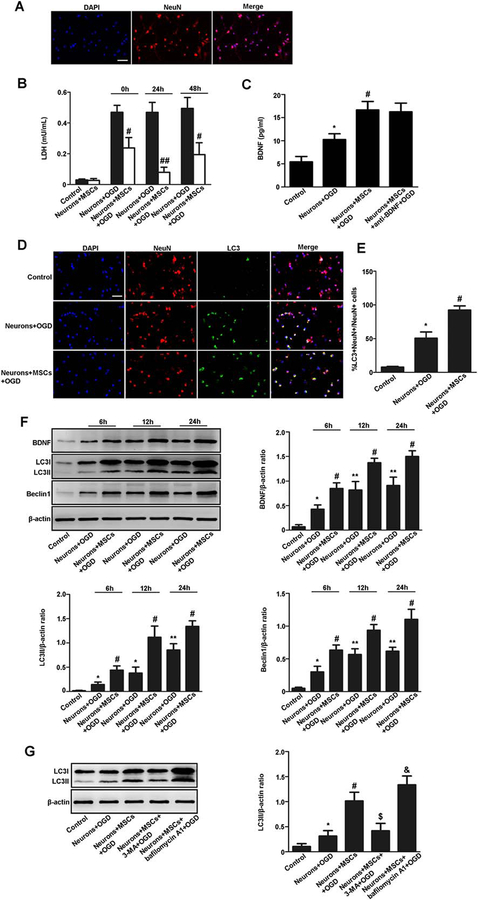
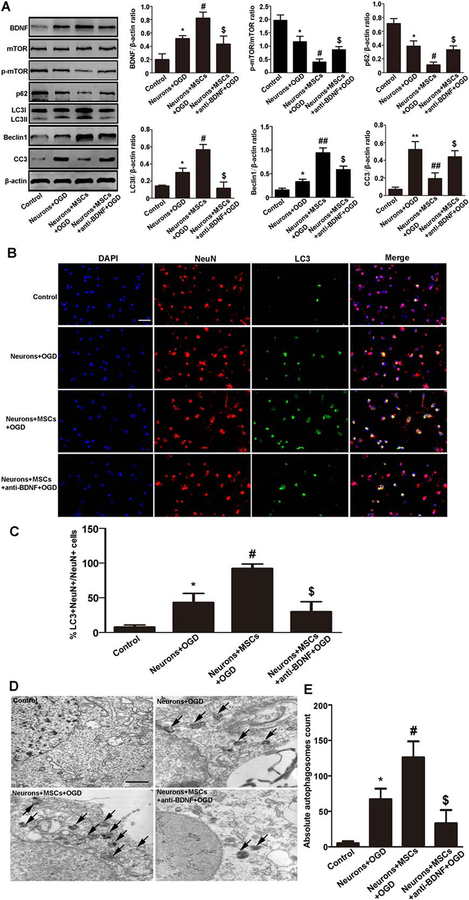
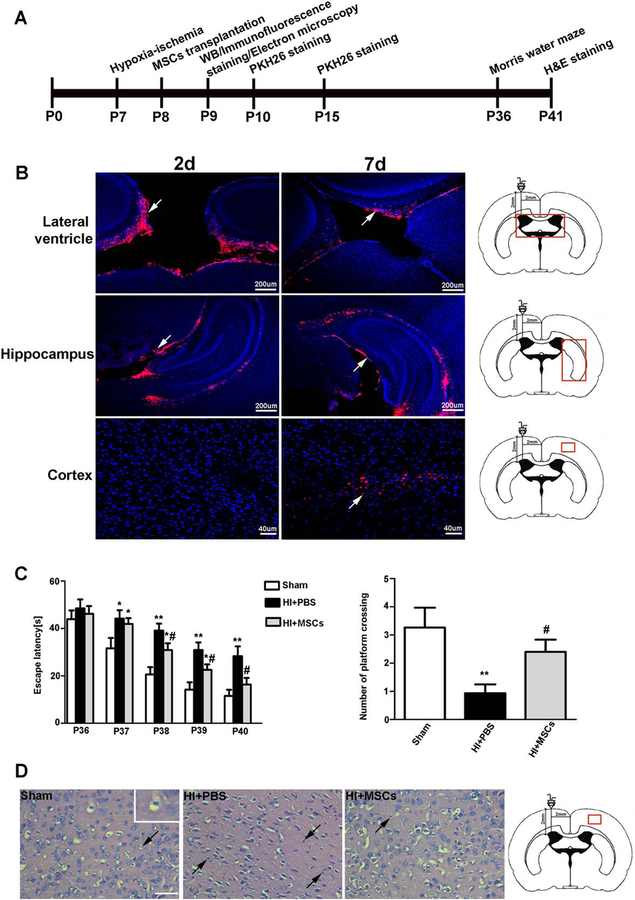
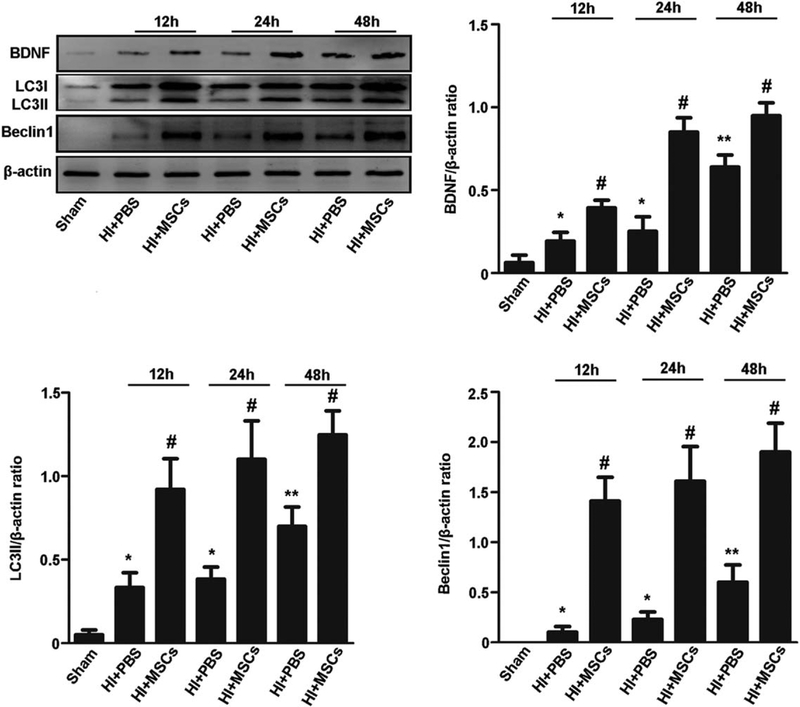
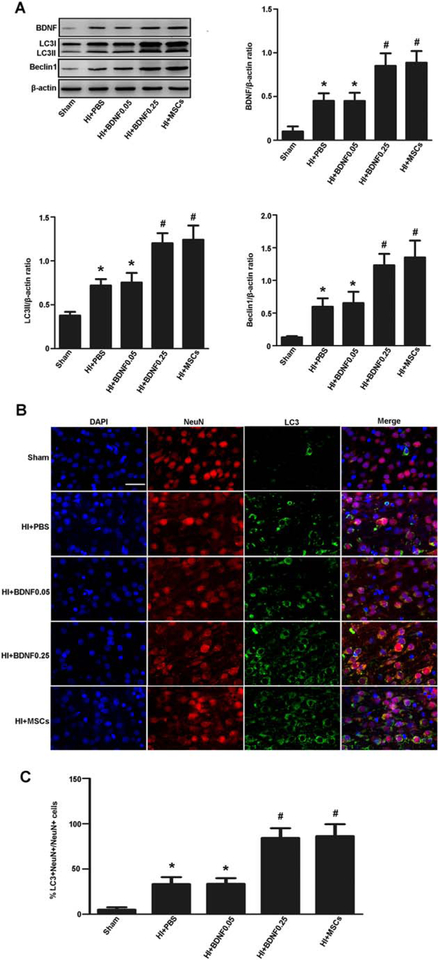
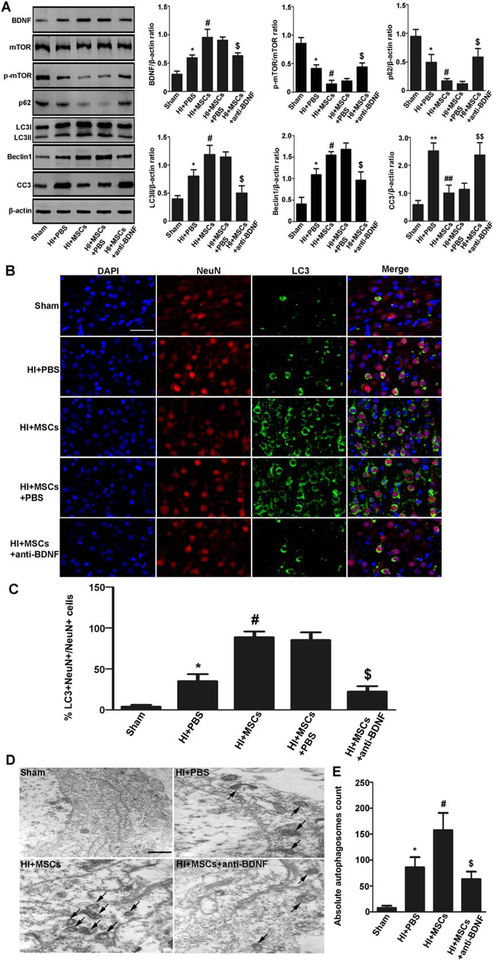
Hypoxic-ischemic encephalopathy (HIE) is a serious disease for neonates. However, present therapeutic strategies are not effective enough for treating HIE. Previous study showed that mesenchymal stem cells (MSCs) can exert neuroprotective effects for brain damage, but its mechanism remains elusive. Using in vitro coculture of rat cortical primary neurons and MSCs in HI conditions, we demonstrated that MSCs help increase brain derived neurotrophic factor (BDNF) and autophagy markers (LC3II and Beclin1) in the cultures and decrease cells death (lactate dehydrogenase levels). We demonstrated a similar mechanism using an in vivo rat model of HI in combination with MSCs transplantation. Using a behavioral study, we further showed that MSCs transplantation into the rat brain after HI injury can attenuate behavioral deficits. Finally, we found that the increase in BDNF and autophagy related factors after HI injury combined with MSCs transplantation can be reversed by anti-BDNF treatment and strengthen the point that the protective effects of BDNF work through inhibition of the mammalin target of rapamycin (mTOR) pathway. Collectively, we proposed that coculture/transplantation of MSCs after HI injury leads to increased BDNF expression and a subsequent reduction in mTOR pathway activation that results in increased autophagy and neuroprotection. This finding gives a hint to explore new strategies for treating neonates with HIE. Stem Cells 2018;36:1109-1121.
Keywords: Autophagy; Brain damage; Brain derived neurotrophic factor; Hypoxia-ischemia; Mammalian target of rapamycin; Mesenchymal stem cells.
© 2018 AlphaMed Press.
Conflict of interest statement
Disclosure of Potential Conflicts of Interest
The authors indicated no potential conflicts of interest.
Figures
References
-
- Vannucci SJ, Hagberg H. Hypoxia-ischemia in the immature brain. J Exp Biol 2004; 207:3149–3154. - PubMed
-
- Douglas-Escobar M, Weiss MD. Hypoxic-ischemic encephalopathy: A review for the clinician. JAMA Pediatr 2015;169:397–403. - PubMed
-
- Carloni S, Albertini MC, Galluzzi L et al. Increased autophagy reduces endoplasmic reticulum stress after neonatal hypoxia-ischemia: Role of protein synthesis and autophagic pathways. Exp Neurol 2014;255:103–112. - PubMed
Publication types
MeSH terms
Substances
Grants and funding
LinkOut - more resources
Full Text Sources
Other Literature Sources
Miscellaneous
