Predictors of persistent prescription opioid analgesic use among people without cancer in Australia
- PMID: 29451672
- PMCID: PMC5980567
- DOI: 10.1111/bcp.13556
Predictors of persistent prescription opioid analgesic use among people without cancer in Australia
Abstract
Aims: To identify patterns of opioid analgesic use and determine predictors of persistent opioid use among people without cancer.
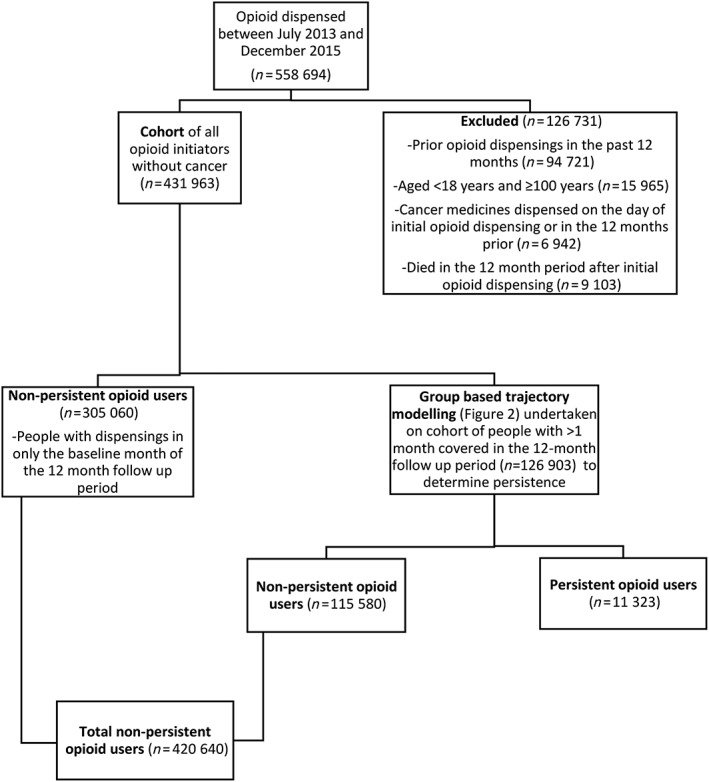
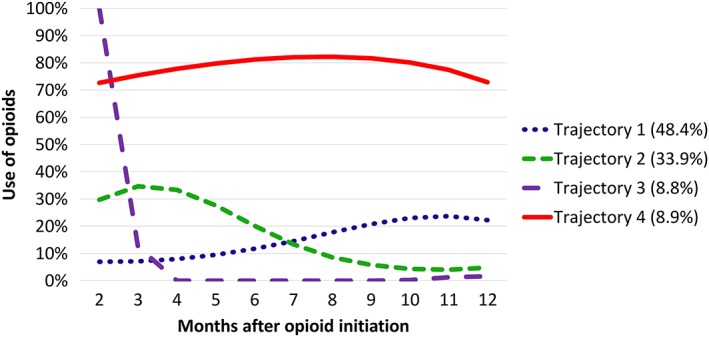
Methods: A population-based cohort study of Australians initiating prescription opioids from July 2013 to December 2015 was conducted using data from a random 10% sample of people who accessed medicines through Australia's Pharmaceutical Benefits Scheme. A 12-month retrospective period was used to define opioid initiation, exclude people with cancer and determine comorbidities. Persistent use over 12 months since initiation was identified through group-based trajectory modelling. Odds ratios (OR) and 95% confidence intervals (CIs) for predictors of opioid persistence were estimated using logistic regression.
Results: The cohort consisted of 431 963 people without cancer who initiated opioids. A total of 11 323 (2.6%) persistent opioid users were identified. Predictors of persistence included initiation with transdermal formulations (OR 4.2, 95% CI 3.9-4.5), or initiation with total oral morphine equivalents (OME) ≥ 750 mg (3.7, 3.3-4.1), having depression (1.6, 1.5-1.7) or psychotic illness (2.0, 1.9-2.2). Previous dispensing of paracetamol (2.0, 1.9-2.1), pregabalin (2.0, 1.8-2.1) and benzodiazepines (1.53, 1.4-1.6) predicted persistence. Compared to people aged 18-44 years, those ≥75 years were 2.5 (2.3-2.6) times more likely to be persistent users.
Conclusions: Patient-specific characteristics (older age, prior history of mental health comorbidities and use of non-opioid analgesics) and prescriber choice of initial opioid (transdermal formulation and higher total OMEs) were found to strongly predict persistent use. This information may help prescribers target monitoring and early intervention efforts in order to prevent harms associated with the long-term use of opioids.
Keywords: non-cancer pain; opioid analgesics; persistent use; pharmacoepidemiology; predictors.
© 2018 The British Pharmacological Society.
Figures
References
-
- Andrew R, Derry S, Taylor RS, Straube S, Phillips CJ. The costs and consequences of adequately managed chronic non‐cancer pain and chronic neuropathic pain. Pain Pract 2014; 14: 79–94. - PubMed
-
- Currow DC, Agar M, Plummer JL, Blyth FM, Abernethy AP. Chronic pain in South Australia – population levels that interfere extremely with activities of daily living. Aust N Z J Public Health 2010; 34: 232–239. - PubMed
Publication types
MeSH terms
Substances
LinkOut - more resources
Full Text Sources
Other Literature Sources
Medical