


Role of Non Receptor Tyrosine Kinases in Hematological Malignances and its Targeting by Natural Products
- PMID: 29455667
- PMCID: PMC5817858
- DOI: 10.1186/s12943-018-0788-y
Role of Non Receptor Tyrosine Kinases in Hematological Malignances and its Targeting by Natural Products
Abstract
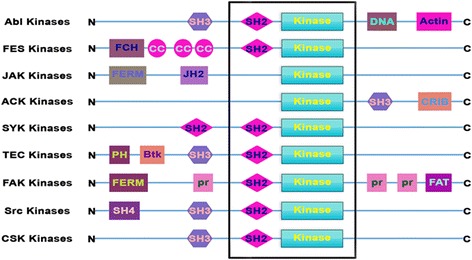
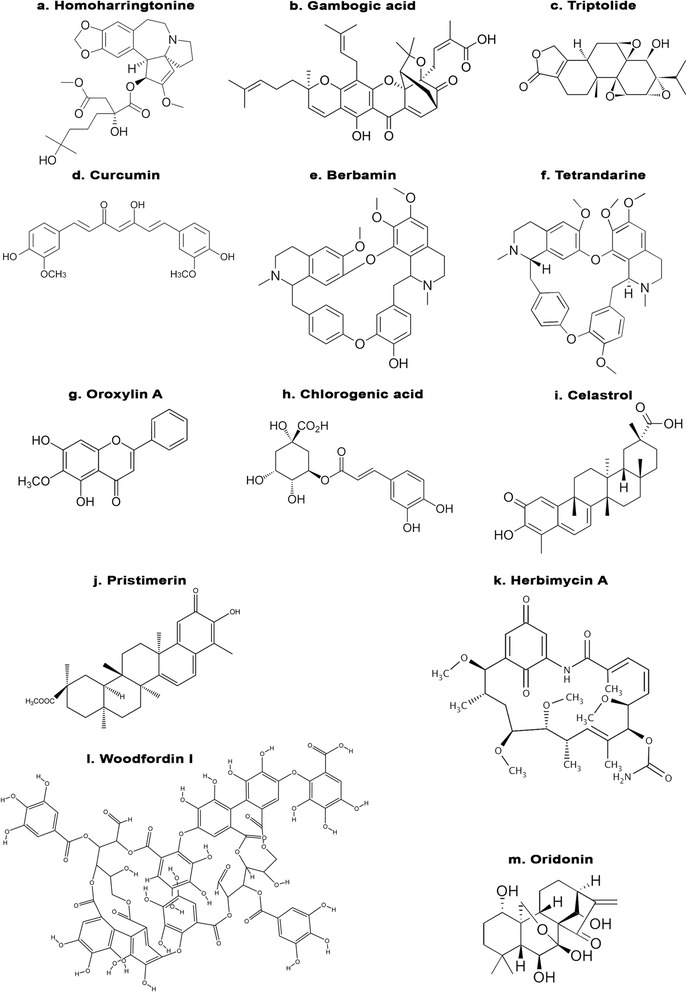
Tyrosine kinases belong to a family of enzymes that mediate the movement of the phosphate group to tyrosine residues of target protein, thus transmitting signals from the cell surface to cytoplasmic proteins and the nucleus to regulate physiological processes. Non-receptor tyrosine kinases (NRTK) are a sub-group of tyrosine kinases, which can relay intracellular signals originating from extracellular receptor. NRTKs can regulate a huge array of cellular functions such as cell survival, division/propagation and adhesion, gene expression, immune response, etc. NRTKs exhibit considerable variability in their structural make up, having a shared kinase domain and commonly possessing many other domains such as SH2, SH3 which are protein-protein interacting domains. Recent studies show that NRTKs are mutated in several hematological malignancies, including lymphomas, leukemias and myelomas, leading to aberrant activation. It can be due to point mutations which are intragenic changes or by fusion of genes leading to chromosome translocation. Mutations that lead to constitutive kinase activity result in the formation of oncogenes, such as Abl, Fes, Src, etc. Therefore, specific kinase inhibitors have been sought after to target mutated kinases. A number of compounds have since been discovered, which have shown to inhibit the activity of NRTKs, which are remarkably well tolerated. This review covers the role of various NRTKs in the development of hematological cancers, including their deregulation, genetic alterations, aberrant activation and associated mutations. In addition, it also looks at the recent advances in the development of novel natural compounds that can target NRTKs and perhaps in combination with other forms of therapy can show great promise for the treatment of hematological malignancies.
Keywords: Non receptor tyrosine kinases; hematological malignancy; natural products; signaling pathways.
Conflict of interest statement
Ethics approval and consent to participate
Not applicable.
Consent for publication
Not applicable.
Competing interests
The authors declare that they have no competing interests.
Publisher’s Note
Springer Nature remains neutral with regard to jurisdictional claims in published maps and institutional affiliations.
Figures
References
Publication types
MeSH terms
Substances
LinkOut - more resources
Full Text Sources
Other Literature Sources
Miscellaneous
