


The Current State of Rural Neurosurgical Practice: An International Perspective
- PMID: 29456356
- PMCID: PMC5812136
- DOI: 10.4103/jnrp.jnrp_273_17
The Current State of Rural Neurosurgical Practice: An International Perspective
Abstract
Introduction: Rural and low-resource areas have diminished capacity to care for neurosurgical patients due to lack of infrastructure, healthcare investment, and training programs. This review summarizes the range of rural neurosurgical procedures, novel mechanisms for delivering care, rapid training programs, and outcome differences across international rural neurosurgical practice.
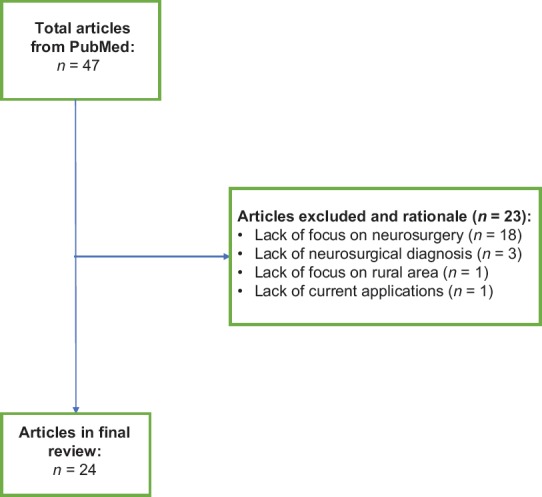
Methods: A comprehensive literature search was performed for English language manuscripts with keywords "rural" and "neurosurgery" using the National Library of Medicine PubMed database (01/1971-06/2017). Twenty-four articles focusing on rural non-neurosurgical practice were included.
Results: Time to care and/or surgery and shortage of trained personnel remain the strongest risk factors for mortality and poor outcome. Telemedicine consults to regional centers with neurosurgery housestaff have potential for increased timeliness of diagnosis/triage, improved time to surgery, and reductions in unnecessary transfers in remote areas. Mobile neurosurgery teams have been deployed with success in nations with large transport distances precluding initial transfers. Common neurosurgical procedures involve trauma mechanisms; accordingly, training programs for nonneurosurgery medical personnel on basic assessment and operative techniques have been successful in resource-deficient settings where neurosurgeons are unavailable.
Conclusions: Protracted transport times, lack of resources/training, and difficulty retaining specialists are barriers to successful outcomes. Advances in telemedicine, mobile neurosurgery, and training programs for urgent operative techniques have been implemented efficaciously. Development of guidelines for paired partnerships between rural centers and academic hospitals, supplying surplus technology to rural areas, and rapid training of qualified local surgical personnel can create sustainable feed-forward programs for trainees and infrastructural solutions to address challenges in rural neurosurgery.
Keywords: Access to care; feasibility; mobile neurosurgery; neurosurgical training; resource allocation; rural neurosurgery; telemedicine; time to surgery.
Conflict of interest statement
There are no conflicts of interest.
References
-
- Meara JG, Leather AJ, Hagander L, Alkire BC, Alonso N, Ameh EA, et al. Global Surgery 2030: Evidence and solutions for achieving health, welfare, and economic development. Lancet. 2015;386:569–624. - PubMed
-
- Attebery JE, Mayegga E, Louis RG, Chard R, Kinasha A, Ellegala DB. Initial audit of a basic and emergency neurosurgical training program in rural Tanzania. World Neurosurg. 2010;73:290–5. - PubMed
-
- Griswold D, Benet A, Tabani H, Lawton MT, Meybodi AT. “To Operate” Versus “Not to Operate” in low-resource settings: Example of aneurysm surgery in rural Iran and impact of mastery of neurosurgical anatomy. World Neurosurg. 2017;100:628–31. - PubMed
Publication types
LinkOut - more resources
Full Text Sources
Other Literature Sources