


Clavicle fracture nonunion in the paediatric population: a systematic review of the literature
- PMID: 29456747
- PMCID: PMC5813118
- DOI: 10.1302/1863-2548.12.170155
Clavicle fracture nonunion in the paediatric population: a systematic review of the literature
Abstract
Aims: Clavicle fracture nonunions are extremely rare in children. The aim of this systematic review was to assess what factors may predispose children to form clavicle fracture nonunions and evaluate the treatment methods and outcomes.
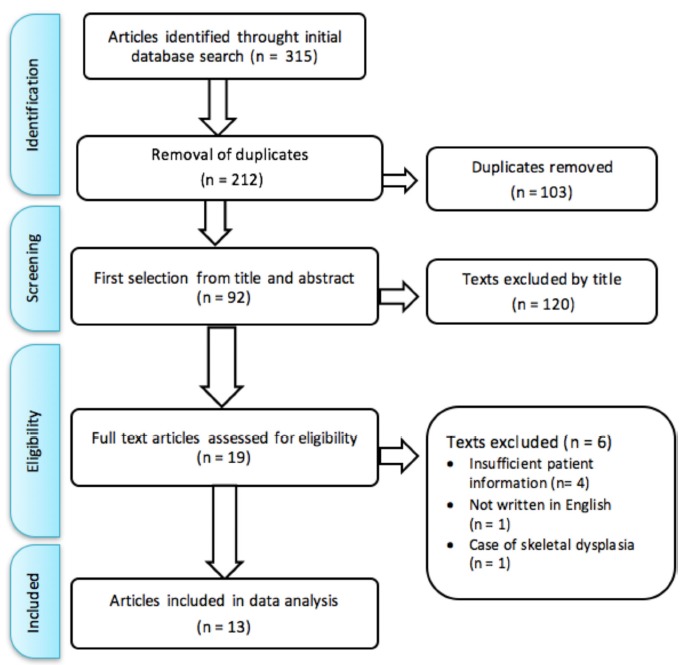
Methods: We performed a systematic review according to Preferred Reporting Items for Systematic Reviews and Meta-Analyses guidelines, aiming to find papers reporting clavicle fracture nonunion in children under the age of 18 years. Data was collected on patient demographics, fracture type, mechanism of injury (MOI), surgical intervention and reported outcome. Two independent reviewers evaluated all the data.
Results: A total of 13 articles reporting 21 cases of clavicle fracture nonunion were identified. The mean age at time of injury was 11.4 years (4 to 17). Falls were the most common MOI. The majority of nonunions occurred after displaced fractures on the right side. Six were refractures. Mean time of presentation following injury was 13.5 months (4 to 60). In all, 16 were treated surgically. Radiographic union was eventually achieved in 12 cases, with functional outcome satisfactory in all cases.
Conclusion: Clavicle nonunion is an extremely rare but possible complication in children. The majority occur after displaced right-sided fractures or refractures and present around one year after injury. Surgical fixation provides good radiographic healing and functional outcomes.
Level of evidence: IV.
Keywords: Clavicle; fracture; nonunion; paediatric.
Figures
References
-
- Rennie L, Court-Brown CM, Mok JYQ, Beattie TF.. The epidemiology of fractures in children. Injury 2007;38:913-922. - PubMed
-
- Kessler J, Gardner I, Corral J.. Pediatric clavicular shaft fractures treated nonoperatively: assessment of treatment results, fracture patterns, modes of injury, and patient demographics. Annual Meeting of the Pediatric Orthopaedic Society of America 2009;30.
-
- Strauss BJ, Carey TP, Seabrook JA, Lim R.. Pediatric clavicular fractures: assessment of fracture patterns and predictors of complicated outcome. J Emerg Med 2012;43:29-35. - PubMed
-
- Wilkes JA, Hoffer MM.. Clavicle fractures in head-injured children. J Orthop Trauma 1987;1:5-58. - PubMed
LinkOut - more resources
Full Text Sources
Other Literature Sources
Research Materials
