


Evidence-Based Analysis of Adjacent Segment Degeneration and Disease After LIF: A Narrative Review
- PMID: 29456920
- PMCID: PMC5810899
- DOI: 10.1177/2192568217734876
Evidence-Based Analysis of Adjacent Segment Degeneration and Disease After LIF: A Narrative Review
Abstract
Study design: Narrative review.
Objectives: The etiology of adjacent segment degeneration (ASDeg) and adjacent segment disease (ASDz) after lumbar interbody fusion (LIF) remains controversial. The aim of this narrative review was to provide an evidence-based analysis of the peer-reviewed literature on clinical studies of ASDeg and ASDz after LIF.
Methods: A review was performed utilizing Medline, Embase, and Cochrane databases. Two reviewers independently extracted relevant data from each included study. Statistical comparisons were made when appropriate.
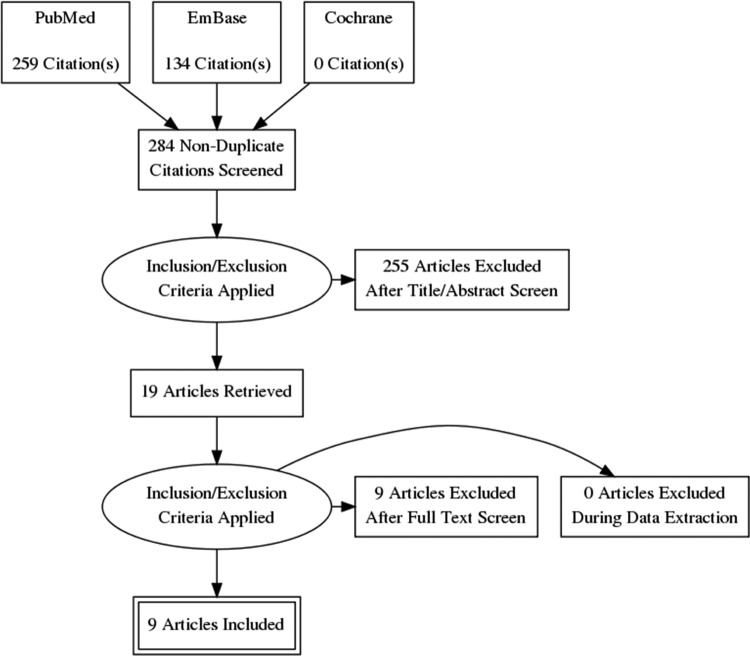
Results: Nine articles that matched the inclusion and exclusion criteria were included. All the studies were Level III and retrospective. MINORS scores ranged from 9.5 to 13. Clinical outcomes were assessed in all 9 studies, but only 6 studies used validated outcomes measures. Only 6 studies reported values for both ASDeg and ASDz. ASDeg alone was reported in 3 studies. Due to the variability in the criteria for designation as ASDz (different radiographic modalities) and ASDeg (different outcomes measures), we were unable to calculate frequency-weighted mean values or compare the various surgical techniques.
Conclusions: This review highlights the various limitations of the current literature on ASDeg and ASDz after lumbar fusion, specifically the absence of a rigorous definition and classification system and an extraordinary heterogeneity in methodology. There needs to be a fundamental shift in the current ASDeg and ASDz research landscape, toward a consensus, so that the high-level clinical research that is essential for treatment of spinal pathology may become available.
Keywords: LIF; adjacent segment degeneration; adjacent segment disease; fusion; lumbar.
Conflict of interest statement
Declaration of Conflicting Interests: The author(s) declared no potential conflicts of interest with respect to the research, authorship, and/or publication of this article.
References
-
- Melancia JL, Francisco FA, Antunes JL. Spinal stenosis. Handb Clin Neurol. 2014;119:541–549. - PubMed
-
- Briggs H, Milligan PR. Chip fusion of the low back following exploration of the spinal canal. J Bone Jt Surg. 1944;26:125–130.
-
- Christensen FB. Outcome in relation to surgical methods, choice of implant and postoperative rehabilitation. Acta Orthop Scand Suppl. 2004;75:2–43. - PubMed
-
- Radcliff KE, Kepler CK, Jakoi A, et al. Adjacent segment disease in the lumbar spine following different treatment interventions. Spine J. 2013;13:1339–1349. - PubMed
LinkOut - more resources
Full Text Sources
Other Literature Sources
