


Bilateral internal jugular vein thrombosis due to malignant tumor
- PMID: 29458414
- PMCID: PMC5819279
- DOI: 10.1186/s13256-017-1556-0
Bilateral internal jugular vein thrombosis due to malignant tumor
Abstract
Background: The aim of the study was to analyze characteristics of patients with bilateral internal jugular vein thrombosis in our department during a 1-year period. Internal jugular vein thrombosis refers to an intraluminal thrombus occurring anywhere from the intracranial internal jugular vein to the junction of the internal jugular vein and the subclavian vein, which form the brachiocephalic vein. It can occur spontaneously or as a complication of head and neck infections, surgery, central venous lines, local malignancy, polycytemia, hyperhomocysteinemia, neck massage, or intravenous drug abuse. Spontaneous bilateral internal jugular vein thrombosis may occur as a result of a neoplasm, a condition called Trousseau's syndrome.
Methods: The medical records of four patients with internal jugular vein thrombosis were reviewed for patient clinical characteristics, including age, sex, and other diseases. This is a retrospective study, and we analyzed four patients who had distant malignant tumors.
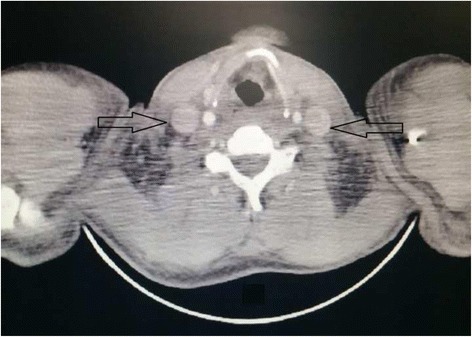
Results: During a 1-year period, four male patients were referred to our department for bilateral internal jugular vein thrombosis. Three of them had lung neoplasm, and one had urinary tract neoplasm. Three patients had thrombosis in the upper arm at the same time, one of them in both arms. Therapy consisted of unfractioned heparin in all patients. The main clinical manifestations were pain and cervical edema. The time between the first clinical manifestation and diagnosis of internal jugular vein thrombosis was 4 days. In the current study, no patient exhibited complications due to internal jugular vein thrombosis.
Conclusions: Diagnosing internal jugular vein thrombosis requires a high degree of suspicion. Our study underlines that bilateral internal jugular vein thrombosis is a risk indicator for malignancy. In our literature review of internal jugular vein thrombosis, 85% of patients exhibited unilateral thrombosis, whereas the remaining patients had bilateral thrombosis (15%). The knowledge of predictive factors of internal jugular vein thrombosis seems to be of utmost importance to improve patient management.
Keywords: Internal Jugular Vein; Malignant tumor; Thrombosis; Treatment.
Conflict of interest statement
Ethics approval and consent to participate
The study was conducted to all currently valid and applied guidelines whose purpose is to assure proper conduction and protection of persons included in this research as examinees. Ethics approval was obtained from the University Clinical Center of Kosovo. Patient identity remained confidential and protected. A freely given, written informed consent was obtained from participants.
Consent for publication
Written informed consent was obtained from the patient for publication of this case report and any accompanying images. A copy of the written consent is available for review by the Editor-in-Chief of this journal.
Competing interests
The authors declare that they have no competing interests.
Publisher’s Note
Springer Nature remains neutral with regard to jurisdictional claims in published maps and institutional affiliations.
Figures

References
-
- Robbins S, Cotran RS, Kumar V. Pathologic basis of diseases. 3. Philadelphia: W.B. Saunders Co.; 1984. pp. 314–55.
-
- Chen K-H, Chen Y-J, Liaw C-C, Chang H-J, Yeow K-M. Left internal jugular vein thrombosis due to a lung tumor. Chang Gung Med J. 2003;26(6):458–61. - PubMed
-
- Erkoç R, Uzun K, Yuca K, Etlik O, Doğan E, Sayarlıoğlu H, İşlek A, Çankaya H. Internal jugular vein thrombosis trwo different etiologies. Eur J Gen Med. 2005;2(3):123–8. doi: 10.29333/ejgm/82324. - DOI
Publication types
MeSH terms
LinkOut - more resources
Full Text Sources
Other Literature Sources
Medical
