. 2018 Feb 20;7(2):16.
doi: 10.1038/s41389-018-0028-8.

Inhibition of ATG12-mediated autophagy by miR-214 enhances radiosensitivity in colorectal cancer

Affiliations

Inhibition of ATG12-mediated autophagy by miR-214 enhances radiosensitivity in colorectal cancer

J L Hu et al. Oncogenesis. .

Abstract

Radioresistance hampers success in the treatment of patients with advanced colorectal cancer (CRC). Improving our understanding of the underlying mechanisms of radioresistance could increase patients' response to irradiation (IR). MicroRNAs are a class of small RNAs involved in tumor therapy response to radiation. Here we found that miR-214 was markedly decreased in CRC cell lines and blood of CRC patients after IR exposure. Meanwhile, autophagy was enhanced in irradiated CRC cells. Mechanically, ATG12 was predicted and identified as a direct target of miR-214 by dual luciferase assay, qPCR, and Western blot. In vitro and in vivo experiments showed that miR-214 promoted radiosensitivity by inhibiting IR-induced autophagy. Restoration of ATG12 attenuated miR-214-mediated inhibition of cell growth and survival in response to IR. Importantly, miR-214 was highly expressed in radiosensitive CRC specimens and negatively correlated with plasma level of CEA. Moreover, ATG12 and LC3 expressions were increased in radioresistant CRC specimens. Our study elucidates that miR-214 promotes radiosensitivity by inhibition of ATG12-mediated autophagy in CRC. Importantly, miR-214 is a determinant of CRC irradiation response and may serve as a potential therapeutic target in CRC treatment.


Conflict of interest statement

The authors declare that they have no conflict of interest.

Figures
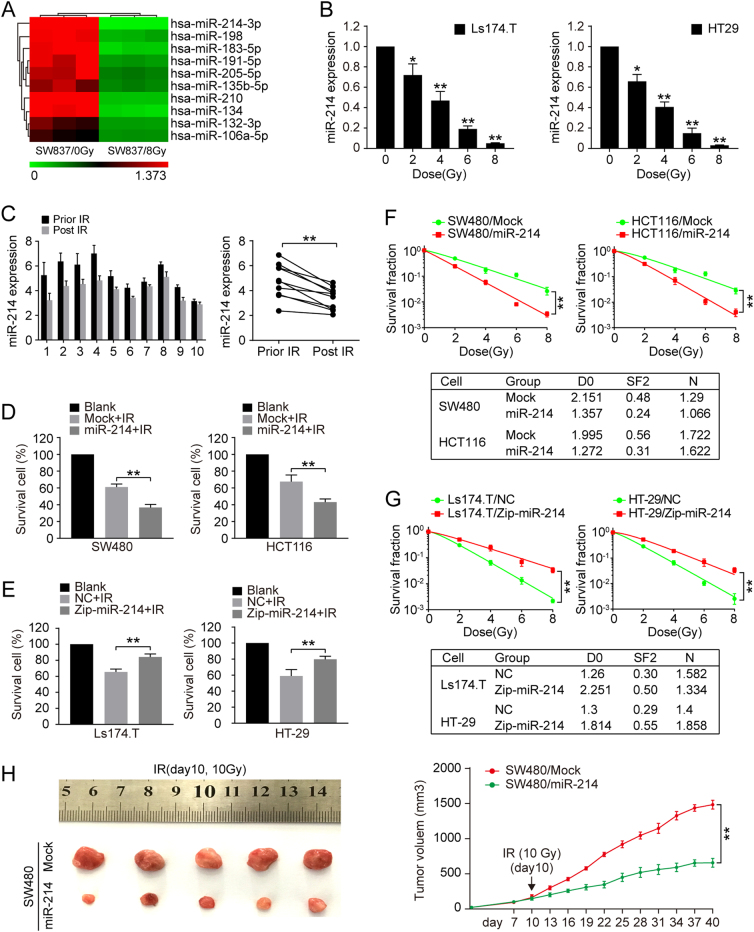
Fig. 1
Fig. 1. Downregulation of miR-214-induced radioresistance of CRC.
a Differentially expressed microRNAs in SW837 cells in response to IR treatment by microRNA microarray. U6 was used as internal control. b MiR-214 expression in HT29 and LS174.T CRC cell lines by quantitative real-time PCR analysis. Data represent mean ± SD. *p < 0.05, **p < 0.01. c Plasma level of miR-214 in CRC patients after IR exposure by quantitative real-time PCR analysis. **p < 0.01. d Cell viability of Mock and miR-214 expressing SW480 and HCT116 cells detected by CCK-8 assay. Data represent mean ± SD. *p < 0.05, **p < 0.01. e Cell viability in NC and anti-miR-214 expressing Ls174.T and HT29 cells detected by CCK-8 assay. Data represent mean ± SD. *p < 0.05, **p < 0.01. f Clonogenic survival assay of Mock and miR-214-expressing SW480 and HCT116 cells treated by indicated irradiation dosage. Data represent mean ± SD. *p < 0.05, **p < 0.01. g Clonogenic survival assay of NC and miR-214-inhibiting LS174.T and HT29 cells treated by indicated irradiation dosage. Data represent mean ± SD. *p < 0.05, **p < 0.01. h The growth of subcutaneous tumor derived from SW480/Mock and SW480/miR-214 cells in Balb/C nude mice. Mice were treated with 10 Gy irradiation at tenth day post tumor cell injection. N = 5 per group, data represent mean ± SD. *p < 0.05, **p < 0.01
Fig. 2
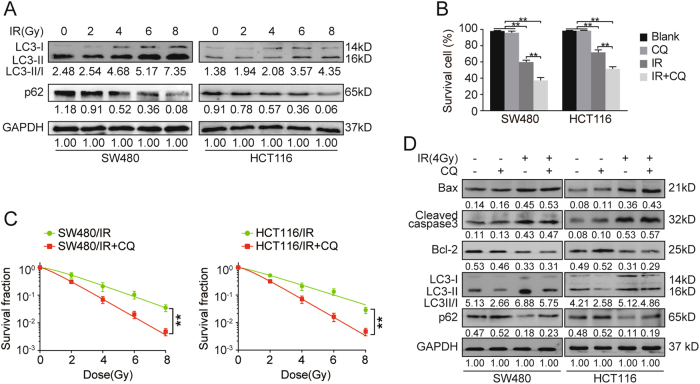
Fig. 2. IR-induced autophagy suppressed cell apoptosis and increased radioresistance.
a Autophagy-related proteins LC3 and p62 expression in SW480 and HCT116 cells exposed to different IR dosage by Western blot. b Cell viability of IR exposed SW480 and HCT116 cells treated with or without CQ by CCK-8 assay. **p < 0.01. c Cell survival fractions of IR exposed SW480 and HCT116 cells treated with or without CQ by plate colony formation assay. **p < 0.01. d Expression of Bax, cleaved caspase3, Bcl-2, LC3, and p62 in indicated SW480 and HCT116 cells by Western blot
Fig. 3
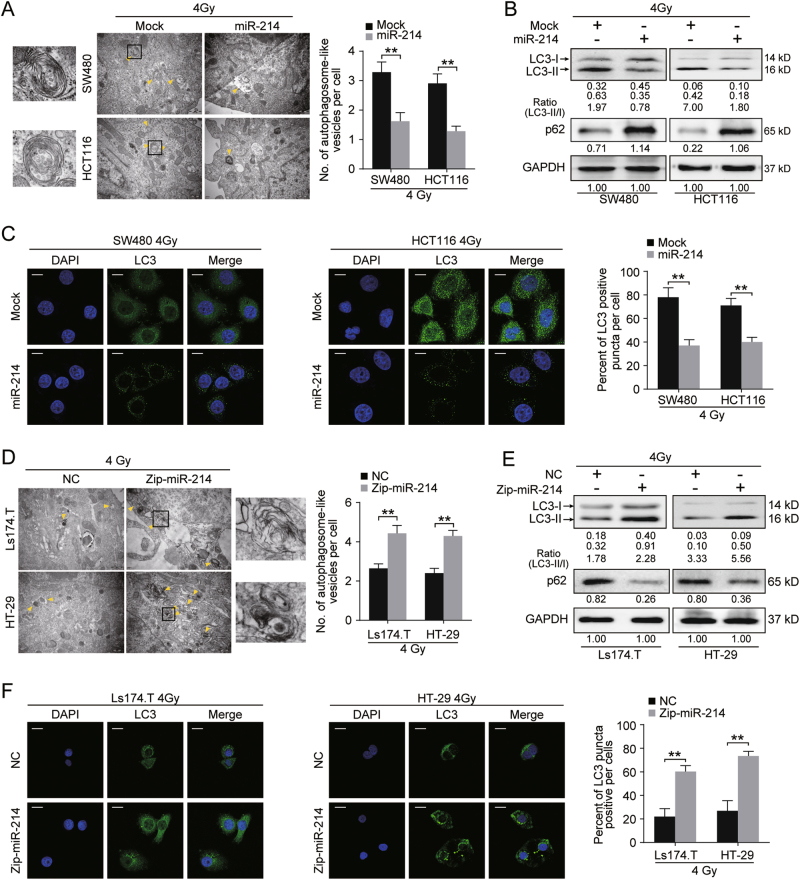
Fig. 3. IR-induced downregulation of miR-214 was associated with increased autophagic activity in CRC cells.
a, d Autophagy evaluation of SW480 and HCT116 (a) or Ls174.T and HT29 (d) cells by transmission electron microscopy (TEM). Arrow head indicated autophagosome-like vesicles induced by IR stimulation in CRC cells. Scale bar, 100 nm. The data were quantified by counting the number of autophagosome-like vesicles per cross-sectioned cell. The data are represented as mean ± SD of values obtained in three independent experiments. **p < 0.01. b, e Expression of LC3 and p62 proteins in Mock and miR-214 expressing cells (b) or NC and miR-214 inhibiting cells (e) treated by 4 Gy IR by Western blot. GAPDH was used as internal control. c, f Immunofluorescence analysis of LC3 puncta in Mock and miR-214 expressing SW480 and HCT116 cells (c) or NC and miR-214 inhibiting cells (f) treated by 4 Gy IR. The percentage of LC3 positive puncta cells was used to quantify the percentage of autophagic cells. **p < 0.01
Fig. 4
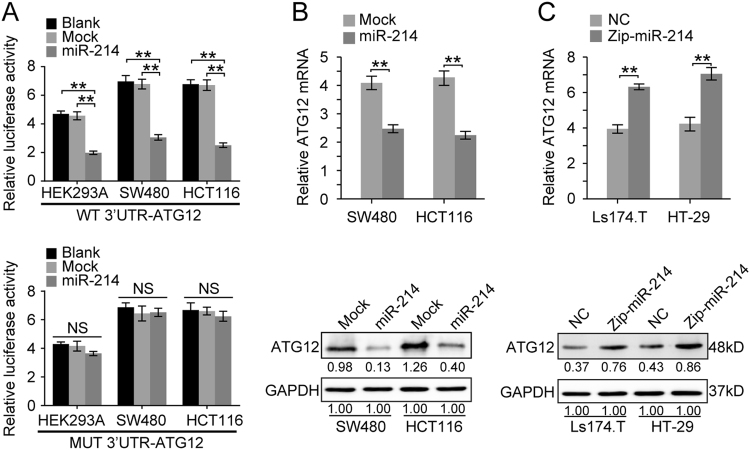
Fig. 4. ATG12 was a downstream target of miR-214.
a Dual luciferase activity assay of wild-type or mutated 3′UTR ATG12 in Mock and miR-214 expressing HEK293A, SW480, and HCT116 cells. Data represent means ± SD. **p < 0.01. b Relative expression of ATG12 in Mock and miR-214 expressing SW480 and HCT116 cells by real-time PCR and Western blot. GAPDH was used as internal control. Data represent mean ± SD. **p < 0.01. c Relative expression of ATG12 in NC and miR-214 inhibiting Ls174.T and HT29 cells by real-time PCR and Western blot. GAPDH was used as internal control. Data represent mean ± SD. **p < 0.01
Fig. 5
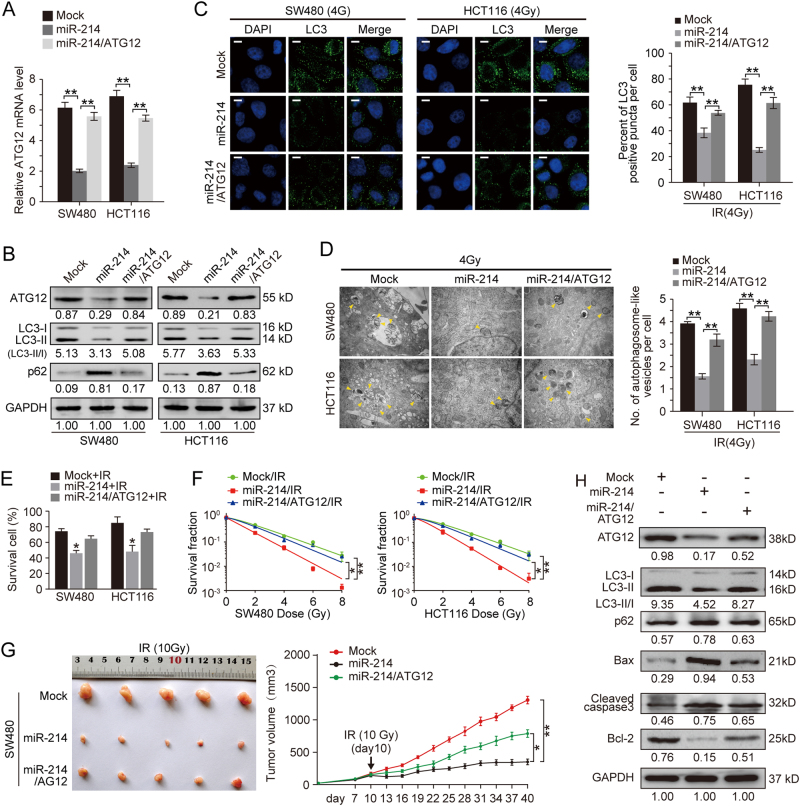
Fig. 5. ATG12 attenuates miR-214-mediated autophagy inhibition in CRC cells.
a Relative expression of ATG12 mRNA in Mock, miR-214 and miR-214/ATG12 SW480, and HCT116 cells by real-time PCR. Data represent mean ± SD. **p < 0.01. b Expression of autophagy-related proteins in Mock, miR-214, and miR-214/ATG12-expressing SW480 and HCT116 cells. c IF observation of LC3 puncta in Mock, miR-214, and miR-214/ATG12-expressing SW480 and HCT116 cell exposed to 4 Gy radiation. Data represent mean ± SD. **p < 0.01. d Autophagy evaluation of Mock, miR-214, and miR-214/ATG12-expressing SW480 and HCT116 cell exposed to 4 Gy radiation by TEM. Data represent mean ± SD. **p < 0.01. e Cell viability of Mock, miR-214 and miR-214/ATG12-expressing SW480 and HCT116 cells after IR exposure by CCK-8. *p < 0.05. f Cell survival fractions of Mock, miR-214 and miR-214/ATG12-expressing SW480 and HCT116 cells after IR exposure by plate colony formation. *p < 0.05. **p < 0.01. g The growth of subcutaneous tumor derived from SW480/Mock, SW480/miR-214, and SW480/miR-214/ATG12 cells in Balb/C nude mice. Mice were treated with 10 Gy irradiation at tenth day post tumor cell injection. N = 5 per group, data represent mean ± SD. *p < 0.05, **p < 0.01. h Expression of ATG12, LC3, p62 and Bax, cleaved caspase3, Bcl-2 in Mock, miR-214 or miR-214/ATG12-expressing SW480 cells-derived tumors by Western blot
Fig. 6
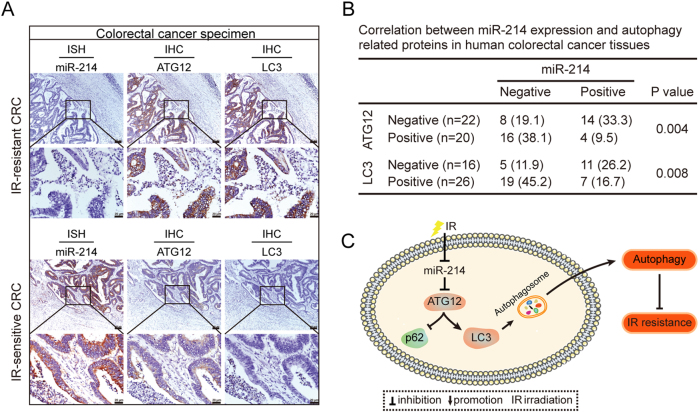
Fig. 6. Correlations between miR-214 and ATG12, LC3 in human CRC tissues.
a In situ hybridization (ISH) and immunohistochemistry analysis (IHC) of miR-214, ATG12, and LC3 in continuous sections of paraffin-embedded human CRC specimen. Bars represent 50 μm. Representative images were shown. b Correlations between miR-214 expression and ATG12 and LC3 in forty-two cases of human CRC tissues. c Schematic of miR-214 in the regulation of cell response to irradiation. Briefly, miR-214 inhibits cell autophagy by directly targeting ATG12. IR exposure enhances cell autophagy and inhibits apoptosis through downregulation of miR-214, thus causing IR resistance

References

    1. Torre LA, et al. Global cancer statistics, 2012. Ca Cancer J. Clin. 2015;65:87–108. doi: 10.3322/caac.21262. - DOI - PubMed
    1. Chen K, Rajewsky N. The evolution of gene regulation by transcription factors and microRNAs. Nat. Rev. Genet. 2007;8:93–103. doi: 10.1038/nrg1990. - DOI - PubMed
    1. Chaudhry MA, Sachdeva H, Omaruddin RA. Radiation-induced microRNA modulation in glioblastoma cells differing in DNA-repair pathways. DNA Cell Biol. 2010;29:553–561. doi: 10.1089/dna.2009.0978. - DOI - PubMed
    1. Josson S, Sung SY, Lao K, Chung LW, Johnstone PA. Radiation modulation of microRNA in prostate cancer cell lines. Prostate. 2008;68:1599–1606. doi: 10.1002/pros.20827. - DOI - PMC - PubMed
    1. Anastasov N, et al. Radiation resistance due to high expression of miR-21 and G2/M checkpoint arrest in breast cancer cells. Radiat. Oncol. 2012;7:206. doi: 10.1186/1748-717X-7-206. - DOI - PMC - PubMed

LinkOut - more resources