


Solid-State Nanopore
- PMID: 29460116
- PMCID: PMC5818388
- DOI: 10.1186/s11671-018-2463-z
Solid-State Nanopore
Abstract
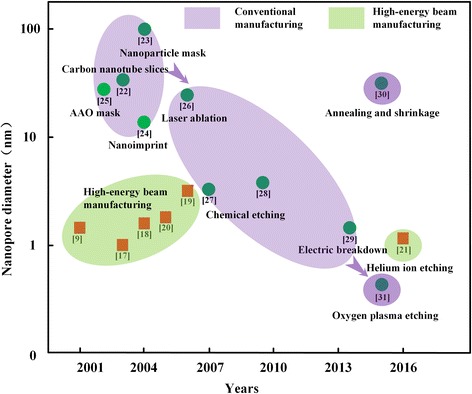
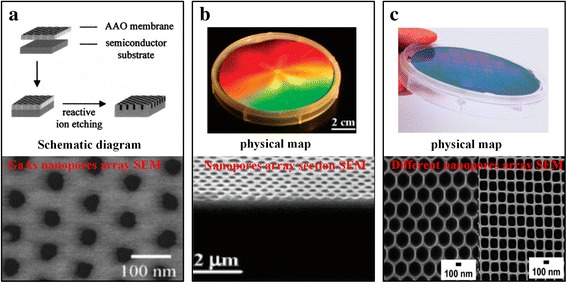
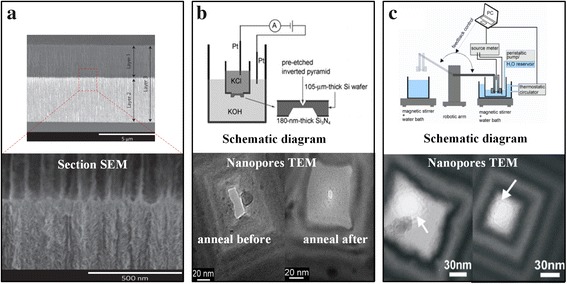
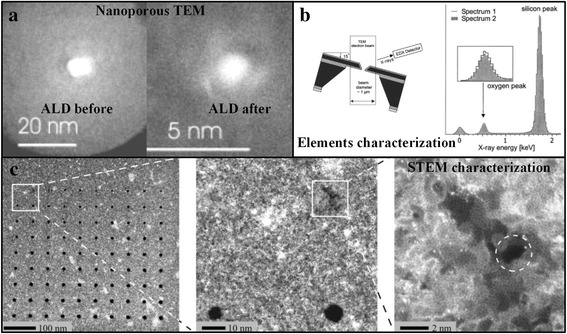
Solid-state nanopore has captured the attention of many researchers due to its characteristic of nanoscale. Now, different fabrication methods have been reported, which can be summarized into two broad categories: "top-down" etching technology and "bottom-up" shrinkage technology. Ion track etching method, mask etching method chemical solution etching method, and high-energy particle etching and shrinkage method are exhibited in this report. Besides, we also discussed applications of solid-state nanopore fabrication technology in DNA sequencing, protein detection, and energy conversion.
Keywords: Applications; Fabrication; Solid-state nanopore.
Conflict of interest statement
Competing Interests
The authors declare that they have no competing interests.
Publisher’s Note
Springer Nature remains neutral with regard to jurisdictional claims in published maps and institutional affiliations.
Figures
References
-
- Gao R, Ying YL, Yan BY, Long YT. An integrated current measurement system for nanopore analysis. Chin Sci Bull. 2014;59:4968–4973. doi: 10.1007/s11434-014-0656-0. - DOI
-
- Kaji N, Yasui T, Baba Y. Nanobiodevices for fast DNA separation and detection toward nanopore-based DNA sequencing. APS Meeting2014
Publication types
Grants and funding
LinkOut - more resources
Full Text Sources
Other Literature Sources
