


Heavy Metal Exposure and Metabolic Syndrome: Evidence from Human and Model System Studies
- PMID: 29460222
- PMCID: PMC6053628
- DOI: 10.1007/s40572-018-0182-3
Heavy Metal Exposure and Metabolic Syndrome: Evidence from Human and Model System Studies
Abstract
Purpose of review: Metabolic syndrome (MS) describes the co-occurrence of conditions that increase one's risk for heart disease and other disorders such as diabetes and stroke. The worldwide increase in the prevalence of MS cannot be fully explained by lifestyle factors such as sedentary behavior and caloric intake alone. Environmental exposures, such as heavy metals, have been implicated, but results are conflicting and possible mechanisms remain unclear. To assess recent progress in determining a possible role between heavy metal exposure and MS, we reviewed epidemiological and model system data for cadmium (Cd), lead (Pb), and mercury (Hg) from the last decade.
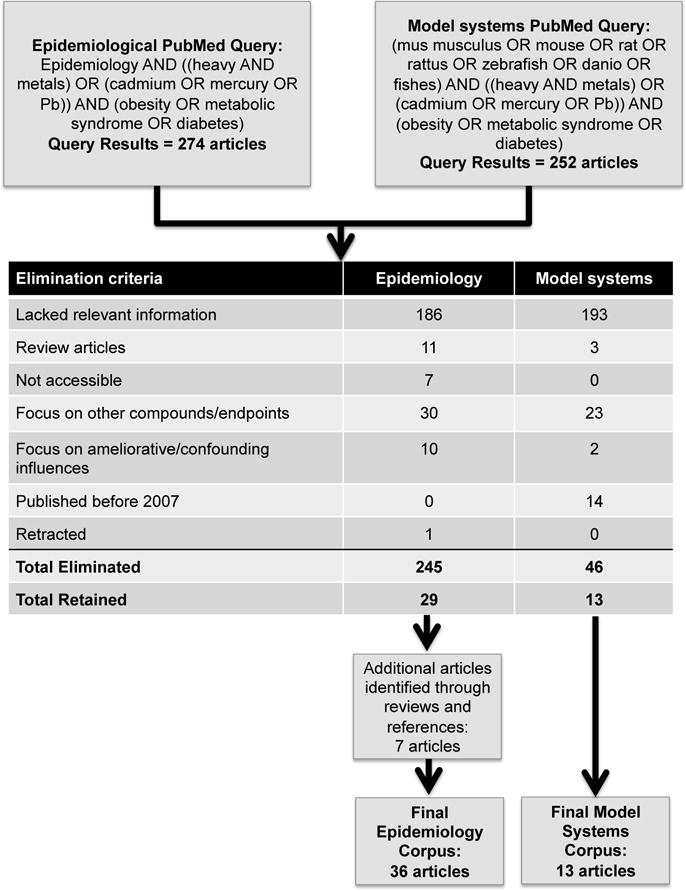
Recent findings: Data from 36 epidemiological studies involving 17 unique countries/regions and 13 studies leveraging model systems are included in this review. Epidemiological and model system studies support a possible association between heavy metal exposure and MS or comorbid conditions; however, results remain conflicting. Epidemiological studies were predominantly cross-sectional and collectively, they highlight a global interest in this question and reveal evidence of differential susceptibility by sex and age to heavy metal exposures. In vivo studies in rats and mice and in vitro cell-based assays provide insights into potential mechanisms of action relevant to MS including altered regulation of lipid and glucose homeostasis, adipogenesis, and oxidative stress. Heavy metal exposure may contribute to MS or comorbid conditions; however, available data are conflicting. Causal inference remains challenging as epidemiological data are largely cross-sectional; and variation in study design, including samples used for heavy metal measurements, age of subjects at which MS outcomes are measured; the scope and treatment of confounding factors; and the population demographics vary widely. Prospective studies, standardization or increased consistency across study designs and reporting, and consideration of molecular mechanisms informed by model system studies are needed to better assess potential causal links between heavy metal exposure and MS.
Keywords: Cadmium; Diabetes; Heavy metals; Mercury; Metabolic syndrome; Pb.
Conflict of interest statement
Antonio Planchart, Adrian Green, Cathrine Hoyo, and Carolyn J. Mattingly declare that they have no conflict of interest.
Figures
References
-
- Aguilar M, Bhuket T, Torres S, Liu B, Wong RJ. Prevalence of the metabolic syndrome in the United States, 2003–2012. JAMA. 2015 May 19;313(19):1973–4. - PubMed
-
- Ogden CL, Carroll MD, Fryar CD, Flegal KM. Prevalence of Obesity Among Adults and Youth: United States, 2011–2014. NCHS data brief. 2015 Nov;(219):1–8. - PubMed
Publication types
MeSH terms
Substances
Grants and funding
LinkOut - more resources
Full Text Sources
Other Literature Sources
Medical
