


Cancer in adolescents and young adults living with HIV
- PMID: 29461329
- PMCID: PMC6047517
- DOI: 10.1097/COH.0000000000000460
Cancer in adolescents and young adults living with HIV
Abstract
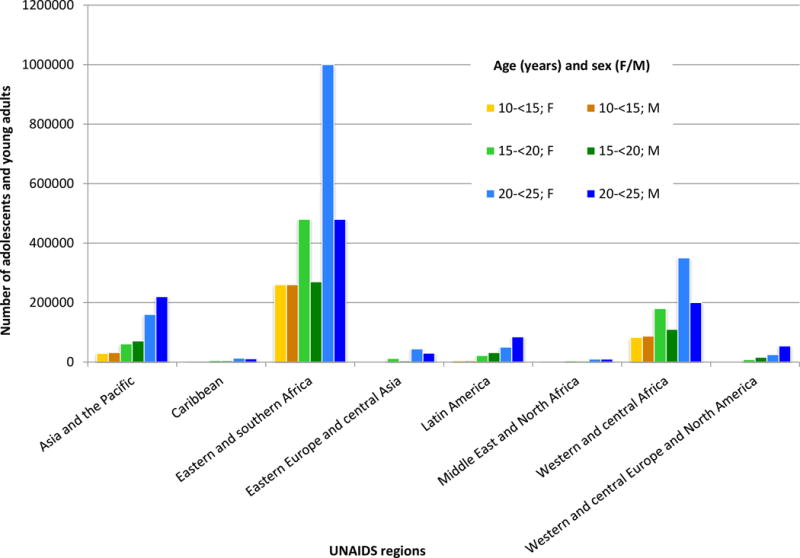
Purpose of review: Adults living with HIV have an increased risk of malignancy yet there is little data for adolescents and young adults. We reviewed recently published cancer epidemiology, treatment, and outcome data for adolescents and young adults living with HIV (AYALHIV) aged 10 to less than 25 years between 2016 and 2017.
Recent findings: AYALHIV are at increased risk of developing cancer compared to their uninfected peers. Kaposi sarcoma and non-Hodgkin lymphoma occur most frequently with variation by geographical region. Increased cancer risk is associated with HIV-related immunosuppression and coinfection with oncogenic viruses. Published data, particularly on posttreatment outcomes, remain limited and analyses are hampered by lack of data disaggregation by age and route of HIV transmission.
Summary: Although data are sparse, the increased cancer risk for AYALHIV is the cause for concern and must be modified by improving global access and uptake of antiretroviral therapy, human papilloma virus (HPV) and hepatitis B virus (HBV) vaccination, screening for hepatitis B and C infection, and optimized cancer screening programs. Education aimed at reducing traditional modifiable cancer risk factors should be embedded within multidisciplinary services for AYALHIV.
Conflict of interest statement
No conflicts of interests were declared.
Figures
References
-
- UNAIDS. UNAIDS 2017 estimates [Internet] 2017
-
- Revised surveillance case definition for HIV infection–United States, 2014. MMWR Recomm Rep. 2014;63:1–10. - PubMed
-
- World Health Organization. WHO case definitions of HIV for surveillance and revised clinical staging and immunological classification of HIV-related disease in adults and children. 2007
-
- Borges ÁH, Neuhaus J, Babiker AG, Henry K, Jain MK, Palfreeman A, Mugyenyi P, Domingo P, Hoffmann C, Read TRH, et al. Immediate Antiretroviral Therapy Reduces Risk of Infection-Related Cancer During Early HIV Infection. Clin Infect Dis. 2016;63:1668–1676. The paper presents a post hoc analysis of infection-related and infection-unrelated cancers in the Strategic Timing of Antiretroviral Treatment (START) randomised controlled trial. The results show significant reduction of infection-related cancer with immediate ART initiation. The benefit appears to be not solely attributable to viral load suppression and may be mediated by other mechanisms which require further evaluation. - PMC - PubMed
Publication types
MeSH terms
Grants and funding
LinkOut - more resources
Full Text Sources
Other Literature Sources
Medical
Research Materials
