Vocal development through morphological computation
- PMID: 29462148
- PMCID: PMC5834215
- DOI: 10.1371/journal.pbio.2003933
Vocal development through morphological computation
Abstract
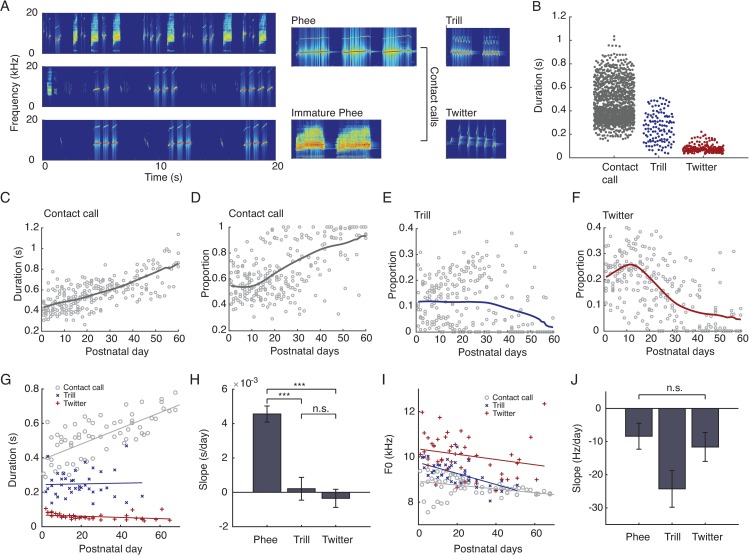
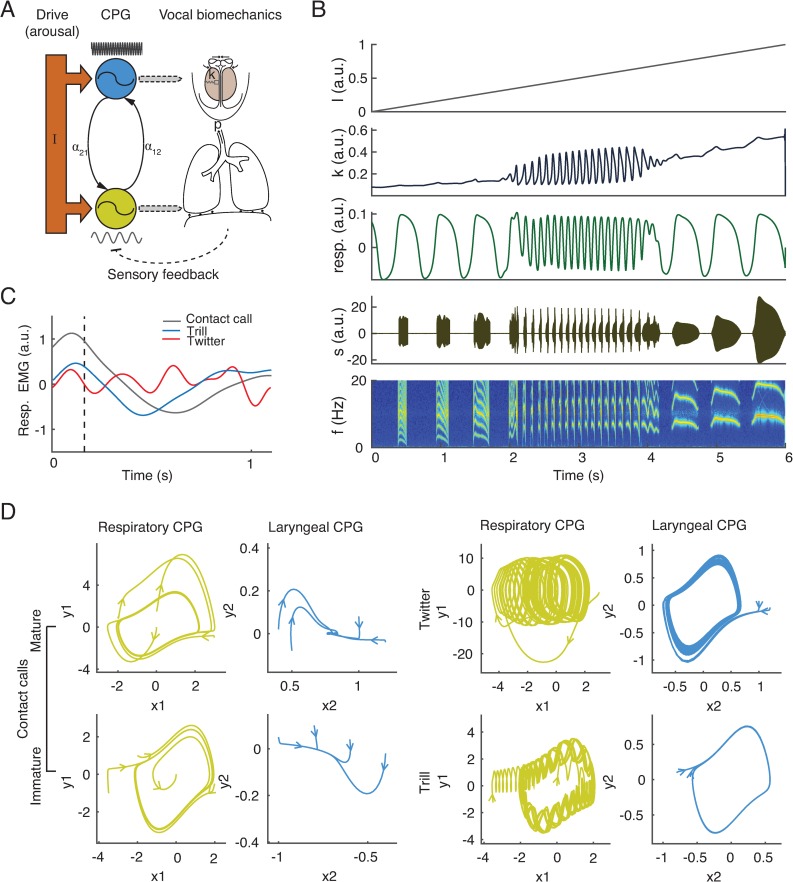
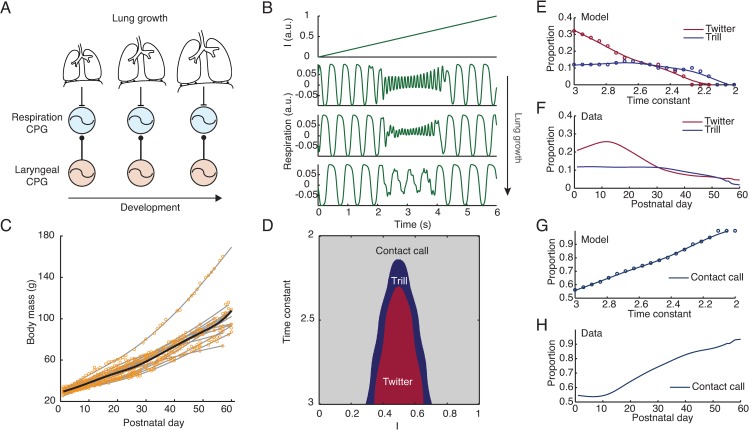
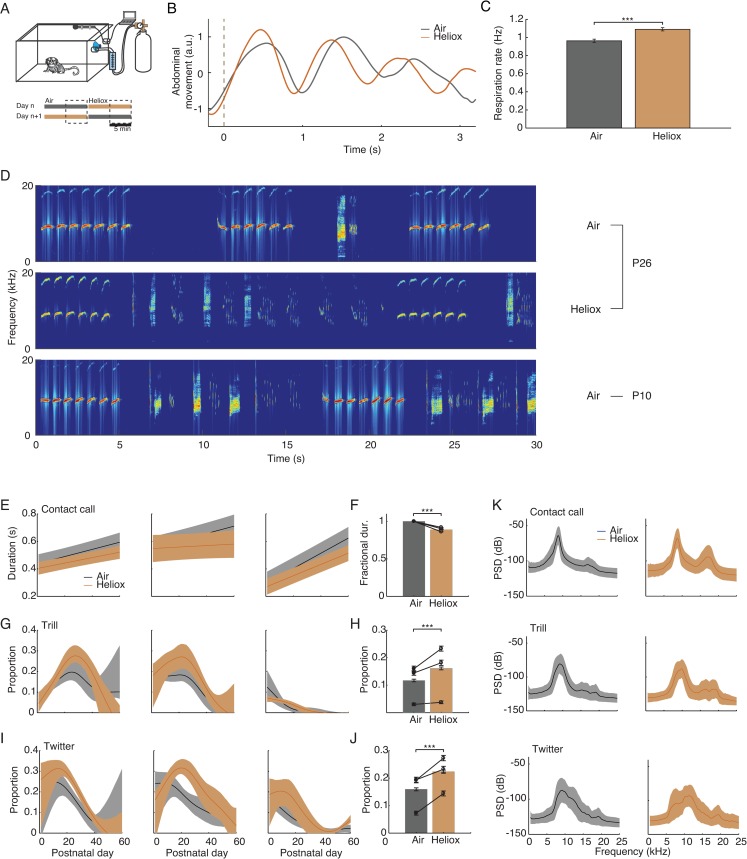
The vocal behavior of infants changes dramatically during early life. Whether or not such a change results from the growth of the body during development-as opposed to solely neural changes-has rarely been investigated. In this study of vocal development in marmoset monkeys, we tested the putative causal relationship between bodily growth and vocal development. During the first two months of life, the spontaneous vocalizations of marmosets undergo (1) a gradual disappearance of context-inappropriate call types and (2) an elongation in the duration of context-appropriate contact calls. We hypothesized that both changes are the natural consequences of lung growth and do not require any changes at the neural level. To test this idea, we first present a central pattern generator model of marmoset vocal production to demonstrate that lung growth can affect the temporal and oscillatory dynamics of neural circuits via sensory feedback from the lungs. Lung growth qualitatively shifted vocal behavior in the direction observed in real marmoset monkey vocal development. We then empirically tested this hypothesis by placing the marmoset infants in a helium-oxygen (heliox) environment in which air is much lighter. This simulated a reversal in development by decreasing the effort required to respire, thus increasing the respiration rate (as though the lungs were smaller). The heliox manipulation increased the proportions of inappropriate call types and decreased the duration of contact calls, consistent with a brief reversal of vocal development. These results suggest that bodily growth alone can play a major role in shaping the development of vocal behavior.
Conflict of interest statement
The authors have declared that no competing interests exist.
Figures
Comment in
-
Towards an integrated view of vocal development.PLoS Biol. 2018 Mar 22;16(3):e2005544. doi: 10.1371/journal.pbio.2005544. eCollection 2018 Mar. PLoS Biol. 2018. PMID: 29565974 Free PMC article.
References
-
- Chiel HJ, Beer RD (1997) The brain has a body: adaptive behavior emerges from interactions of nervous system, body and environment. Trends in Neurosciences 20: 553–557. - PubMed
-
- Tytell ED, Holmes P, Cohen AH (2011) Spikes alone do not behavior make: why neuroscience needs biomechanics. Current Opinion in Neurobiology 21: 816–822. doi: 10.1016/j.conb.2011.05.017 - DOI - PMC - PubMed
-
- Pfeifer R, Bongard J (2007) How the body shapes the way we think: a new view of intelligence: MIT press.
-
- Hauser H, Ijspeert AJ, Füchslin RM, Pfeifer R, Maass W (2011) Towards a theoretical foundation for morphological computation with compliant bodies. Biological cybernetics 105: 355–370. doi: 10.1007/s00422-012-0471-0 - DOI - PubMed
-
- Laschi C, Mazzolai B (2016) Lessons from Animals and Plants: The Symbiosis of Morphological Computation and Soft Robotics. IEEE Robotics & Automation Magazine 23: 107–114.
Publication types
MeSH terms
Substances
Grants and funding
LinkOut - more resources
Full Text Sources
Other Literature Sources
Molecular Biology Databases
Miscellaneous