


Biosorption: An Interplay between Marine Algae and Potentially Toxic Elements-A Review
- PMID: 29463058
- PMCID: PMC5852493
- DOI: 10.3390/md16020065
Biosorption: An Interplay between Marine Algae and Potentially Toxic Elements-A Review
Abstract
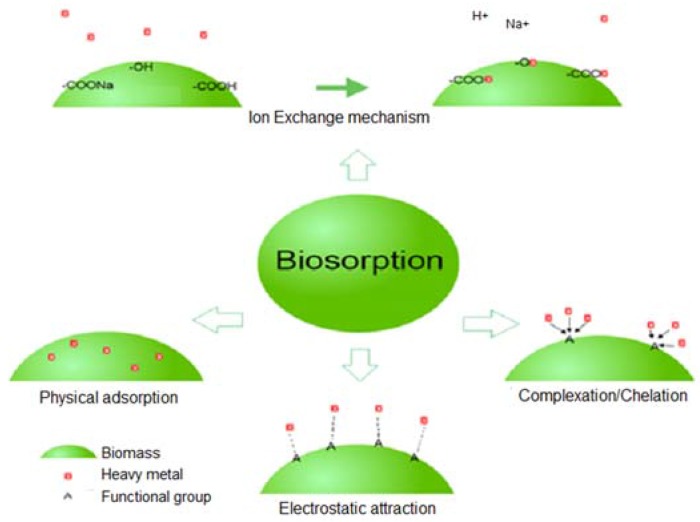
In recent decades, environmental pollution has emerged as a core issue, around the globe, rendering it of fundamental concern to eco-toxicologists, environmental biologists, eco-chemists, pathologists, and researchers from other fields. The dissolution of polluting agents is a leading cause of environmental pollution of all key spheres including the hydrosphere, lithosphere, and biosphere, among others. The widespread occurrence of various pollutants including toxic heavy metals and other emerging hazardous contaminants is a serious concern. With increasing scientific knowledge, socioeconomic awareness, human health problems, and ecological apprehensions, people are more concerned about adverse health outcomes. Against this background, several removal methods have been proposed and implemented with the aim of addressing environmental pollution and sustainable and eco-friendly development. Among them, the biosorption of pollutants using naturally inspired sources, e.g., marine algae, has considerable advantages. In the past few years, marine algae have been extensively studied due to their natural origin, overall cost-effective ratio, and effectiveness against a broader pollutant range; thus, they are considered a potential alternative to the conventional methods used for environmental decontamination. Herein, an effort has been made to highlight the importance of marine algae as naturally inspired biosorbents and their role in biosorption. Biosorption mechanisms and factors affecting biosorption activities are also discussed in this review. The utilization of marine algae as a biosorbent for the removal of numerous potentially toxic elements has also been reviewed.
Keywords: biosorbent; biosorption; environmental pollution; marine algae; toxic elements.
Conflict of interest statement
The authors report no conflicting interest in any capacity, competing or financial.
Figures

References
-
- Ahmed I., Iqbal H.M.N., Dhama K. Enzyme-based biodegradation of hazardous pollutants—An overview. J. Exp. Biol. Agric. Sci. 2017;5:402–411. doi: 10.18006/2017.5(4).402.411. - DOI
-
- Ullah S., Zuberi A., Alagawany M., Farag M.R., Dadar M., Karthik K., Tiwari R., Dhama K., Iqbal H.M.N. Cypermethrin induced toxicities in fish and adverse health outcomes: Its prevention and control measure adaptation. J. Environ. Manag. 2018;206:863–871. doi: 10.1016/j.jenvman.2017.11.076. - DOI - PubMed
-
- Park D., Yun Y.S., Park J.M. The past, present, and future trends of biosorption. Biotechnol. Bioproc. Eng. 2010;15:86–102. doi: 10.1007/s12257-009-0199-4. - DOI
Publication types
MeSH terms
Substances
LinkOut - more resources
Full Text Sources
Other Literature Sources
Miscellaneous
