


Spatial modelling of malaria cases associated with environmental factors in South Sumatra, Indonesia
- PMID: 29463239
- PMCID: PMC5819714
- DOI: 10.1186/s12936-018-2230-8
Spatial modelling of malaria cases associated with environmental factors in South Sumatra, Indonesia
Abstract
Background: Malaria, a parasitic infection, is a life-threatening disease in South Sumatra Province, Indonesia. This study aimed to investigate the spatial association between malaria occurrence and environmental risk factors.
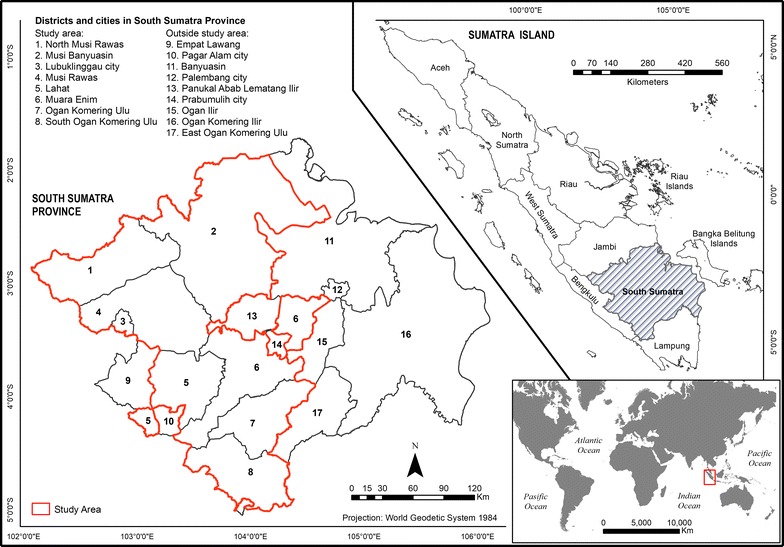
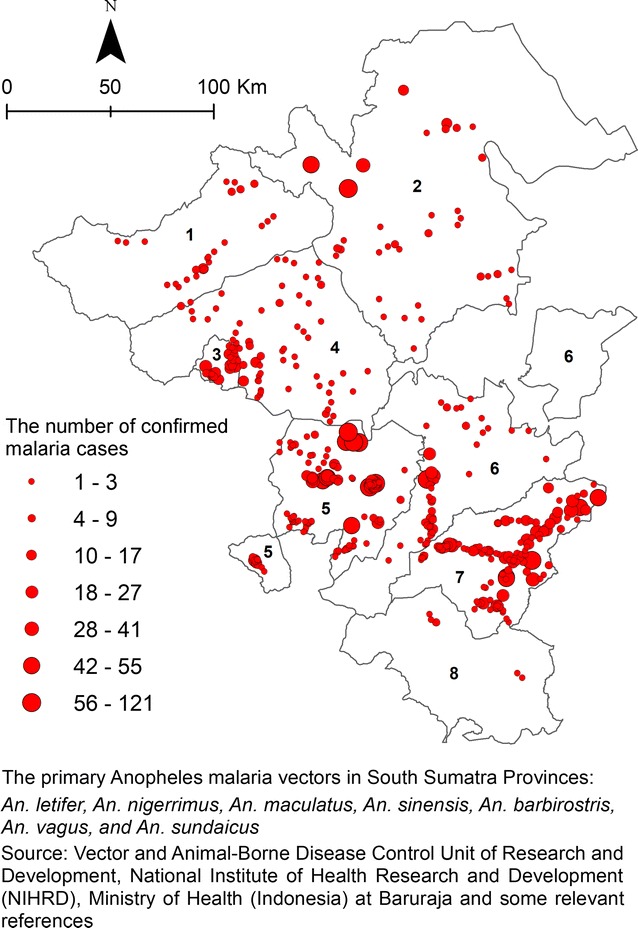
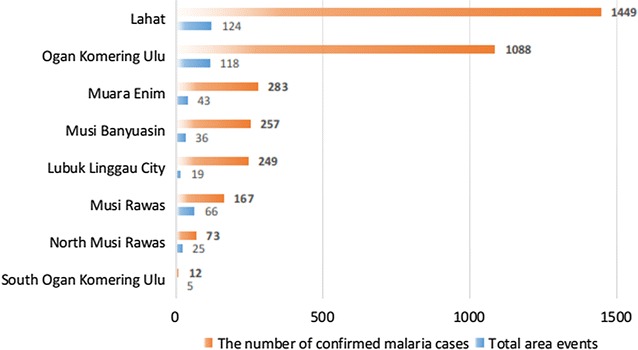
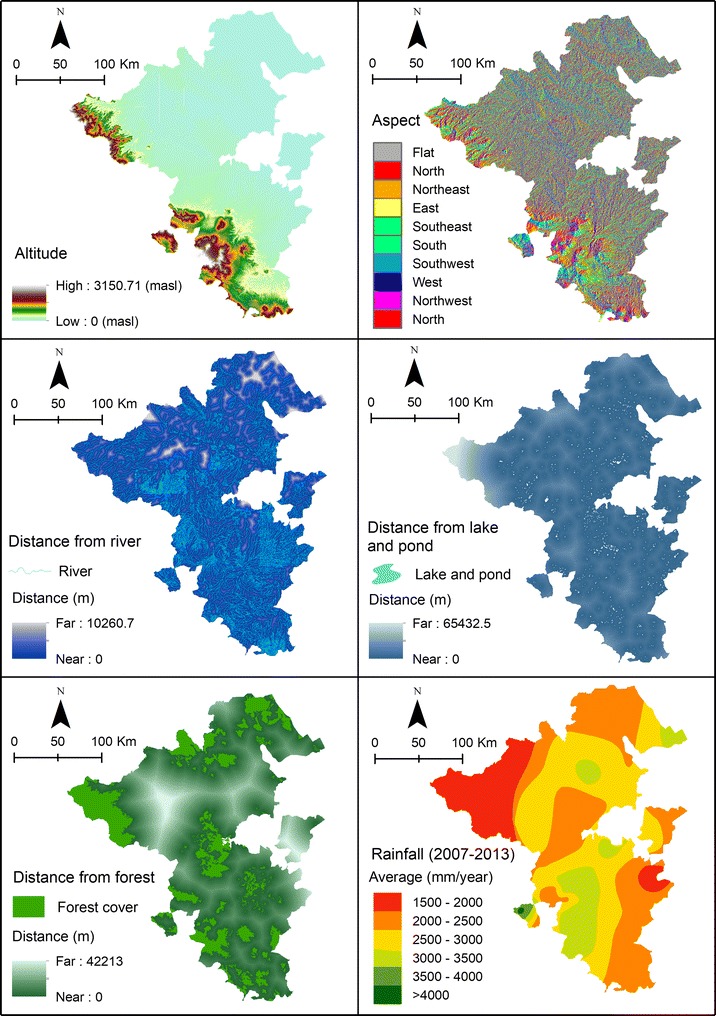
Methods: The number of confirmed malaria cases was analysed for the year 2013 from the routine reporting of the Provincial Health Office of South Sumatra. The cases were spread over 436 out of 1613 villages. Six potential ecological predictors of malaria cases were analysed in the different regions using ordinary least square (OLS) and geographically weighted regression (GWR). The global pattern and spatial variability of associations between malaria cases and the selected potential ecological predictors was explored.
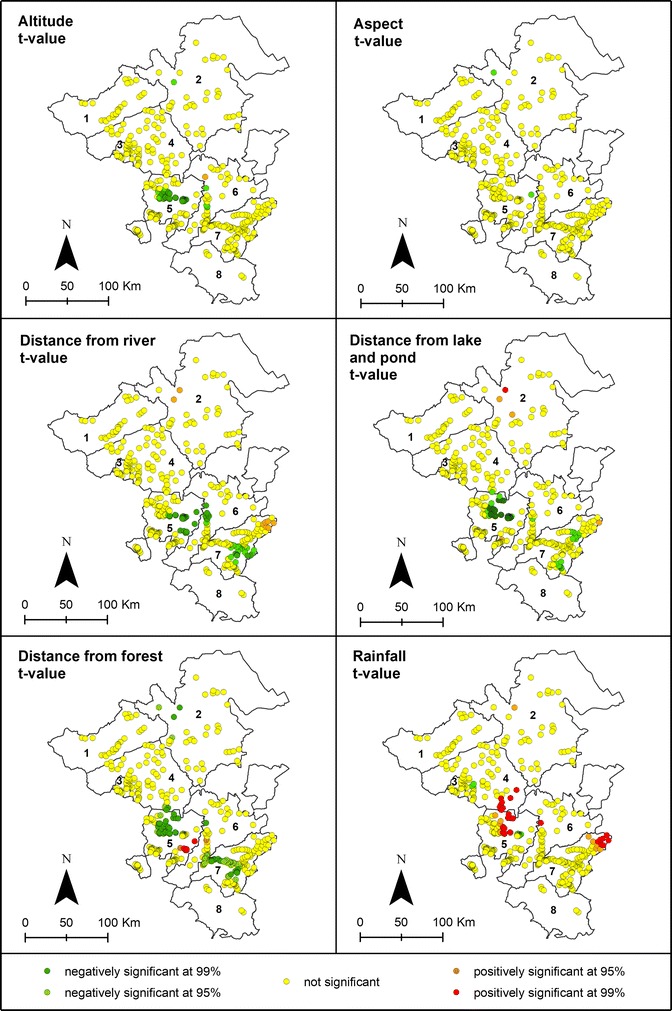
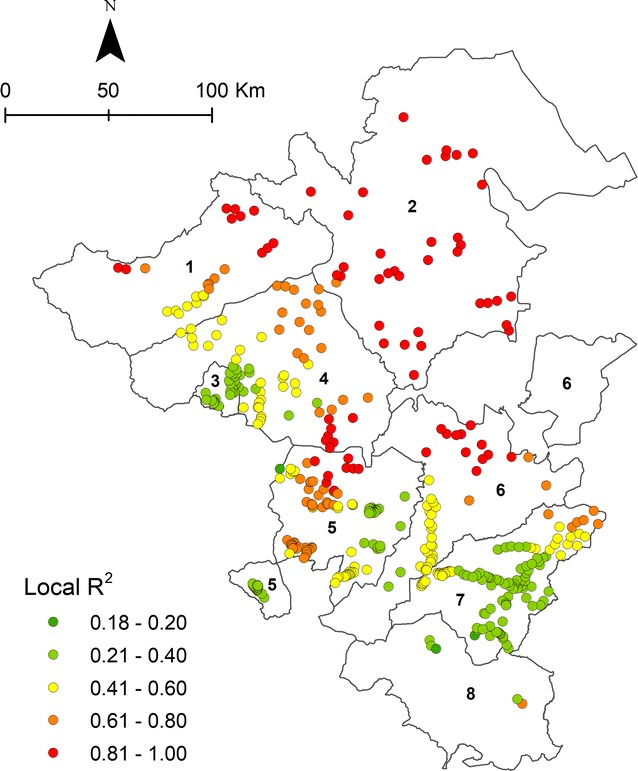
Results: The importance of different environmental and geographic parameters for malaria was shown at global and village-level in South Sumatra, Indonesia. The independent variables altitude, distance from forest, and rainfall in global OLS were significantly associated with malaria cases. However, as shown by GWR model and in line with recent reviews, the relationship between malaria and environmental factors in South Sumatra strongly varied spatially in different regions.
Conclusions: A more in-depth understanding of local ecological factors influencing malaria disease as shown in present study may not only be useful for developing sustainable regional malaria control programmes, but can also benefit malaria elimination efforts at village level.
Keywords: Akaike information criterion (AIC); Distance to water; Elevation; Geographically weighted regression (GWR); Local climate; Ordinary least squares (OLS); Physical environment; Rainfall; Sumatra.
Figures


References
-
- Ministry of Health Republic of Indonesia. Decree of the Minister of Health Republic of Indonesia Number 293/MENKES/SK/IV/2009 on Elimination of Malaria in Indonesia, Jakarta. Ministry of Health (MoH) of Indonesia, 2009. Retrieved from http://perpustakaan.depkes.go.id/.
-
- Ministry of Health Republic of Indonesia. South Sumatera Province Health Profile 2013. Palembang: South Sumatra Provincial Health Office (Indonesia), 2014. Retrieved from http://www.depkes.go.id/.
-
- Ministry of Health Republic of Indonesia. Malaria management: guideline. Jakarta: Directorate of vector borne disease and zoonosis control, directorate general of disease prevention and control, ministry of health (MoH) of Indonesia, 2014. Retrieved from http://eliminasimalaria.blogspot.de/p/download.html.
-
- WHO and UNICEF. Achieving the malaria MDG target: reversing the incidence of malaria 2000–2015. Geneva: World Health Organization, 2015. Retrieved from http://www.who.int/malaria/. ISBN: 978 92 4 150944 2.
-
- WHO. Regional action framework for malaria control and elimination in the Western Pacific: 2016–2020. Manila, Philippines WHO Regional Office for the Western Pacific, 2017. Retrieved from http://iris.wpro.who.int/handle/10665.1/13578. ISBN: 9789290618157.
MeSH terms
LinkOut - more resources
Full Text Sources
Other Literature Sources
Medical
