


Mycoplasma genitalium Infection in Kenyan and US Women
- PMID: 29465649
- PMCID: PMC6043389
- DOI: 10.1097/OLQ.0000000000000799
Mycoplasma genitalium Infection in Kenyan and US Women
Abstract
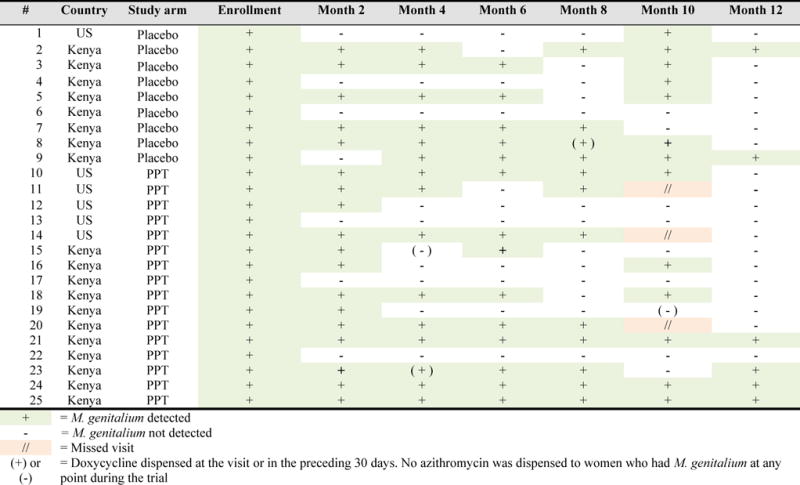
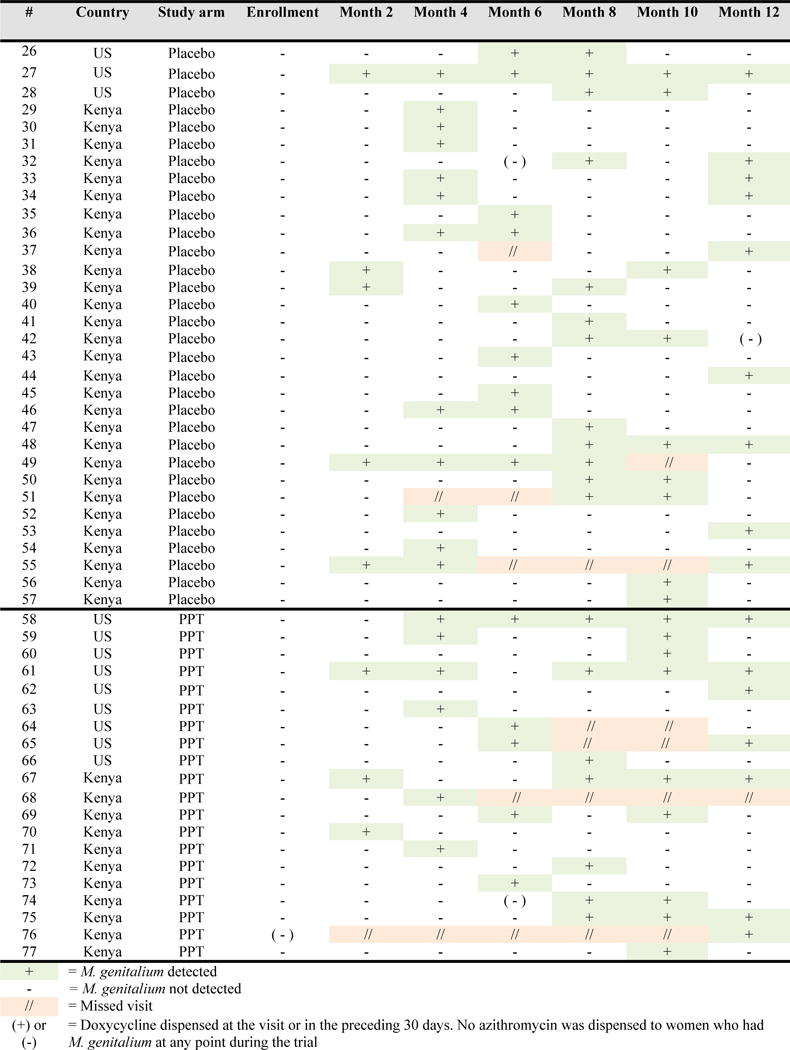
Background: Little is known about the natural history of Mycoplasma genitalium (MG) infection in women. We retrospectively tested archived vaginal fluid samples to assess MG prevalence, incidence, persistence, recurrence and antimicrobial resistance markers among women participating in the Preventing Vaginal Infections trial, a randomized trial of monthly presumptive treatment to reduce vaginal infections.
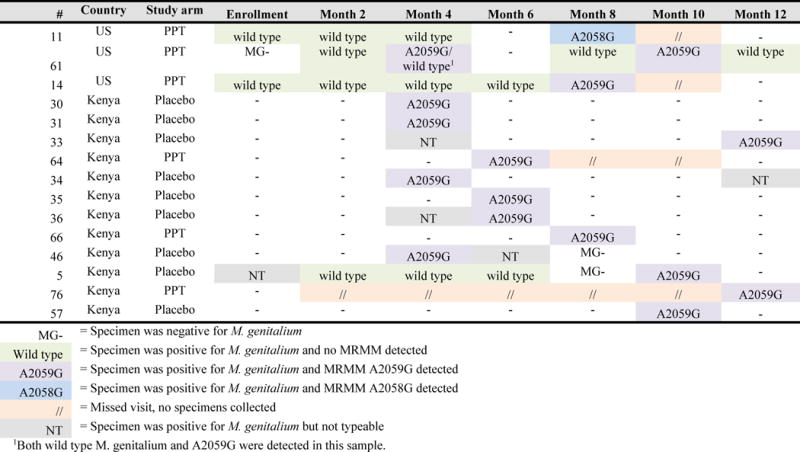
Methods: High-risk, nonpregnant, HIV-negative women aged 18 to 45 years from Kenya and the United States were randomized to receive metronidazole 750 mg + miconazole 200 mg intravaginal suppositories or placebo for 5 consecutive nights each month for 12 months. Clinician-collected swabs containing cervicovaginal fluid were tested for MG using Hologic nucleic acid amplification testing at enrollment and every other month thereafter. Specimens that were MG+ underwent additional testing for macrolide resistance-mediating mutations by DNA sequencing.
Results: Of 234 women enrolled, 221 had available specimens and 25 (11.3%) had MG at enrollment. Among 196 women without MG at enrollment, there were 52 incident MG infections (incidence, 33.4 per 100 person-years). Smoking was independently associated with incident MG infection (adjusted hazard ratio, 3.02; 95% confidence interval, 1.32-6.93), and age less than 25 years trended toward an association (adjusted hazard ratio, 1.70; 95% confidence interval, 0.95-3.06). Median time to clearance of incident MG infections was 1.5 months (interquartile range, 1.4-3.0 months). Of the 120 MG+ specimens, 16 specimens from 15 different women were macrolide resistance-mediating mutation positive (13.3%), with no difference by country.
Conclusions: M. genitalium infection is common among sexually active women in Kenya and the Southern United States. Given associations between MG and adverse reproductive health outcomes, this high burden of MG in reproductive-aged women could contribute to substantial morbidity.
Conflict of interest statement
JEB has received donated reagents and test kits from Hologic. RSM currently receives research funding, paid to the University of Washington, from Hologic. J. Schwebke has received consultancy payments from Akesis, Hologic, Symbiomix, and Starpharma, and has grants/pending grants from Akesis, BD Diagnostic, Hologic, Cepheid, Quidel, Symbiomix, Starpharma, and Viamet. LEM has received donated reagents and test kits from Hologic and honoraria for scientific advisory board membership from Hologic and Qiagen, Inc. JSJ has received speaker fees and travel support and research funding via Serum Statens Instiutue (SSI) from Hologic and SSI has performed contract work for SpeeDx, Diagenode, Nytor, Cempra, Angelini, and Nabriva. All other authors declare that they do not have a commercial or other association that might pose a conflict of interest.
Figures
References
-
- Thurman AR, et al. Mycoplasma genitalium symptoms, concordance and treatment in high-risk sexual dyads. Int J STD AIDS. 2010;21(3):177–83. - PubMed
Publication types
MeSH terms
Substances
Grants and funding
LinkOut - more resources
Full Text Sources
Other Literature Sources
Medical
