


Generation of human brain region-specific organoids using a miniaturized spinning bioreactor
- PMID: 29470464
- PMCID: PMC6241211
- DOI: 10.1038/nprot.2017.152
Generation of human brain region-specific organoids using a miniaturized spinning bioreactor
Abstract
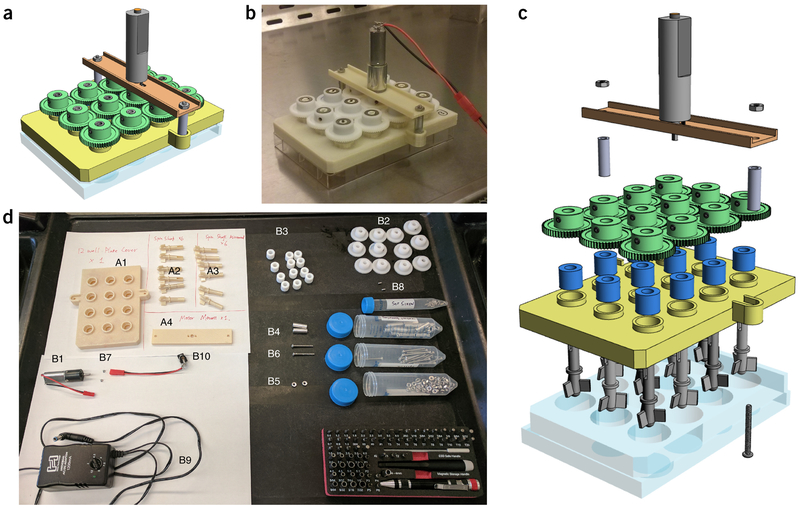
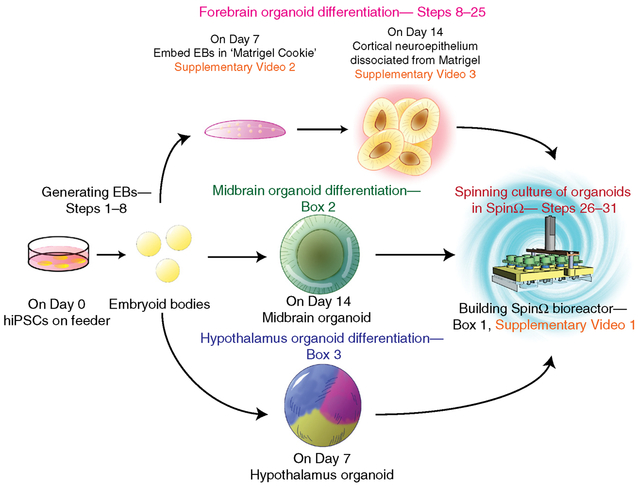
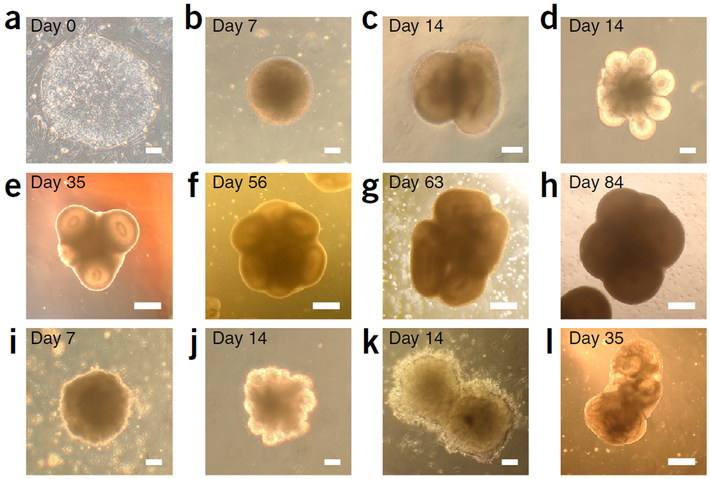
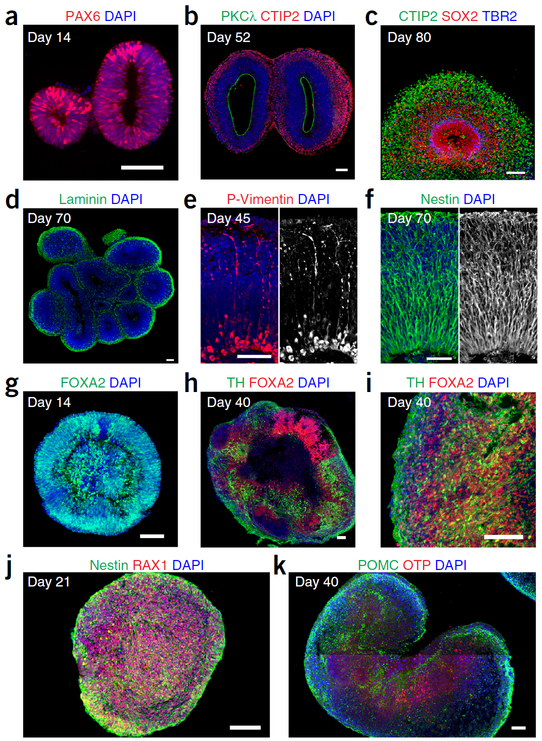
Human brain organoids, 3D self-assembled neural tissues derived from pluripotent stem cells, are important tools for studying human brain development and related disorders. Suspension cultures maintained by spinning bioreactors allow for the growth of large organoids despite the lack of vasculature, but commercially available spinning bioreactors are bulky in size and have low throughput. Here, we describe the procedures for building the miniaturized multiwell spinning bioreactor SpinΩ from 3D-printed parts and commercially available hardware. We also describe how to use SpinΩ to generate forebrain, midbrain and hypothalamus organoids from human induced pluripotent stem cells (hiPSCs). These organoids recapitulate key dynamic features of the developing human brain at the molecular, cellular and structural levels. The reduction in culture volume, increase in throughput and reproducibility achieved using our bioreactor and region-specific differentiation protocols enable quantitative modeling of brain disorders and compound testing. This protocol takes 14-84 d to complete (depending on the type of brain region-specific organoids and desired developmental stages), and organoids can be further maintained over 200 d. Competence with hiPSC culture is required for optimal results.
Conflict of interest statement
Figures
Comment in
-
Mini and customized low-cost bioreactors for optimized high-throughput generation of tissue organoids.Stem Cell Investig. 2018 Oct 10;5:33. doi: 10.21037/sci.2018.09.06. eCollection 2018. Stem Cell Investig. 2018. PMID: 30498744 Free PMC article. No abstract available.
References
-
- Takahashi K et al. Induction of pluripotent stem cells from adult human fibroblasts by defined factors. Cell 131, 861–872 (2007). - PubMed
Publication types
MeSH terms
Grants and funding
LinkOut - more resources
Full Text Sources
Other Literature Sources
