. 2018 May:163:163-173.
doi: 10.1016/j.biomaterials.2018.02.014. Epub 2018 Feb 13.

Targeting CD14 on blood derived cells improves intracortical microelectrode performance

Affiliations

Targeting CD14 on blood derived cells improves intracortical microelectrode performance

Hillary W Bedell et al. Biomaterials. 2018 May.

Abstract

Intracortical microelectrodes afford researchers an effective tool to precisely monitor neural spiking activity. Additionally, intracortical microelectrodes have the ability to return function to individuals with paralysis as part of a brain computer interface. Unfortunately, the neural signals recorded by these electrodes degrade over time. Many strategies which target the biological and/or materials mediating failure modes of this decline of function are currently under investigation. The goal of this study is to identify a precise cellular target for future intervention to sustain chronic intracortical microelectrode performance. Previous work from our lab has indicated that the Cluster of Differentiation 14/Toll-like receptor pathway (CD14/TLR) is a viable target to improve chronic laminar, silicon intracortical microelectrode recordings. Here, we use a mouse bone marrow chimera model to selectively knockout CD14, an innate immune receptor, from either brain resident microglia or blood-derived macrophages, in order to understand the most effective targets for future therapeutic options. Using single-unit recordings we demonstrate that inhibiting CD14 from the blood-derived macrophages improves recording quality over the 16 week long study. We conclude that targeting CD14 in blood-derived cells should be part of the strategy to improve the performance of intracortical microelectrodes, and that the daunting task of delivering therapeutics across the blood-brain barrier may not be needed to increase intracortical microelectrode performance.

Keywords: CD14; Electrophysiology; Gliosis; Innate immunity; Intracortical microelectrodes; Neuroinflammation.


Figures

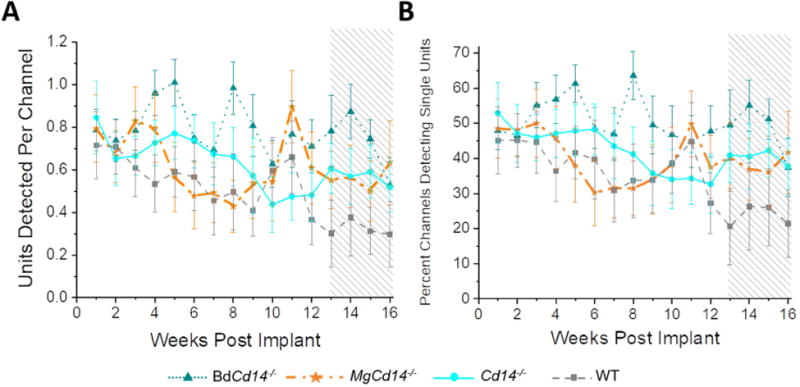
Figure 1
Figure 1. Recording performance for all four animal models
Number of single units detected per working channel (A) and percentage of working channels detecting single units (B). Shaded region on the plots represents the CMS time course.
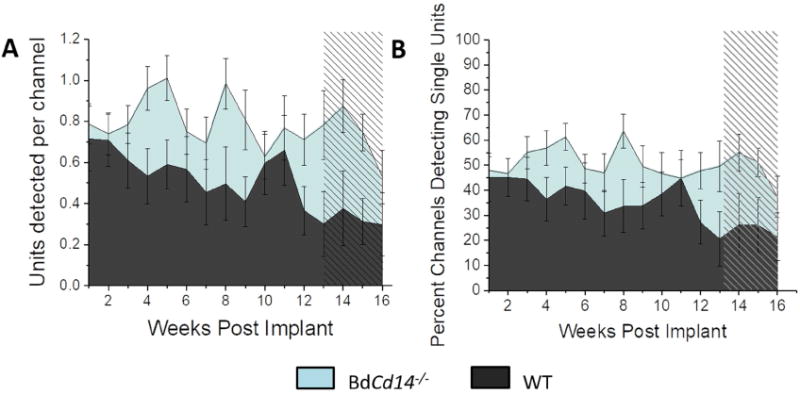
Figure 2
Figure 2. Recording performance for removing BdCD14 versus WT
Number of single units detected per working channel (A) and percentage of working channels detecting single units (B). Shaded region on the plots represents the CMS time course.
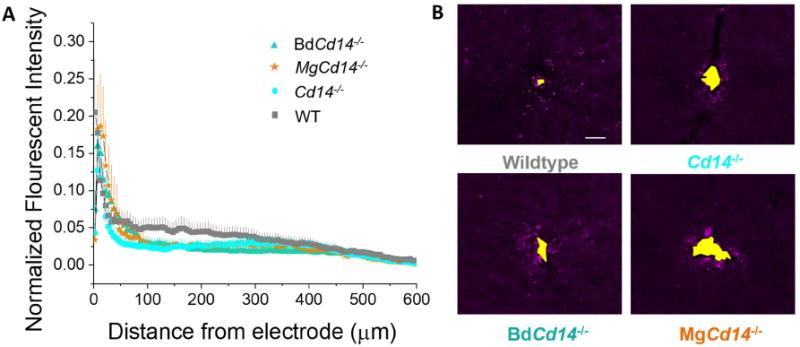
Figure 3
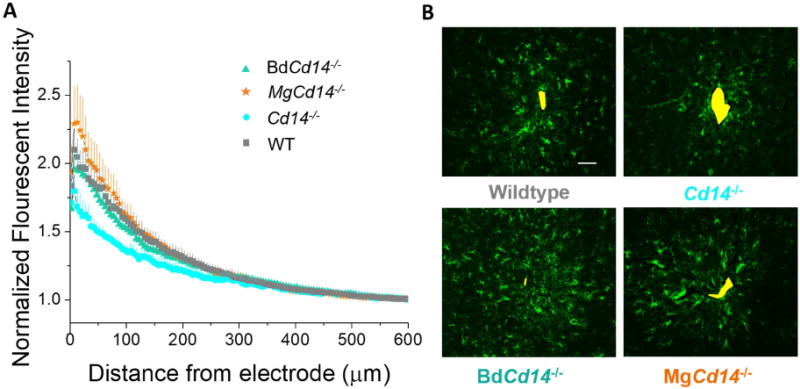
Figure 3. Immunohistochemical evaluation of inflammatory activated microglia and macrophages
(A) Microglial and macrophage activation evaluated as CD68 expression with respect to distance from the explanted microelectrode hole (μm). No significant differences were observed among experimental groups. (B) Representative images from tissue derived from ∼ 480 - 800 μm deep from surface of brain. Yellow area represents hole left by explanted probe. Scale bar: 50 μm.
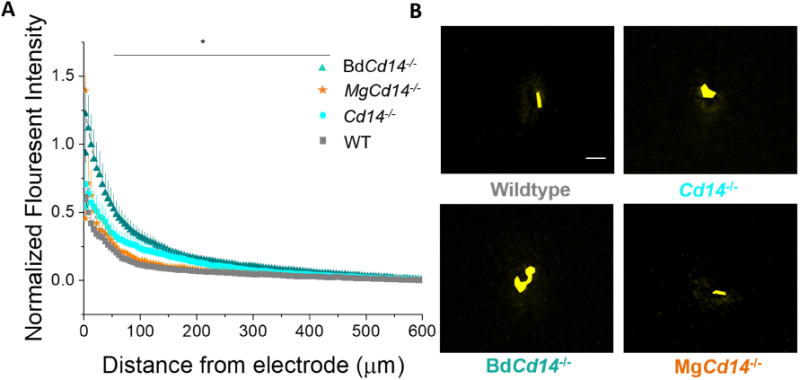
Figure 4
Figure 4. Immunohistochemical evaluation of blood brain barrier permeability
(A) Blood brain barrier permeability evaluated as IgG expression with respect to distance from the explanted microelectrode hole (μm). Significant differences between wildtype and BdCd14-/- were observed from 50-450 μm away from electrode-tissue interface, * p<0.05). (B) Representative images from tissue derived from ∼380 - 830 μm deep from surface of brain. Yellow area represents hole left by explanted probe. Scale bar: 50 μm
Figure 5
Figure 5. Immunohistochemical evaluation of astrocyte encapsulation
(A) Astrocyte encapsulation evaluated as GFAP expression with respect to distance from the explanted microelectrode hole (μm). No significant differences were observed among experimental groups. (B) Representative images from tissue derived from ∼ 380 - 940 μm deep from surface of brain. Yellow area represents hole left by explanted probe. Scale bar: 50 μm
Figure 6
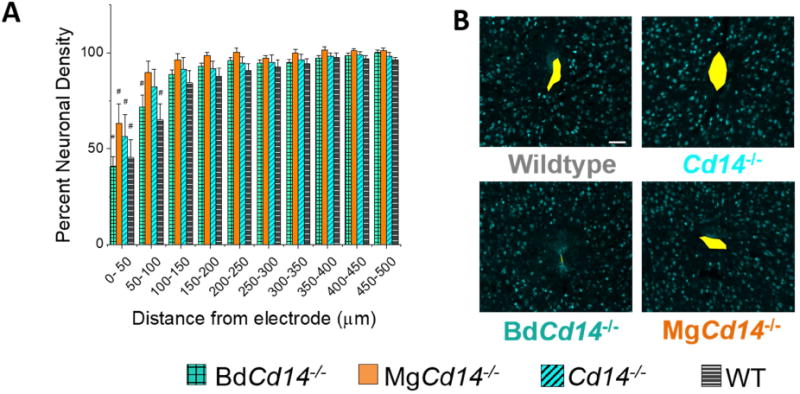
Figure 6. Immunohistochemical evaluation of neuronal density
(A) Neuronal density evaluated as NeuN+ counts with respect to distance from the explanted microelectrode hole (μm). No significant differences were observed among experimental groups. Neuronal density is significantly different from background MgCd14-/- and wildtype between 0 and 50 μm from the microelectrode hole, and Cd14-/-and BdCd14-/- between 0 and 100 μm from the microelectrode hole, # p<0.05. (B) Representative images from tissue acquired from ∼625-825 μm deep from surface of brain. Yellow area represents hole left by explanted probe. Scale bar: 50 μm
Figure 7
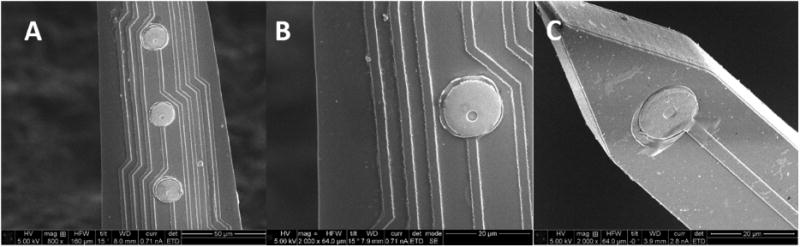
Figure 7. Representative SEM images of post-explant and non-implanted laminar, silicon IMEs
(A) Probe explanted after 16 week study (800× magnification). (B) Probe explanted after 16 week study (2000× magnification). (C) Non-implanted probe (2000× magnification).
Figure 8
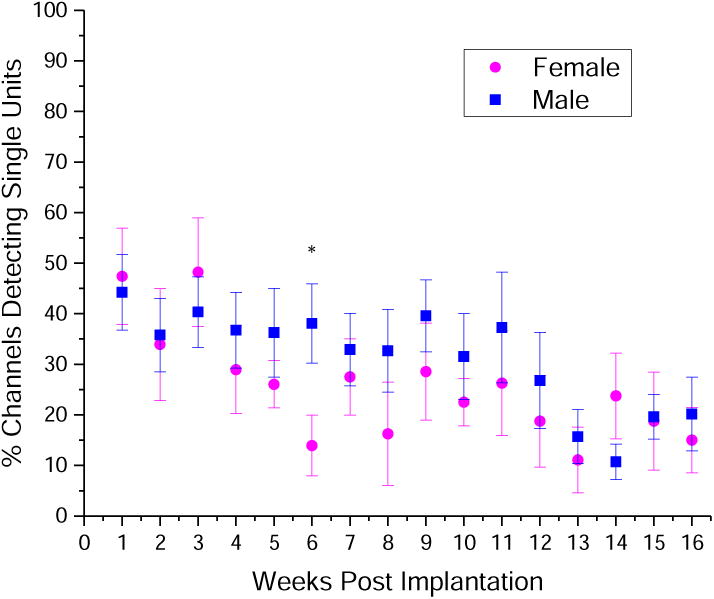
Figure 8. Sex as a Biological Variable
Both male (n=11) and female (n=8) mice were implanted with control NeuroNexus Single shank, 16 channel Michigan style electrodes in primary motor cortex. Over a 16 week trial, only one time point showed a significant difference in the percentage of channels detecting single units. * p<0.05.

References

    1. Ajiboye AB, Willett FR, Young DR, Memberg WD, Murphy BA, Miller JP, Walter BL, Sweet JA, Hoyen HA, Keith MW. Restoration of reaching and grasping movements through brain-controlled muscle stimulation in a person with tetraplegia: a proof-of-concept demonstration. The Lancet. 2017;389(10081):1821–1830. - PMC - PubMed
    1. Schwartz AB. Cortical neural prosthetics. Annu Rev Neurosci. 2004;27:487–507. - PubMed
    1. Liu X, McCreery DB, Bullara LA, Agnew WF. Evaluation of the stability of intracortical microelectrode arrays. IEEE transactions on neural systems and rehabilitation engineering: a publication of the IEEE Engineering in Medicine and Biology Society. 2006;14(1):91–100. - PubMed
    1. Barrese JC, Rao N, Paroo K, Triebwasser C, Vargas-Irwin C, Franquemont L, Donoghue JP. Failure mode analysis of silicon-based intracortical microelectrode arrays in non-human primates. J Neural Eng. 2013;10(6):066014. - PMC - PubMed
    1. Rennaker RL, Miller J, Tang H, Wilson DA. Minocycline increases quality and longevity of chronic neural recordings. J Neural Eng. 2007;4(2):L1–5. - PMC - PubMed

Publication types

MeSH terms