Review
. 2018 Feb;38(1):51-59.
doi: 10.1055/s-0037-1621710. Epub 2018 Feb 22.

Fibrolamellar Carcinoma: Recent Advances and Unresolved Questions on the Molecular Mechanisms

Affiliations
Review

Fibrolamellar Carcinoma: Recent Advances and Unresolved Questions on the Molecular Mechanisms

Gadi Lalazar et al. Semin Liver Dis. 2018 Feb.

Abstract

Fibrolamellar hepatocellular carcinoma (FLC) is a rare form of primary liver cancer that affects adolescents and young adults without underlying liver disease. Surgery remains the mainstay of therapy; however, most patients are either not surgical candidates or suffer from recurrence. There is no approved systemic therapy and the overall survival remains poor. Historically classified as a subtype of hepatocellular carcinoma (HCC), FLC has a unique clinical, histological, and molecular presentation. At the genomic level, FLC contains a single 400kB deletion in chromosome 19, leading to a functional DNAJB1-PRKACA fusion protein. In this review, we detail the recent advances in our understanding of the molecular underpinnings of FLC and outline the current knowledge gaps.


Conflict of interest statement

Disclosure The authors report no conflicts of interest in this work.

Figures
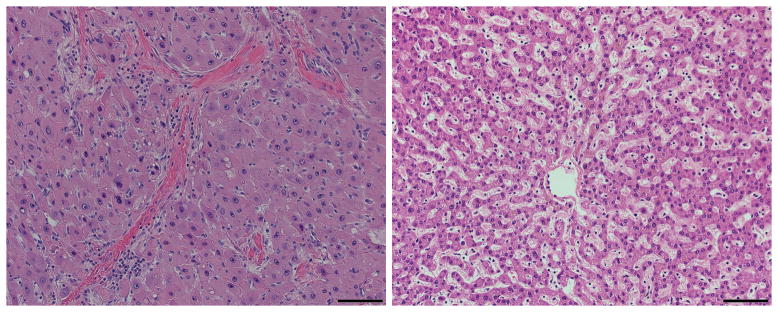
Figure 1
Figure 1. FLC has a typical histological appearance
The histology of FLC has several typical features that can be seen on H&E staining. These include: large hepatocyte-like polygonal cells, with an abundant eosinophilic cytoplasm, prominent nucleoli and pale cytoplasmic inclusion bodies. These cells are surrounded by abundant fibrotic bands or “lamellae”.
Figure 2
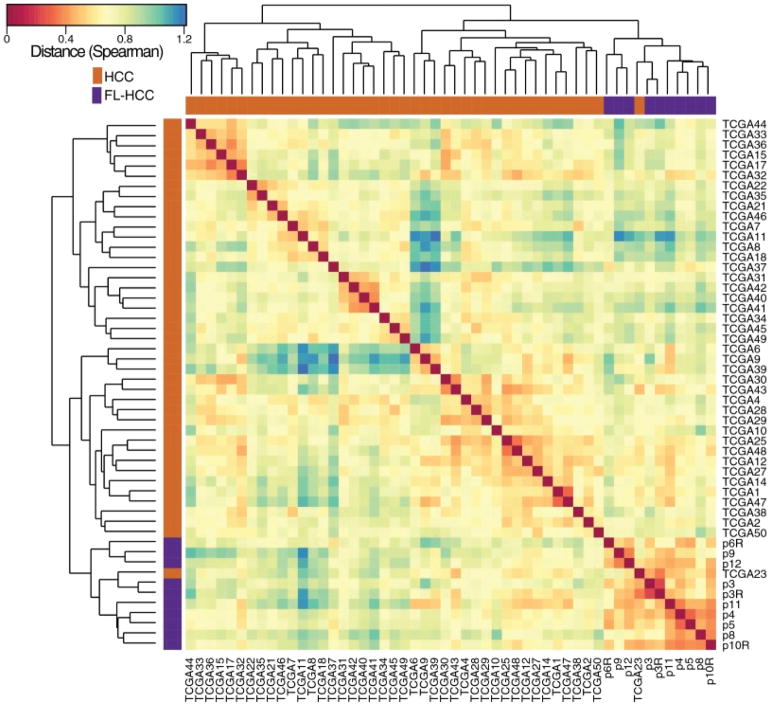
Figure 2. FLC and HCC have distinct molecular characteristics
The transcriptome of fibrolamellar tumor relative to the adjacent normal and hepatocellular carcinoma tumor, relative to the adjacent normal, were analyzed and characterized by hierarchical clustering (complete method) with a spearman rank correlation matrix for all 3708 protein coding genes that passed the DESeq2 expression filter (|log 2 fold change| > 1, FDR < 0.01, and ranked by moderated t statistic ranking). The transcriptome of the fibrolamellar samples (purple) segregated away from those of hepatocellular carcinoma (orange) [Data shown is for 10 FLC and 42 HCC from over 400 HCC patients analyzed]. An example is shown of one patient out of five found that had been reported to be HCC, but the transcriptome segregated with FLC. This particular example was from a young adolescent who was diagnosed with HCC without a molecular characterization. An analysis showed the presence of a fusion between the genes DNAJB1 and PRKACA consistent with this patient actually having fibrolamellar (see figure 3). A histological sample was not available in this specific case. Figure from (10).
Figure 3
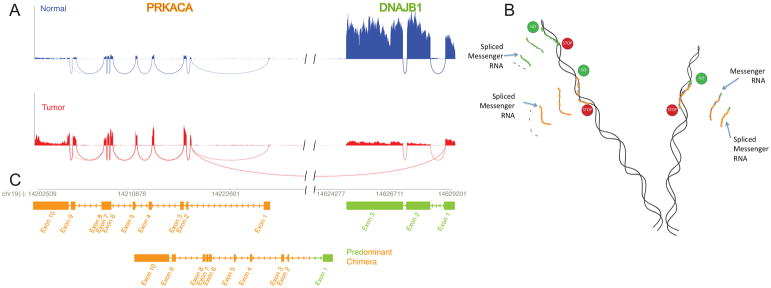
Figure 3. Molecular basis for FLC: A deletion in a chromosome 19 produces a chimeric gene
Figure A. The reads for the mRNA were mapped onto the genome. An increased number of reads for PRKACA, the catalytic subunit of protein kinase A, in the tumor sample (red) relative to the normal (blue) in exon 2 through 10, and in the reads spanning the exons, demonstrated the increased expression of this gene. In addition in the tumor there were reads that spanned between the start of exon 2 of PRKACA and the end of exon 1 of DNAJB1, a member of the heat shock protein family. Figure B. This pattern of reads demonstrate that in the tumor there is the normal transcript for DNAJB1 (green), and the normal transcript for PRKACA (goldenrod) and a chimeric transcript with the first exon of DNAJB1 and the 2nd to final exons of PRKACA. This chimeric transcript was confirmed by Sanger sequencing (28). Figure C. The formation of the chimeric transcripts, while maintaining the normal transcripts, is consistent with a deletion of ~400 kB in one copy of chromosome 19. This deletion was confirmed by Sanger sequencing (28). Figure adapted from (28).

References

    1. El-Serag HB, Davila JA. Is fibrolamellar carcinoma different from hepatocellular carcinoma? A US population-based study. Hepatology. 2004;39(3):798–803. - PubMed
    1. Eggert T, McGlynn KA, Duffy A, Manns MP, Greten TF, Altekruse SF. Epidemiology of fibrolamellar hepatocellular carcinoma in the USA, 2000–10. Gut. 2013;62(11):1667–8. - PMC - PubMed
    1. Torbenson M. Fibrolamellar carcinoma: 2012 update. Scientifica. 2012;2012:743790. - PMC - PubMed
    1. Mavros MN, Mayo SC, Hyder O, Pawlik TM. A systematic review: treatment and prognosis of patients with fibrolamellar hepatocellular carcinoma. Journal of the American College of Surgeons. 2012;215(6):820–30. - PubMed
    1. Edmondson HA. Differential diagnosis of tumors and tumor-like lesions of liver in infancy and childhood. AMA J Dis Child. 1956;91(2):168–86. - PubMed

MeSH terms

Substances

Supplementary concepts