


Direct effects of thyroid hormones on hepatic lipid metabolism
- PMID: 29472712
- PMCID: PMC6013028
- DOI: 10.1038/nrendo.2018.10
Direct effects of thyroid hormones on hepatic lipid metabolism
Abstract
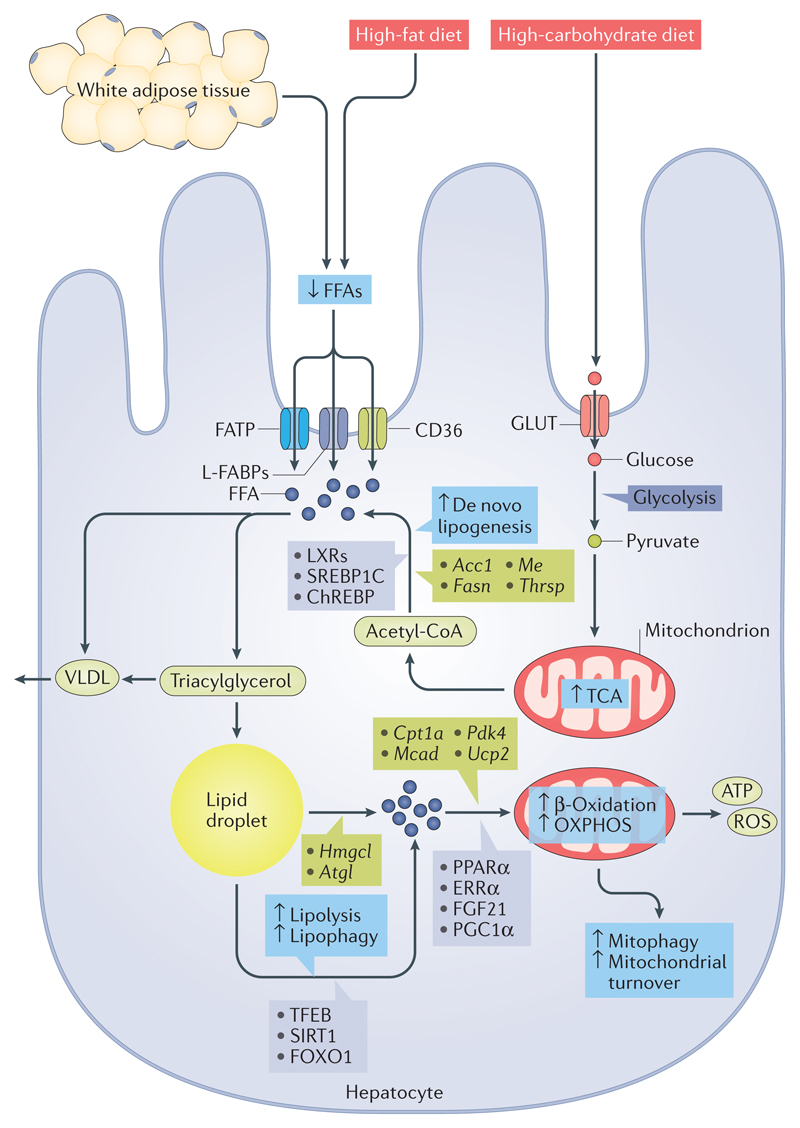
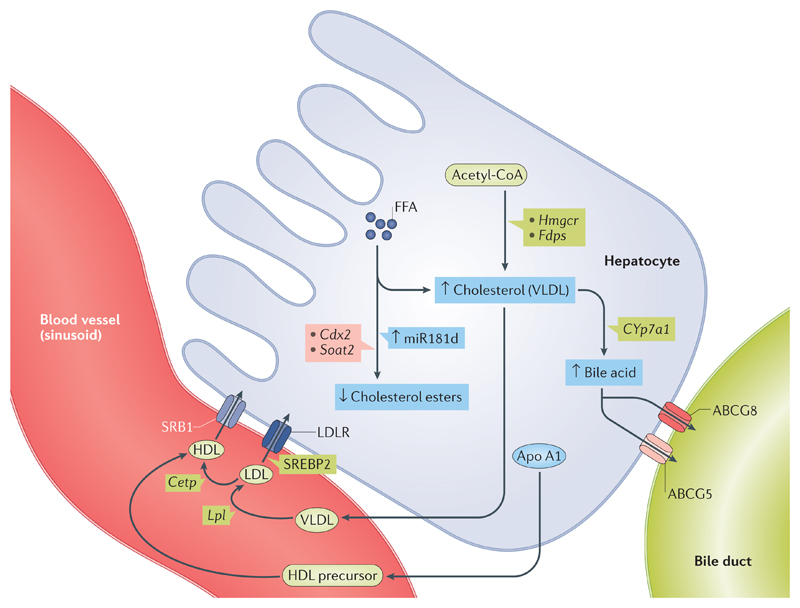
It has been known for a long time that thyroid hormones have prominent effects on hepatic fatty acid and cholesterol synthesis and metabolism. Indeed, hypothyroidism has been associated with increased serum levels of triglycerides and cholesterol as well as non-alcoholic fatty liver disease (NAFLD). Advances in areas such as cell imaging, autophagy and metabolomics have generated a more detailed and comprehensive picture of thyroid-hormone-mediated regulation of hepatic lipid metabolism at the molecular level. In this Review, we describe and summarize the key features of direct thyroid hormone regulation of lipogenesis, fatty acid β-oxidation, cholesterol synthesis and the reverse cholesterol transport pathway in normal and altered thyroid hormone states. Thyroid hormone mediates these effects at the transcriptional and post-translational levels and via autophagy. Given these potentially beneficial effects on lipid metabolism, it is possible that thyroid hormone analogues and/or mimetics might be useful for the treatment of metabolic diseases involving the liver, such as hypercholesterolaemia and NAFLD.
Conflict of interest statement
The authors declare no competing interests.
Figures
References
-
- Duntas LH. Thyroid disease and lipids. Thyroid. 2002;12:287–293. - PubMed
-
- Krotkiewski M. Thyroid hormones and treatment of obesity. Int J Obes Relat Metab Disord. 2000;24:S116–S119. - PubMed
-
- Martinez-Sanchez N, et al. Hypothalamic effects of thyroid hormones on metabolism. Best practice and research. Clin Endocrinol Metabolism. 2014;28:703–712. - PubMed
Publication types
MeSH terms
Substances
Grants and funding
LinkOut - more resources
Full Text Sources
Other Literature Sources
Medical
Molecular Biology Databases
