


Communication failure: analysis of prescribers' use of an internal free-text field on electronic prescriptions
- PMID: 29474659
- PMCID: PMC7647024
- DOI: 10.1093/jamia/ocy003
Communication failure: analysis of prescribers' use of an internal free-text field on electronic prescriptions
Abstract
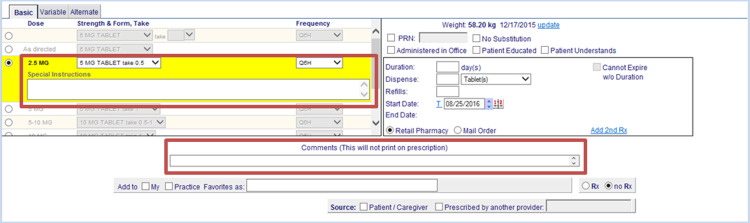
Importance: Electronic prescribing promises to improve the safety and clarity of prescriptions. However, it also can introduce miscommunication between prescribers and pharmacists. There are situations where information that is meant to be sent to pharmacists is not sent to them, which has the potential for dangerous errors.
Objective: To examine how frequently prescribers or administrative personnel put information intended for pharmacists in a field not sent to pharmacists, classify the type of information included, and assess the potential harm associated with these missed messages.
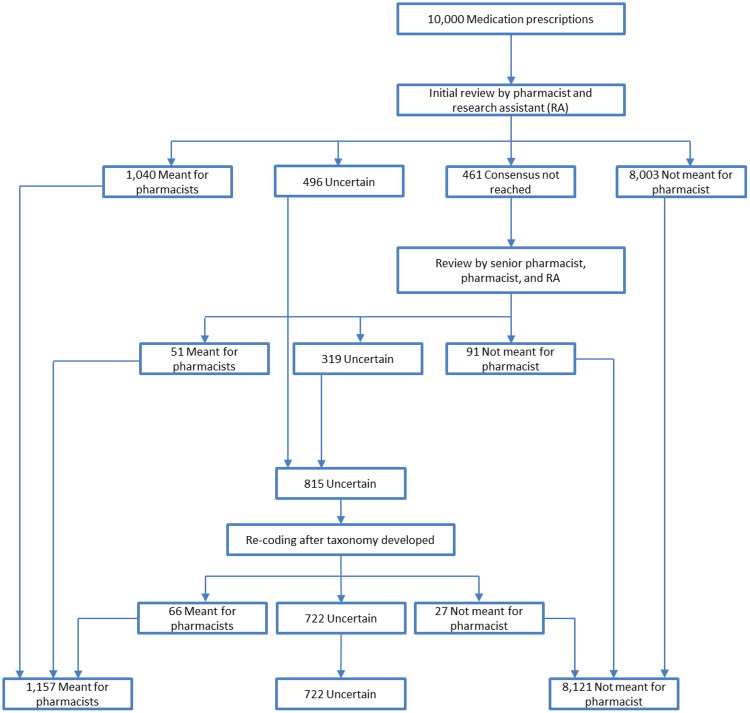
Design, setting, participants: Medication record data from our legacy electronic health record were requested for ambulatory care patients seen at an academic medical center from January 1, 2000, to May 31, 2015 (20 123 881 records). From this database, 6 060 272 medication orders met our inclusion criteria. We analyzed a random sample of 10 000 medication orders with internal comments.
Main outcomes and measures: Reviewers classified internal comments for intent. Comments intended for pharmacists were also sorted into descriptive categories and analyzed for the potential for patient harm.
Results: We found that 11.7% of the prescriptions in our sample contained comments that were intended to be sent to pharmacists. Many comments contained information about the dose, route, or duration of the prescription (38.0%). Approximately a third of the comments intended for pharmacists contained information that had the potential for significant or severe harm if not communicated.
Conclusion: We found undelivered comments that were clearly intended for pharmacists and contained important information for either pharmacists or patients. This poses a legitimate safety concern, as a portion of comments contained information that could have prevented severe or significant harm.
Figures
References
-
- Misra-Hebert AD, Rabovsky A, Yan C, Hu B, Rothberg MB. A team-based model of primary care delivery and physician-patient interaction. Am J Med. 2015;1289:1025–28. - PubMed
-
- Kaboli PJ, Hoth AB, McClimon BJ, Schnipper JL. Clinical pharmacists and inpatient medical care: a systematic review. Arch Intern Med. 2006;1669:955–64. - PubMed
-
- Smith M, Bates DW, Bodenheimer TS. Pharmacists belong in accountable care organizations and integrated care teams. Health Aff (Millwood). 2013;3211:1963–70. - PubMed
-
- Scott MA, Hitch B, Ray L, Colvin G. Integration of pharmacists into a patient-centered medical home. J Am Pharm Assoc (2003). 2011;512:161–66. - PubMed
Publication types
MeSH terms
LinkOut - more resources
Full Text Sources
Other Literature Sources
Miscellaneous
