


Cardio-metabolic and socio-environmental correlates of waist-to-height ratio in German primary schoolchildren: a cross-sectional exploration
- PMID: 29475449
- PMCID: PMC5824571
- DOI: 10.1186/s12889-018-5174-6
Cardio-metabolic and socio-environmental correlates of waist-to-height ratio in German primary schoolchildren: a cross-sectional exploration
Abstract
Background: Controversial messages of childhood obesity emerge: Levelling off in terms of body mass index (BMI) is foiled by increases in abdominal obesity. Waist-to-height ratio (WHtR) may be used as a screening tool for abdominal obesity in children. The aim of this study was to investigate clinical and socio-environmental correlates of abdominal obesity in primary schoolchildren.
Methods: Cross-sectional data from 753 children participating in baseline assessments of the outcome evaluation of a school-based prevention program were analysed. Abdominal obesity was defined as WHtR ≥0.5. According to German age and sex-specific BMI-percentiles, overweight (>90th percentile) and obesity (>97th percentile) were determined. Anthropometric and sonographic measurements, blood pressure and blood samples were taken by clinical staff in a standardized manner. Socio-environmental and lifestyle data were assessed via parental questionnaires. Differences between abdominally obese children and others, and correlations of WHtR with clinical data were tested. Socio-environmental correlates of abdominal obesity were explored in a logistic regression analysis.
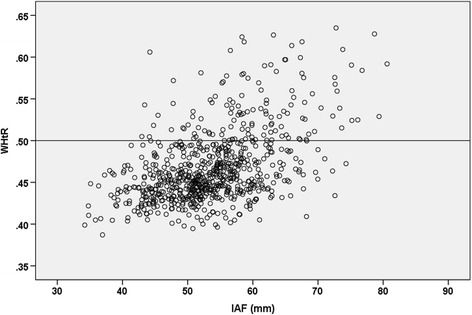
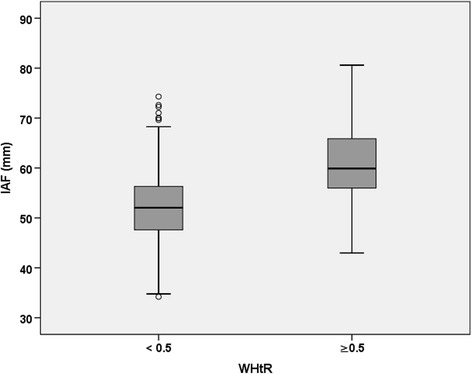
Results: At the time of the examination children were 7.57 ± 0.42 years old. Abdominal obesity was observed in 132 (17.5%) children. According to BMI-percentiles, 22.9% of these children were obese, 38.2% overweight, and 38.2% normal weight. Affected children more often used screen media and less often participated in club sports. Abdominal obesity was associated with higher blood pressure, lower HDL- and higher LDL-cholesterol. WHtR significantly correlated with intra-abdominal fat thickness (IAF). The logistic regression model revealed migration background (odds ratio (OR) 2.12, 95% confidence interval (CI) [1.41, 3.19]), smoking during pregnancy (OR 2.30, 95% CI [1.37, 3.86]), parental obesity (OR 1.95, 95% CI [1.22, 3.10]) and higher educational level (OR 0.64, 95% CI [0.42, 0.98]) to be significantly associated with abdominal obesity in children.
Conclusion: WHtR correlates strongly with IAF. Abdominal obesity in primary schoolchildren is associated with cardio-metabolic risk factors and also occurs in otherwise normal weight children. Against the background of rising numbers of abdominal obesity in children, targeted preventive measures are long overdue. The focus of such measures should be used on children with migration background and involve parents, especially those who are obese and those with lower educational levels.
Keywords: (MeSH); Abdominal obesity; Blood pressure; Child; Etiology; Lipids; Prevention & control.
Conflict of interest statement
Ethics approval and consent to participate
The study protocol was approved by the ethics committee of Ulm University in 2006. Written informed consent was obtained from parents and teachers.
Consent for publication
Not applicable
Competing interests
The authors declare that they have no competing interests.
Publisher’s Note
Springer Nature remains neutral with regard to jurisdictional claims in published maps and institutional affiliations.
Figures
References
-
- Garnett SP, Baur L a., Cowell CT. The prevalence of increased central adiposity in Australian school children 1985 to 2007. Obes Rev 2011;12(15):887–896. - PubMed
-
- Javed A, Jumean M, Murad MH, et al. Diagnostic performance of body mass index to identify obesity as defined by body adiposity in children and adolescents: a systematic review and meta-analysis. Pediatr Obes. 2014:1–11. - PubMed
Publication types
MeSH terms
Substances
LinkOut - more resources
Full Text Sources
Other Literature Sources
Medical
