


miR-145 Antagonizes SNAI1-Mediated Stemness and Radiation Resistance in Colorectal Cancer
- PMID: 29475734
- PMCID: PMC5910672
- DOI: 10.1016/j.ymthe.2017.12.023
miR-145 Antagonizes SNAI1-Mediated Stemness and Radiation Resistance in Colorectal Cancer
Abstract
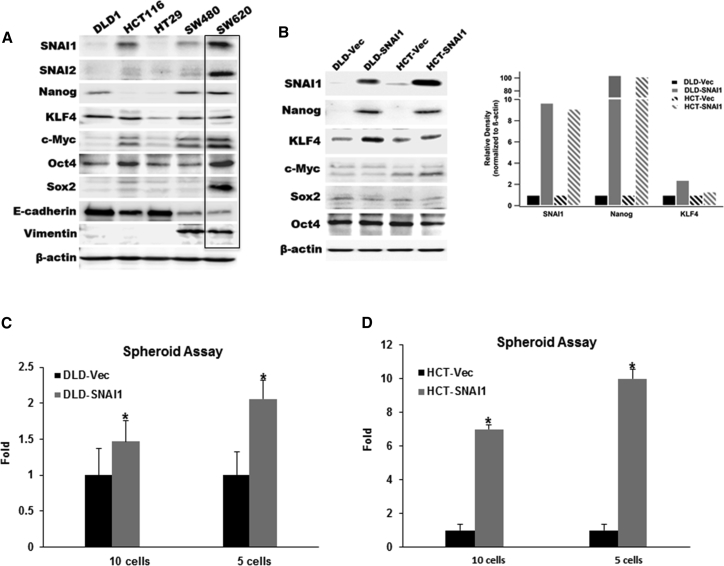
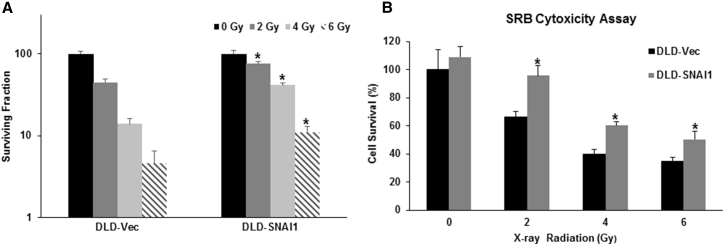
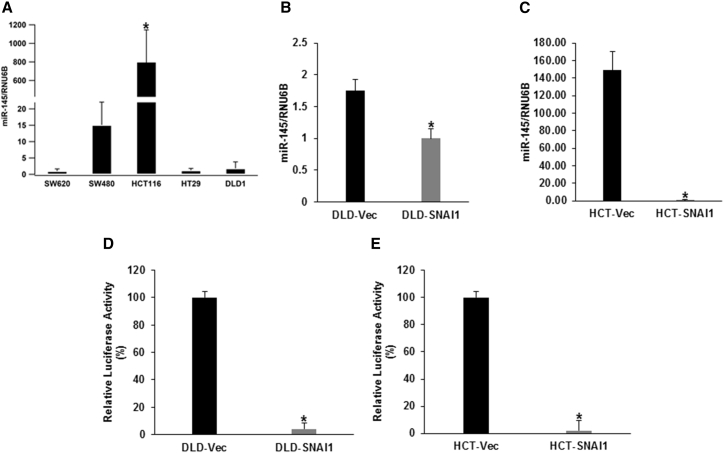
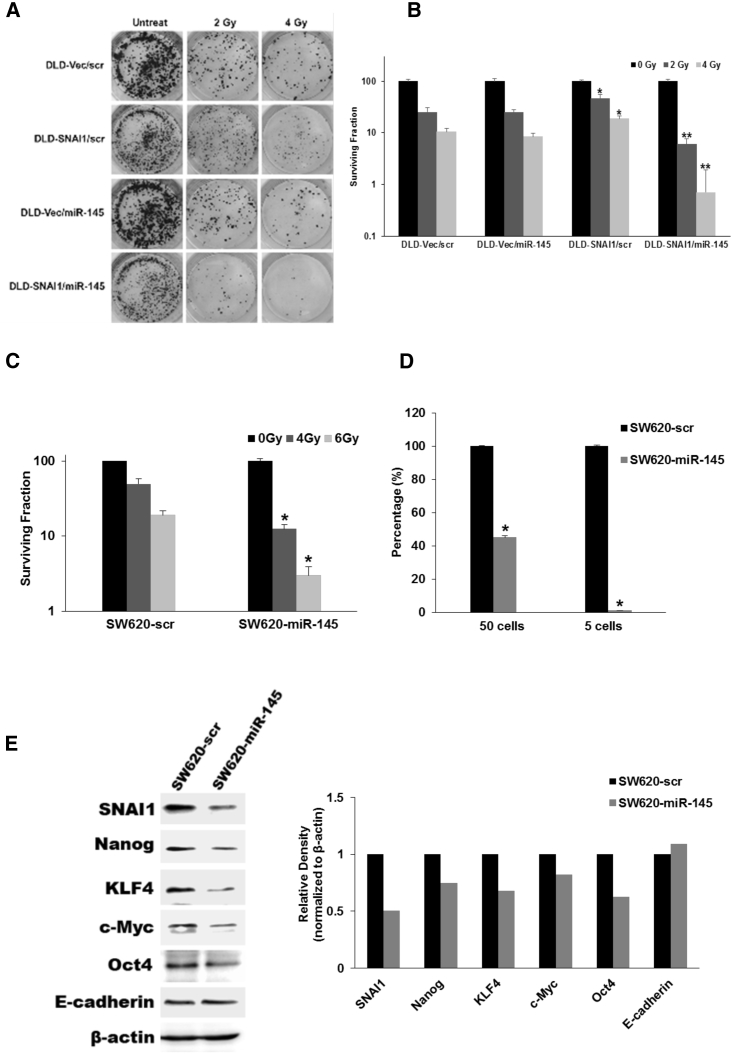
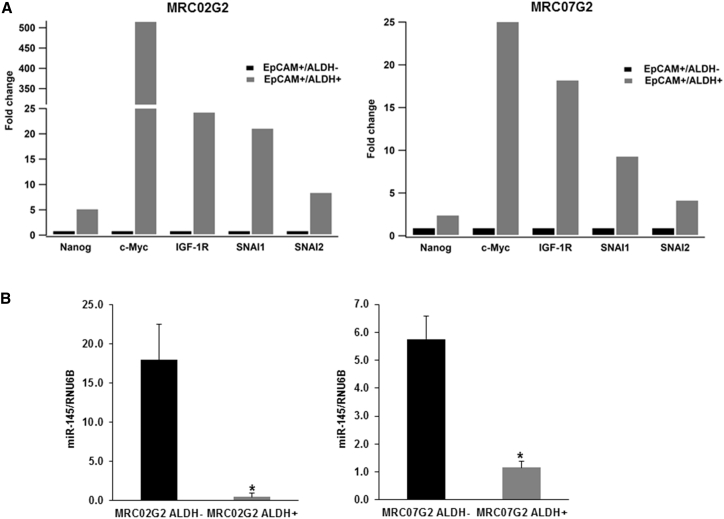
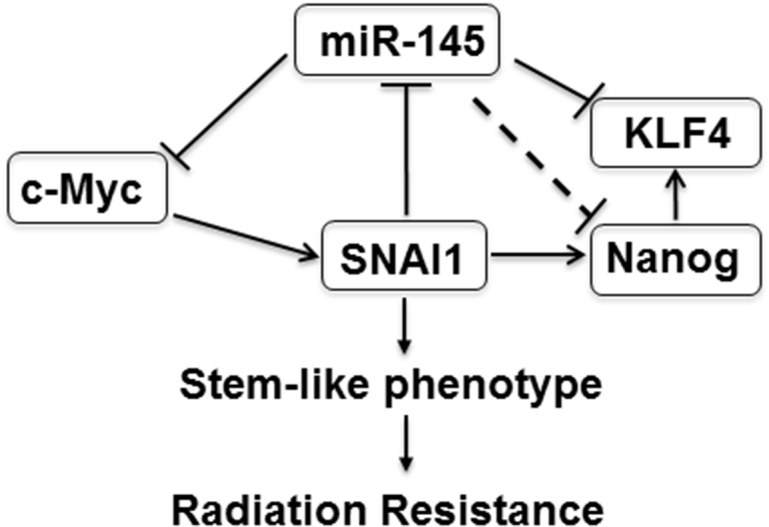
Epithelial-to-mesenchymal transition (EMT) has been closely linked with therapy resistance and cancer stem cells (CSCs). However, EMT pathways have proven challenging to therapeutically target. MicroRNA 145 (miR-145) targets multiple stem cell transcription factors and its expression is inversely correlated with EMT. Therefore, we hypothesized that miR-145 represents a therapeutic target to reverse snail family transcriptional repressor 1 (SNAI1)-mediated stemness and radiation resistance (RT). Stable expression of SNAI1 in DLD1 and HCT116 cells (DLD1-SNAI1; HCT116-SNAI1) increased expression of Nanog and decreased miR-145 expression compared to control cells. Using a miR-145 luciferase reporter assay, we determined that ectopic SNAI1 expression significantly repressed the miR-145 promoter. DLD1-SNAI1 and HCT116-SNAI1 cells demonstrated decreased RT sensitivity and, conversely, miR-145 replacement significantly enhanced RT sensitivity. Of the five parental colon cancer cell lines, SW620 cells demonstrated relatively high endogenous SNAI1 and low miR-145 levels. In the SW620 cells, miR-145 replacement decreased CSC-related transcription factor expression, spheroid formation, and radiation resistance. In rectal cancer patient-derived xenografts, CSC identified by EpCAM+/aldehyde dehydrogenase (ALDH)+ demonstrated high expression of SNAI1, c-Myc, and Nanog compared with non-CSCs (EpCAM+/ALDH-). Conversely, patient-derived CSCs demonstrated low miR-145 expression levels relative to non-CSCs. These results suggest that the SNAI1:miR-145 pathway represents a novel therapeutic target in colorectal cancer to overcome RT resistance.
Keywords: SNAI1; colorectal cancer; microRNA-145; radiation; resistance; stem cell.
Copyright © 2018 The American Society of Gene and Cell Therapy. Published by Elsevier Inc. All rights reserved.
Figures

Comment in
-
Potential Therapeutic Impact of miR-145 Deregulation in Colorectal Cancer.Mol Ther. 2018 Jun 6;26(6):1399-1400. doi: 10.1016/j.ymthe.2018.05.008. Epub 2018 May 18. Mol Ther. 2018. PMID: 29778522 Free PMC article. No abstract available.
References
-
- Wu J., Hirata I., Zhao X., Gao B., Okazaki M., Kato K. Influence of alkyl chain length on calcium phosphate deposition onto titanium surfaces modified with alkylphosphonic acid monolayers. J. Biomed. Mater. Res. A. 2013;101:2267–2272. - PubMed
-
- Sauer R., Becker H., Hohenberger W., Rödel C., Wittekind C., Fietkau R., Martus P., Tschmelitsch J., Hager E., Hess C.F., German Rectal Cancer Study Group Preoperative versus postoperative chemoradiotherapy for rectal cancer. N. Engl. J. Med. 2004;351:1731–1740. - PubMed
-
- Willett C.G., Duda D.G., di Tomaso E., Boucher Y., Ancukiewicz M., Sahani D.V., Lahdenranta J., Chung D.C., Fischman A.J., Lauwers G.Y. Efficacy, safety, and biomarkers of neoadjuvant bevacizumab, radiation therapy, and fluorouracil in rectal cancer: a multidisciplinary phase II study. J. Clin. Oncol. 2009;27:3020–3026. - PMC - PubMed
-
- Dewdney A., Cunningham D., Tabernero J., Capdevila J., Glimelius B., Cervantes A., Tait D., Brown G., Wotherspoon A., Gonzalez de Castro D. Multicenter randomized phase II clinical trial comparing neoadjuvant oxaliplatin, capecitabine, and preoperative radiotherapy with or without cetuximab followed by total mesorectal excision in patients with high-risk rectal cancer (EXPERT-C) J. Clin. Oncol. 2012;30:1620–1627. - PubMed
Publication types
MeSH terms
Substances
Grants and funding
LinkOut - more resources
Full Text Sources
Other Literature Sources
Medical
Research Materials
Miscellaneous
