Comparison of Urine 4-(Methylnitrosamino)-1-(3)Pyridyl-1-Butanol and Cotinine for Assessment of Active and Passive Smoke Exposure in Urban Adolescents
- PMID: 29475963
- PMCID: PMC5835192
- DOI: 10.1158/1055-9965.EPI-17-0671
Comparison of Urine 4-(Methylnitrosamino)-1-(3)Pyridyl-1-Butanol and Cotinine for Assessment of Active and Passive Smoke Exposure in Urban Adolescents
Abstract
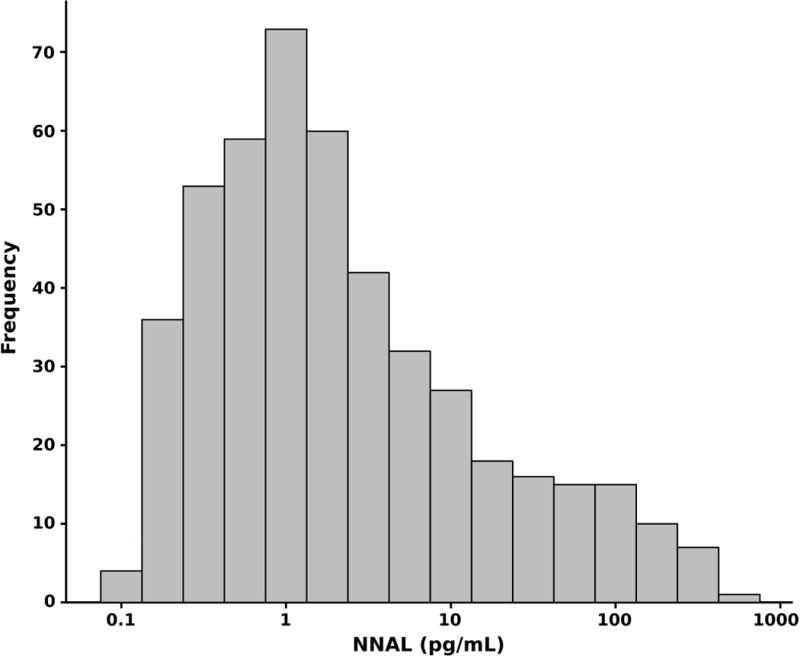
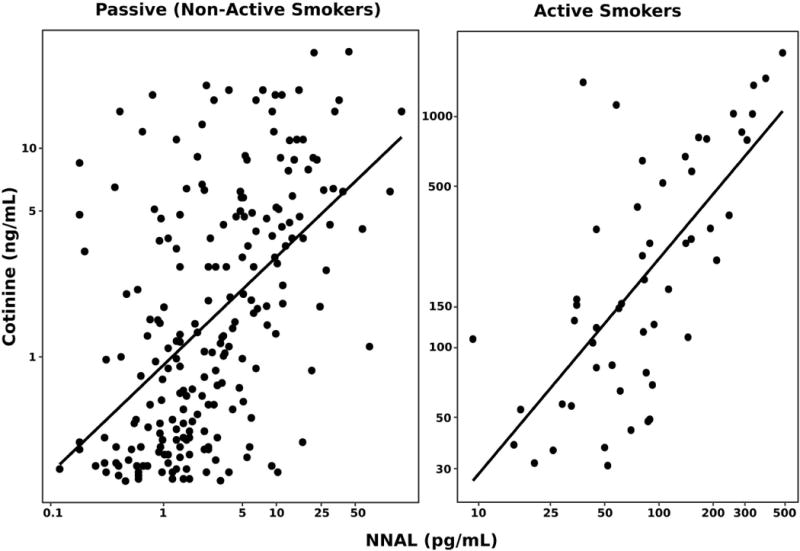
Background: Many adolescents are exposed to tobacco smoke, from either active smoking (CS) or secondhand smoke (SHS) exposure. Tobacco-specific biomarkers of exposure include cotinine (detects use in past 2-4 days) and 4-(methylnitrosamino)-1-(3-pyridyl)-1-butanol (NNAL; detects use for a month or longer). NNAL is expected to detect more intermittent tobacco exposure. We compared NNAL and cotinine as biomarkers of exposure to tobacco in urban adolescents and determined the optimal NNAL cutoff point to distinguish CS from SHS exposure.Methods: Surplus urine samples, collected from 466 adolescents attending pediatric well or urgent care visits at Zuckerberg San Francisco General Hospital in 2013 to 2014, were assayed for cotinine and NNAL.Results: Ninety-four percent of adolescents had measurable levels of NNAL compared with 87% for cotinine. The optimal NNAL cutoff point to distinguish CS from SHS was 9.6 pg/mL by latent class or 14.4 pg/mL by receiver-operating characteristic analysis. Cotinine and NNAL were strongly correlated, but the correlation slopes differed for active versus SHS-exposed adolescents. Among nonsmokers, NNAL levels were significantly higher in African American (median, 3.3 pg/mL) compared with other groups (0.9-1.9 pg/mL), suggesting greater exposure to SHS.Conclusions: Urine NNAL screening finds a large majority (94%) of urban adolescents are exposed to tobacco. African Americans are exposed to higher levels of SHS than other ethnic/racial groups.Impact: SHS is associated with significant medical morbidity in adolescents. Routine biochemical screening with NNAL or cotinine detects high prevalence of SHS exposure and should be considered as a tool to reduce SHS exposure in high-risk populations. Cancer Epidemiol Biomarkers Prev; 27(3); 254-61. ©2018 AACR.
©2018 American Association for Cancer Research.
Conflict of interest statement
Dr. Benowitz is a consultant to several pharmaceutical companies that market medications to aid smoking cessation and has served as a paid expert witness in litigation against tobacco companies. The other authors have no conflicts to disclose.
Figures
References
-
- USDHHS. Respiratory effects in children from exposure to seconhand smoke. Washington, DC: Office of the Surgeon General; 2006.
-
- Hukkanen J, Jacob P, 3rd, Benowitz NL. Metabolism and disposition kinetics of nicotine. Pharmacological reviews. 2005;57(1):79–115. - PubMed
-
- SRNT. Biochemical verification of tobacco use and cessation. Nicotine & tobacco research: official journal of the Society for Research on Nicotine and Tobacco. 2002;4(2):149–59. - PubMed
Publication types
MeSH terms
Substances
Grants and funding
LinkOut - more resources
Full Text Sources
Other Literature Sources
Medical
Molecular Biology Databases
Miscellaneous