


Characteristics, consequences and prevention of falls in institutionalised older adults in the province of Malaga (Spain): a prospective, cohort, multicentre study
- PMID: 29476031
- PMCID: PMC5855255
- DOI: 10.1136/bmjopen-2017-020039
Characteristics, consequences and prevention of falls in institutionalised older adults in the province of Malaga (Spain): a prospective, cohort, multicentre study
Abstract
Objectives: Falls are an important adverse event among institutionalised persons. It is in this clinical setting where falls occur more frequently than in any other, despite the measures commonly taken to prevent them. This study aimed to determine the characteristics of a typical institutionalised elderly patient who suffers a fall and to describe the physical harms resulting from this event. We then examined the association between falls and the preventive measures used.
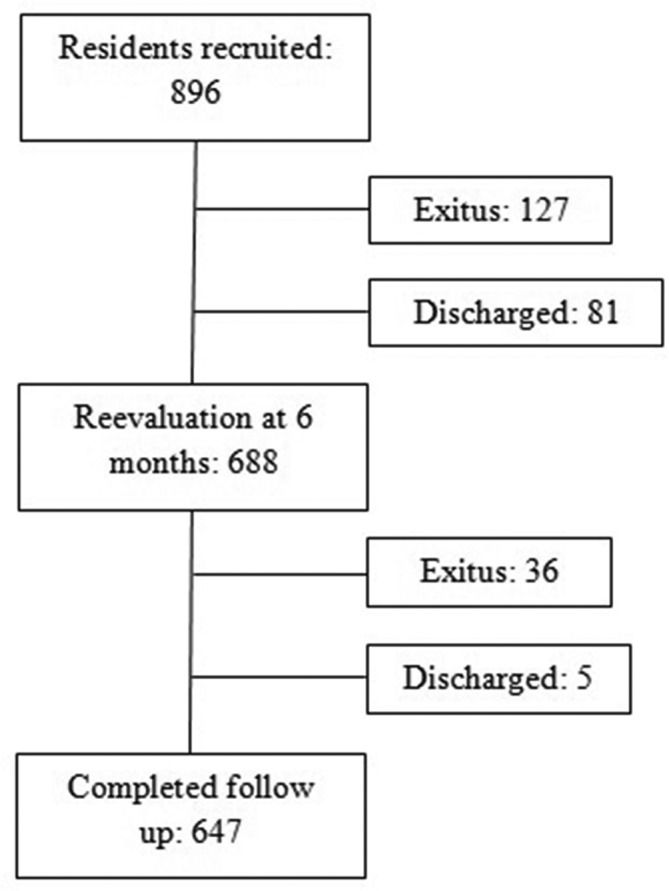
Methods: This was a prospective cohort study in 37 nursing homes in Spain. The participants were all the nursing home residents institutionalised in these centres from May 2014 to July 2016. Participants were followed up for 9 months. During this period, two observations were made to evaluate the preventive measures taken and to record the occurrence of falls.
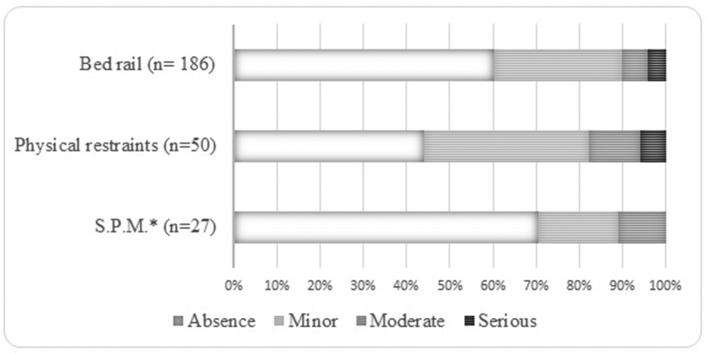
Results: 896 residents were recruited, of whom 647 completed the study. During this period, 411 falls took place, affecting 213 residents. The injuries caused by the falls were mostly minor or moderate. They took place more frequently among women and provoked 22 fractures (5.35%). The most commonly used fall prevention measure was bed rails (53.53% of cases), followed by physical restraint (16.79%). The latter measure was associated with a higher incidence of injuries not requiring stitches (OR=2.06, 95% CI 1.01 to 4.22, P=0.054) and of injuries that did require stitches (OR=3.51, 95% CI 1.36 to 9.01, P=0.014) as a consequence of falls. Bed rails protected against night-time falls.
Conclusions: Falls are a very common adverse event in nursing homes. The prevention of falls is most commonly addressed by methods to restrain movement. The use of physical restraints is associated with a greater occurrence of injuries caused by a fall.
Keywords: accident prevention; accidental fall; nursing homes; physical restraint.
© Article author(s) (or their employer(s) unless otherwise stated in the text of the article) 2018. All rights reserved. No commercial use is permitted unless otherwise expressly granted.
Conflict of interest statement
Competing interests: None declared.
Figures
References
-
- World Health Organization. Falls. fact sheet No. 344. 2016. http://bit.ly/1i7Ixzq
-
- World Health Organization. WHO global report on falls prevention in older age. 2007. http://bit.ly/1IltXUR
-
- da Silva Gama ZA, Gómez Conesa A. Morbilidad, factores de riesgo y consecuencias de las caídas en ancianos. Fisioterapia 2008;30:142–51. 10.1016/S0211-5638(08)72972-9 - DOI
Publication types
MeSH terms
LinkOut - more resources
Full Text Sources
Other Literature Sources
Medical
