


CARD14-associated papulosquamous eruption: A spectrum including features of psoriasis and pityriasis rubra pilaris
- PMID: 29477734
- PMCID: PMC6098739
- DOI: 10.1016/j.jaad.2018.02.034
CARD14-associated papulosquamous eruption: A spectrum including features of psoriasis and pityriasis rubra pilaris
Abstract
Background: Heterozygous mutations in caspase recruitment domain family member 14 gene (CARD14) have been shown to be associated with psoriasis and familial pityriasis rubra pilaris (PRP). Many subjects with CARD14 mutations display features of both disorders, which can result in diagnostic uncertainty. In addition, these eruptions are often recalcitrant to conventional psoriasis therapies such as methotrexate, oral retinoids, and tumor necrosis factor-α inhibitors.
Objective: We sought to describe the clinical characteristics, family history, and response to therapy in subjects with papulosquamous eruptions due to mutations in CARD14.
Methods: Subjects were referred for genetic testing as part of a registry of subjects with inherited disorders of keratinization. DNA was isolated from blood or saliva, and multiplex targeted sequencing or whole exome sequencing was performed. Clinical histories of subjects with CARD14 mutations were reviewed.
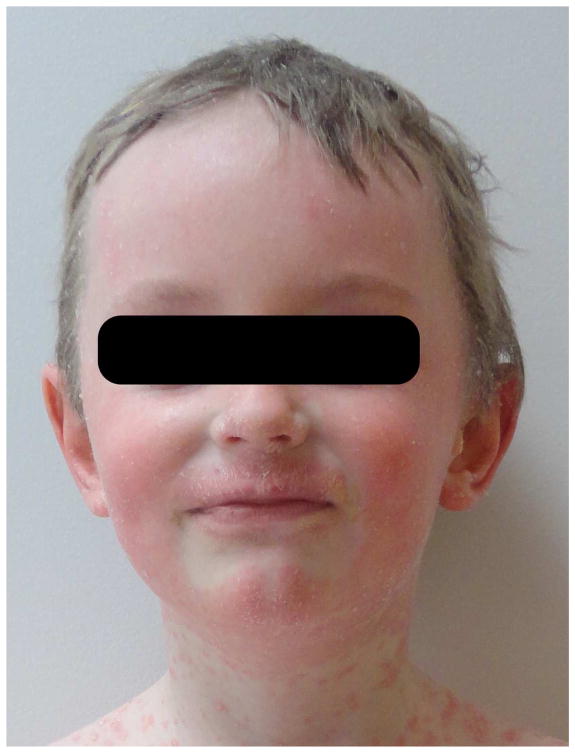
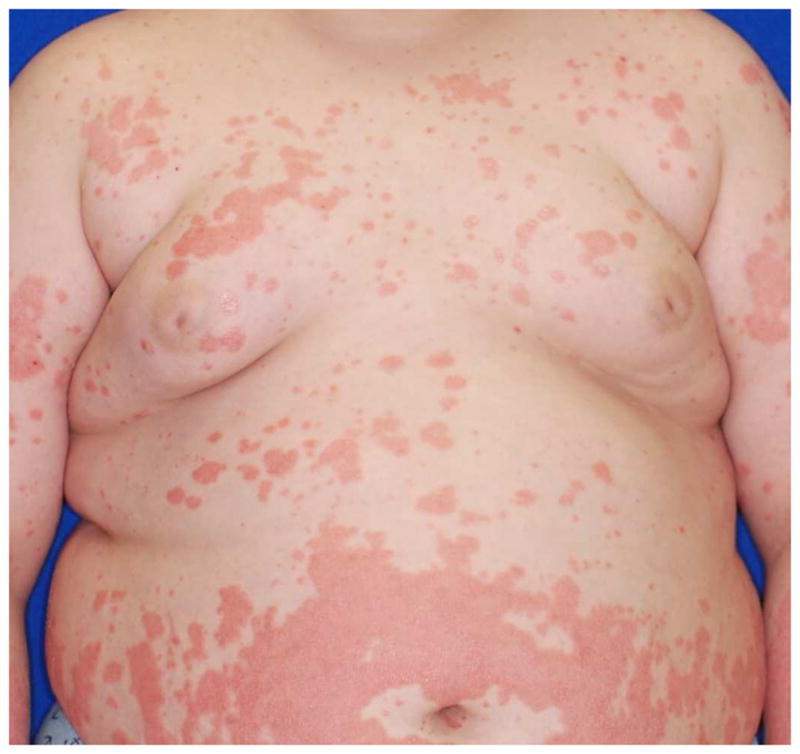
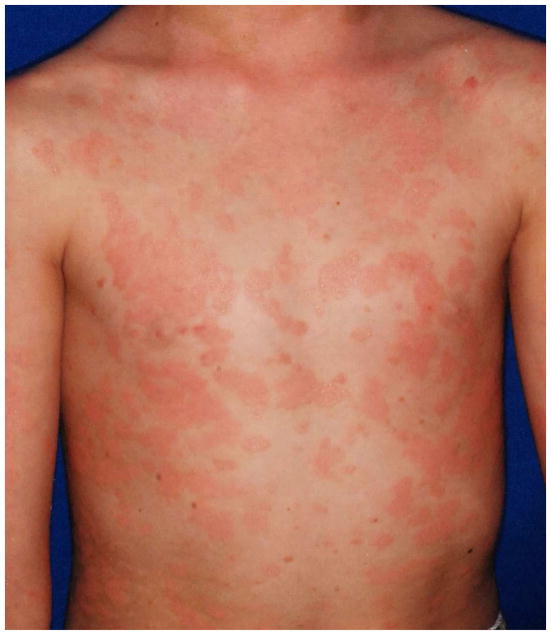
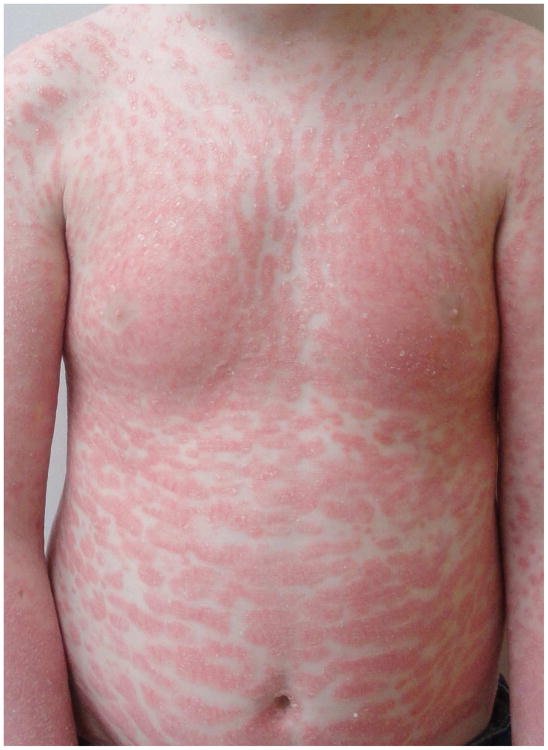
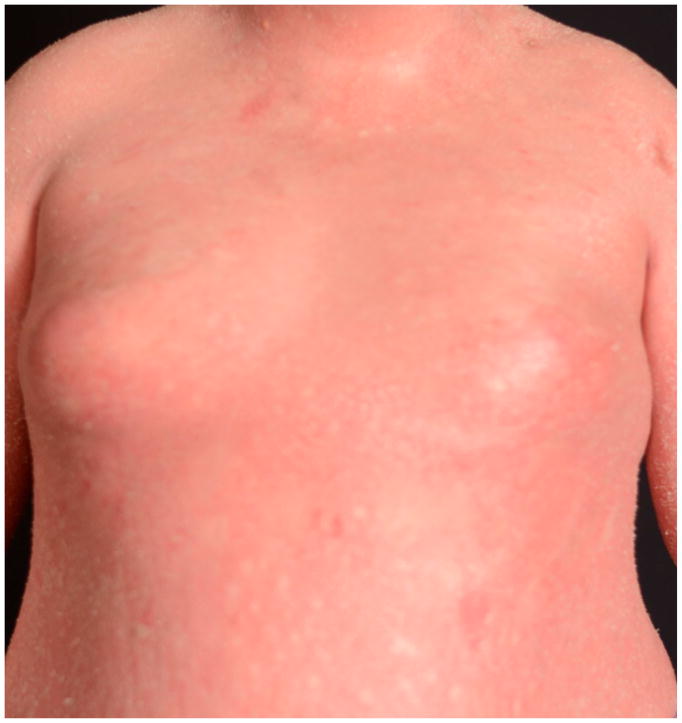
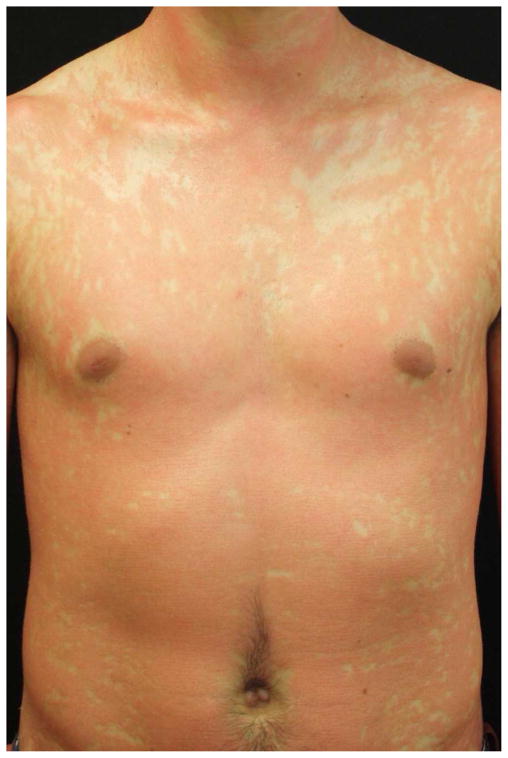
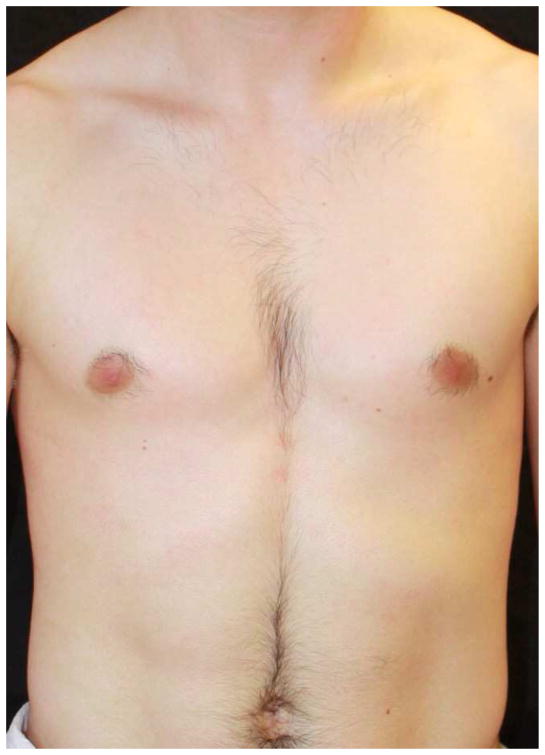
Results: We identified 15 kindreds with CARD14-associated papulosquamous eruption (CAPE). Characteristic features of CAPE include early age of onset; prominent involvement of the cheeks, chin, and ears; family history of psoriasis or PRP; minimal response to conventional topical and systemic psoriasis therapies; and improvement with ustekinumab.
Limitations: Relatively small sample size.
Conclusions: Many subjects with CARD14 mutations display characteristics of both psoriasis and PRP. We propose the term CARD14-associated papulosquamous eruption to describe this spectrum of disease. Subjects with clinical features suggestive of CAPE should undergo CARD14 sequencing and may benefit from treatment with ustekinumab.
Keywords: CARD14; genetics; pityriasis rubra pilaris; psoriasis; treatment; ustekinumab.
Copyright © 2018 American Academy of Dermatology, Inc. Published by Elsevier Inc. All rights reserved.
Conflict of interest statement
Conflict of Interest: Dr. Choate has received honoraria from Janssen Biotech and Abbvie.
Figures
Comment in
-
Choosing the right biologic for psoriatic patients may be in the cards.J Am Acad Dermatol. 2018 Sep;79(3):441-442. doi: 10.1016/j.jaad.2018.06.038. Epub 2018 Jun 30. J Am Acad Dermatol. 2018. PMID: 29969699 No abstract available.
-
Epithelioid cell granuloma formation in CARD14-associated papulosquamous eruptions.J Eur Acad Dermatol Venereol. 2022 May;36(5):e369-e371. doi: 10.1111/jdv.17890. Epub 2021 Dec 29. J Eur Acad Dermatol Venereol. 2022. PMID: 34927775 No abstract available.
References
-
- Bertin J, Wang L, Guo Y, et al. CARD11 and CARD14 are novel caspase recruitment domain (CARD)/membrane-associated guanylate kinase (MAGUK) family members that interact with BCL10 and activate NF-kappa B. J Biol Chem. 2001;276(15):11877–11882. - PubMed
MeSH terms
Substances
Grants and funding
LinkOut - more resources
Full Text Sources
Other Literature Sources
Research Materials
