


Lower vitamin D intake is associated with low HDL cholesterol and vitamin D insufficiency/deficiency in Brazilian children
- PMID: 29478422
- PMCID: PMC10260741
- DOI: 10.1017/S1368980018000204
Lower vitamin D intake is associated with low HDL cholesterol and vitamin D insufficiency/deficiency in Brazilian children
Abstract
Objective: To evaluate the association of vitamin D intake with dyslipidaemia and vitamin D insufficiency/deficiency in Brazilian children and identify the main food group sources of this nutrient in the sample.
Design: A cross-sectional study carried out with a representative sample. Blood was collected after 12 h of fasting. Laboratory tests were performed to determine total cholesterol, HDL cholesterol (HDL-C), LDL cholesterol, TAG, apoB, apoA1, 25-hydroxyvitamin D and parathyroid hormone. Dietary intake was evaluated by a 24 h recall.
Setting: Viçosa, Minas Gerais, Brazil.
Subjects: Children between 8 and 9 years old enrolled in urban schools (n 378).
Results: We found an elevated prevalence of inadequate vitamin D intake (91·3 %), dyslipidaemia (72·8 %) and vitamin D insufficiency/deficiency (56·2 %). The food groups that contributed the most to vitamin D intake were dairy products and fish. Lower vitamin D intake was associated with increased prevalence of both low HDL-C (prevalence ratio=2·51; 95 % CI 1·02, 6·18; P<0·05) and vitamin D insufficiency/deficiency (prevalence ratio=1·61; 95 % CI 1·01, 2·58; P<0·05).
Conclusions: Given the elevated prevalence of inadequate vitamin D intake and its association with low HDL-C and vitamin D insufficiency/deficiency, it is important to develop specific actions in food and nutritional education as well as programmes that stimulate and facilitate access to vitamin D food sources, such as dairy products and fish.
Keywords: Dairy products; Dyslipidaemia; Fish; Micronutrients; Nutritional Deficiency.
Figures
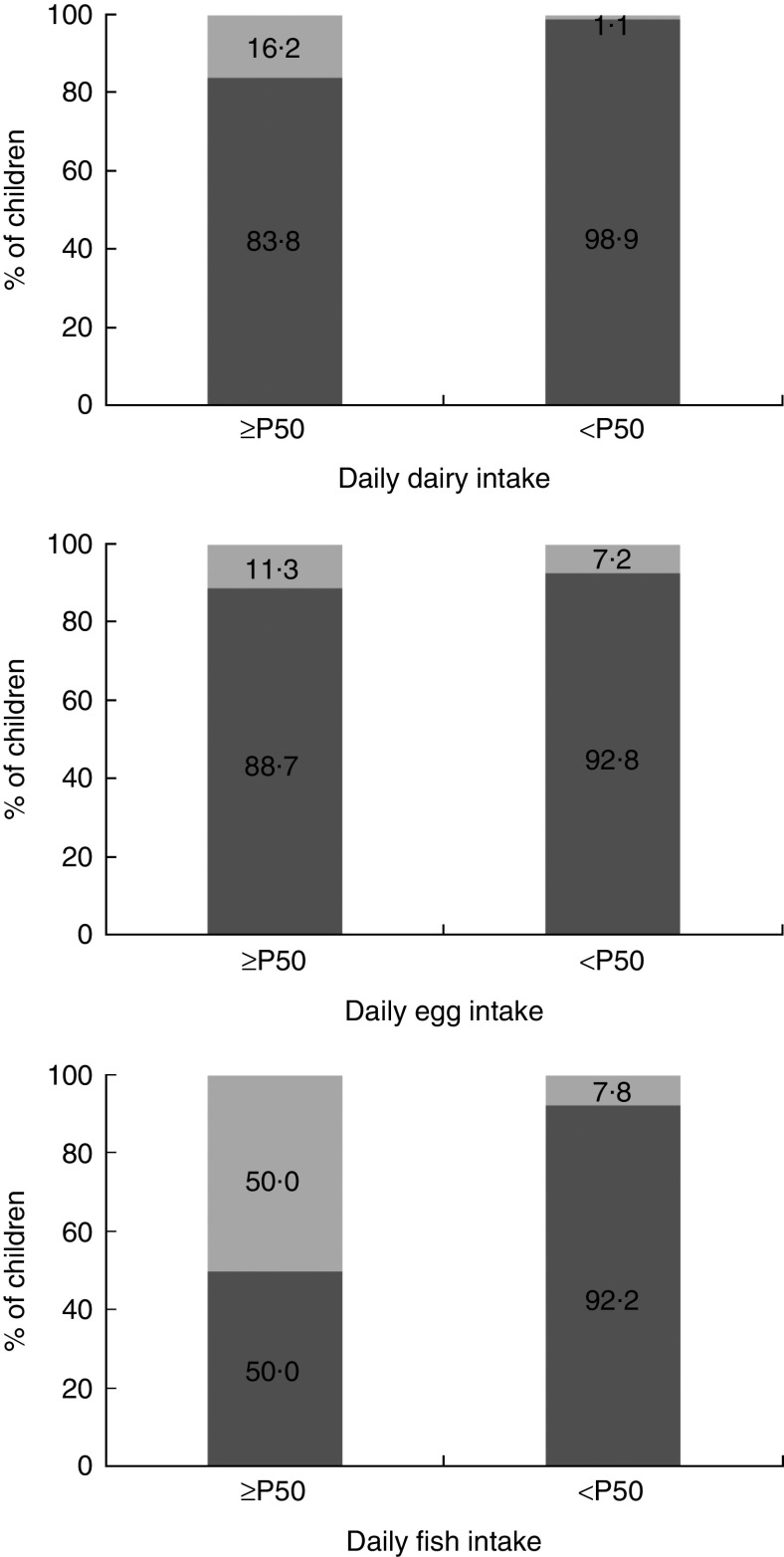
 , <10 µg/d;
  , ≥10 µg/d) according to the consumption of dairy products, eggs and fish (equal to or greater than the median, ≥P50; less than the median, <P50) by urban schoolchildren aged 8–9 years (n 378), Viçosa, Minas Gerais, Brazil, 2015. Dairy intake: P50=169·2 g/d (P<0·001*); egg intake: P50=16·7 g/d (P=0·184); fish intake: P50=6·7 g/d (P=0·009). *P<0·05 (Fisher’s exact test)
References
-
- Holick MF (2007) Vitamin D deficiency. N Engl J Med 357, 266–281. - PubMed
-
- Holick MF & Chen TC (2008) Vitamin D deficiency: a worldwide problem with health consequences. Am J Clin Nutr 87, issue 4, 1080S–1086S. - PubMed
-
- Aryan Z, Rezaei N & Camargo CA Jr (2017) Vitamin D status, aeroallergen sensitization, and allergic rhinitis: a systematic review and meta-analysis. Int Rev Immunol 36, 41–53. - PubMed
Publication types
MeSH terms
Substances
LinkOut - more resources
Full Text Sources
Other Literature Sources
Medical
Miscellaneous
