


Seroprevalence, risk associations, and cost analysis of screening for viral infections among patients of cataract surgery
- PMID: 29480249
- PMCID: PMC5859593
- DOI: 10.4103/ijo.IJO_726_17
Seroprevalence, risk associations, and cost analysis of screening for viral infections among patients of cataract surgery
Abstract
Purpose: The purpose of this study was to estimate the prevalence of blood-borne viral infections (triple H: HBV-hepatitis B virus, HCV-hepatitis C virus, and HIV-human immunodeficiency virus) among cataract patients, sought possible risk associations and discuss feasibility of universal preoperative screening.
Methods: This prospective, cross-sectional study enrolled consecutive patients of senile cataract. They were screened by immunoassay-based rapid diagnostic card tests for blood-borne viral infections. Positive cases were confirmed with confirmatory ELISA tests. Seropositive patients were enquired about the exposure to possible risk associations for acquiring these infections. Cost of card test per patient was calculated.
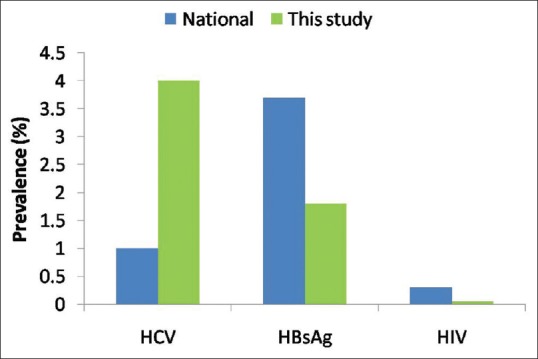
Results: The prevalence of seropositivity for triple H viral infections (HBV, HCV, and HIV) among patients of senile cataract was 5.9% (95% confidence interval [CI]: 5.3-6.6), and HCV was most common viral infection. The dental extraction was most common (54%; 95% CI:48-60) possible risk association. The total cost of primary screening per patient for triple H infections(HBV, HCV, and HIV) was $0.93.
Conclusion: The prevalence of blood-borne viral infection among cataract patients is high in this area. Awareness of the prevalence of blood-borne viral infections in service area, along with knowledge of rate of accidental exposure and risk of transmission would help to understand cost-effectiveness of universal preoperative screening before cataract surgery.
Keywords: Cataract; cost-analysis; hepatitis b virus; hepatitis c virus; human immunodeficiency virus; prevalence; screening.
Conflict of interest statement
There are no conflicts of interest.
Figures
Comment in
-
Universal screening versus universal precautions in ophthalmic surgery.Indian J Ophthalmol. 2018 Mar;66(3):355-356. doi: 10.4103/ijo.IJO_253_18. Indian J Ophthalmol. 2018. PMID: 29480241 Free PMC article. No abstract available.
-
Universal screening: To do or not to do.Indian J Ophthalmol. 2018 Mar;66(3):400-401. doi: 10.4103/ijo.IJO_84_18. Indian J Ophthalmol. 2018. PMID: 29480250 Free PMC article. No abstract available.
References
-
- National Program for control of blindness. State wise targets and achievements for various eye diseases during 2015-16. Available at http://npcb.nic.in/writereaddata/mainlinkfile/File320.pdf .
-
- Malik A. Efficacy and performance of various local anesthesia modalities for cataract surgery. J Clin Exp Ophthalmol. 2013;S1:007.
-
- Ayanniyi AA, Olatunji FO, Majengbasan T, Ayanniyi RO, Danfulani M. Ophthalmic practice health hazards among ophthalmologists in a resource-limited setting. Asian Pac J Trop Dis. 2011;1:17–20.
MeSH terms
Substances
LinkOut - more resources
Full Text Sources
Medical
