


Percutaneous treatment for silicosis-induced pulmonary artery stenosis: A case report and review of the literature
- PMID: 29480834
- PMCID: PMC5943882
- DOI: 10.1097/MD.0000000000009469
Percutaneous treatment for silicosis-induced pulmonary artery stenosis: A case report and review of the literature
Abstract
Background: Exposure to crystalline silica results in silicosis with initiation and progression of pulmonary fibrosis. The impaired lung parenchyma leads to pulmonary arterial hypertension and increased pressure in the right ventricle of the heart. Usually, the silicosis may be followed by enlargement of hilar lymphnodes, but silicosis-induced pulmonary artery stenosis with severe pulmonary hypertension is rare. Percutaneous pulmonary artery stenting and balloon angioplasty were performed to relieve stenosis and pulmonary hypertension.
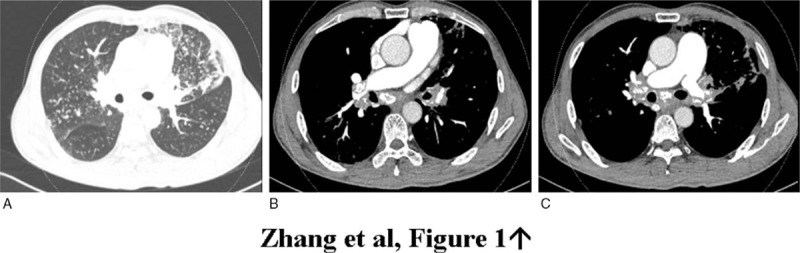
Methods: We report the case of a 52-year-old man who was admitted for persistent dyspnea for 2 years and progressive dyspnea for half a month. He had been a stonemason for 20 years. The computer tomography pulmonary angiography scan images showed partially fibrotic lungs with a disseminated nodular pattern and enlarged bilateral hilar and mediastinal lymphnodes. The echocardiogram and right heart catheterization confirmed the diagnosis of severe pulmonary arterial hypertension.
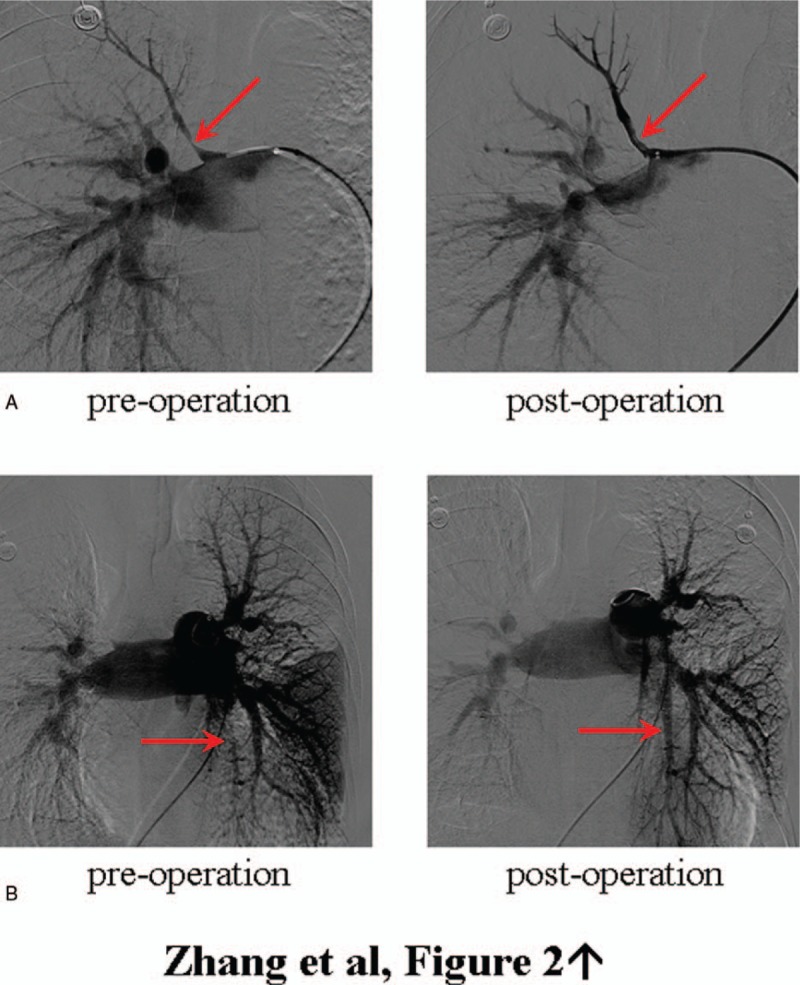
Results: Pulmonary angiograms showed severe stenosis of the proximal upper right and lower left pulmonary artery. Moderate stenosis occured in a branch of the lower right pulmonary artery and a branch of the upper left pulmonary artery. A total of 2 stents and 4 balloons were used to relieve lesions. The final angiograms showed a significantly increased pulmonary artery caliber. The clinical symptom and 6-minute walk distance of the patient were much improved.
Conclusion: To our knowledge, this is the first reported case of percutaneous treatment for silicosis-induced pulmonary artery stenosis and pulmonary hypertension. The clinical symptom, 6-minute walking test, and vessel caliber at areas of stenosis improved significantly following stent implantation and balloon dilatation. However, the patient was followed up for a short period and long-term outcomes have not yet been sufficiently evaluated.
Copyright © 2017 The Authors. Published by Wolters Kluwer Health, Inc. All rights reserved.
Conflict of interest statement
The authors report no conflicts of interest.
Figures
References
-
- Hughes JM, Weill H, Checkoway H, et al. Radiographic evidence of silicosis risk in the diatomaceous earth industry. Am J Respir Crit Care Med 1998;158:807–14. - PubMed
-
- Bessis L, Callard P, Gotheil C, et al. High-resolution CT of parenchymal lung disease: precise correlation with histologic findings. Radiographics 1992;12:45–58. - PubMed
-
- Nemmar A, Vanbilloen H, Hoylaerts MF, et al. Passage of intratracheally instilled ultrafine particles from the lung into the systemic circulation in hamster. Am J Respir Crit Care Med 2001;164:1665–8. - PubMed
-
- Seaton A, MacNee W, Donaldson K, et al. Particulate air pollution and acute health effects. Lancet 1995;345:176–8. - PubMed
Publication types
MeSH terms
LinkOut - more resources
Full Text Sources
Other Literature Sources
