


Economic burden of cancer in India: Evidence from cross-sectional nationally representative household survey, 2014
- PMID: 29481563
- PMCID: PMC5826535
- DOI: 10.1371/journal.pone.0193320
Economic burden of cancer in India: Evidence from cross-sectional nationally representative household survey, 2014
Abstract
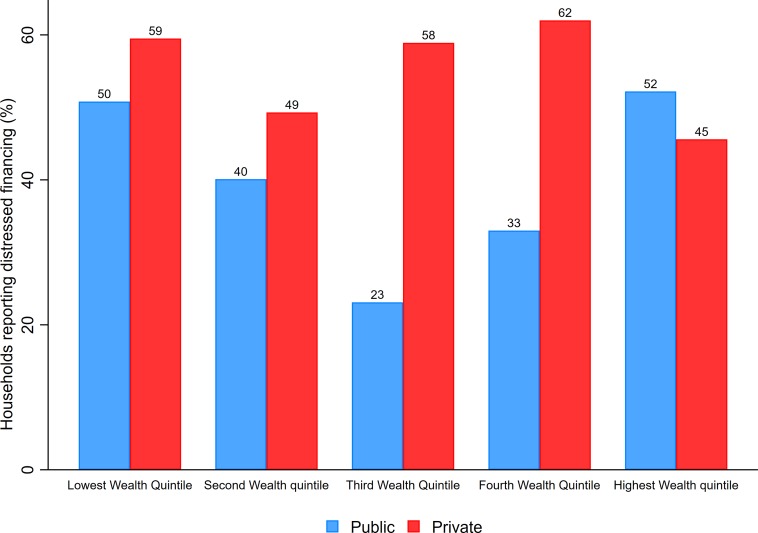
With the ongoing demographic and epidemiological transition, cancer is emerging as a major public health concern in India. This paper uses nationally representative household survey to examine the overall prevalence and economic burden of cancer in India. The age-standardized prevalence of cancer is estimated to be 97 per 100,000 persons with greater prevalence in urban areas. The evidence suggests that cancer prevalence is highest among the elderly and also among females in the reproductive age groups. Cancer displays a significant socioeconomic gradient even after adjusting for age-sex specifics and clustering in a multilevel regression framework. We find that out of pocket expenditure on cancer treatment is among the highest for any ailment. The average out of pocket spending on inpatient care in private facilities is about three-times that of public facilities. Furthermore, treatment for about 40 percent of cancer hospitalization cases is financed mainly through borrowings, sale of assets and contributions from friends and relatives. Also, over 60 percent of the households who seek care from the private sector incur out of pocket expenditure in excess of 20 percent of their annual per capita household expenditure. Given the catastrophic implications, this study calls for a disease-based approach towards financing such high-cost ailment. It is suggested that universal cancer care insurance should be envisaged and combined with existing accident and life insurance policies for the poorer sections in India. In concluding, we call for policies to improve cancer survivorship through effective prevention and early detection. In particular, greater public health investments in infrastructure, human resources and quality of care deserve priority attention.
Conflict of interest statement
Figures
References
-
- Long ER. A history of Pathology. 1928; New York.
-
- Schlotterbeck ME. What is Cancer? The American Journal of Nursing. 1949;49: 300
-
- Joseph F, Fraumeni J. Epidemiologic approaches to cancer etiology.Annual Review Public Health. 1982; 3: 80–100. - PubMed
-
- Schottenfeld D, Beebe-Dimmer JL. Advances in cancer epidemiology: understanding causal mechanisms and the evidences for implementing interventions. Annual Review of Public Health. 2005;26: 37–60. doi: 10.1146/annurev.publhealth.26.021304.144402 - DOI - PubMed
-
- World Health Organization. Cancer control: knowledge into action, WHO guide for effective programmes WHO; 2006; Geneva.
MeSH terms
LinkOut - more resources
Full Text Sources
Other Literature Sources
Miscellaneous
