


The use of advanced medical technologies at home: a systematic review of the literature
- PMID: 29482550
- PMCID: PMC6389044
- DOI: 10.1186/s12889-018-5123-4
The use of advanced medical technologies at home: a systematic review of the literature
Abstract
Background: The number of medical technologies used in home settings has increased substantially over the last 10-15 years. In order to manage their use and to guarantee quality and safety, data on usage trends and practical experiences are important. This paper presents a literature review on types, trends and experiences with the use of advanced medical technologies at home.
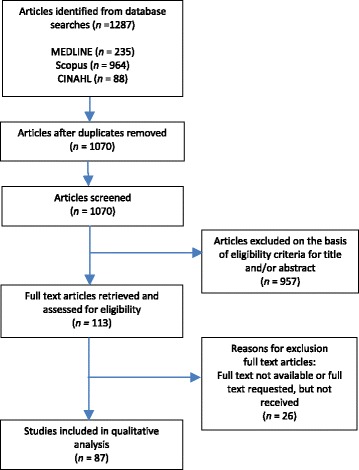
Methods: The study focused on advanced medical technologies that are part of the technical nursing process and 'hands on' processes by nurses, excluding information technology such as domotica. The systematic review of literature was performed by searching the databases MEDLINE, Scopus and Cinahl. We included papers from 2000 to 2015 and selected articles containing empirical material.
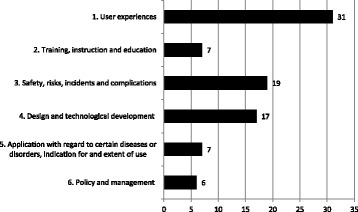
Results: The review identified 87 relevant articles, 62% was published in the period 2011-2015. Of the included studies, 45% considered devices for respiratory support, 39% devices for dialysis and 29% devices for oxygen therapy. Most research has been conducted on the topic 'user experiences' (36%), mainly regarding patients or informal caregivers. Results show that nurses have a key role in supporting patients and family caregivers in the process of homecare with advanced medical technologies and in providing information for, and as a member of multi-disciplinary teams. However, relatively low numbers of articles were found studying nurses perspective.
Conclusions: Research on medical technologies used at home has increased considerably until 2015. Much is already known on topics, such as user experiences; safety, risks, incidents and complications; and design and technological development. We also identified a lack of research exploring the views of nurses with regard to medical technologies for homecare, such as user experiences of nurses with different technologies, training, instruction and education of nurses and human factors by nurses in risk management and patient safety.
Keywords: Home health nursing; Medical technologies; Patient safety; Quality of health care; Systematic review; Trends.
Conflict of interest statement
Author’s information
Ingrid ten Haken is researcher in the research group Technology, Health & Care at Saxion University of Applied Sciences, Enschede, The Netherlands. Somaya Ben Allouch is head of the research group. Wim van Harten is professor at the University of Twente, Faculty Behavioural, Management and Social Sciences, department Health Technology & Services Research and CEO of Rijnstate general hospital, Arnhem, The Netherlands.
Ethics approval and consent to participate
Not applicable.
Consent for publication
Not applicable.
Competing interests
The authors declare that they have no competing interests.
Publisher’s Note
Springer Nature remains neutral with regard to jurisdictional claims in published maps and institutional affiliations.
Figures

References
-
- Hollestelle M, Hilbers E, van Tienhoven E, Geertsma R. Geavanceerde medische technologie in de thuissituatie: inventarisatie, gebruikersaantallen en risico’s. RIVM rapport 265011004/2005. Rijksinstituut voor Volksgezondheid en Milieu RIVM, Bilthoven; 2005.
-
- WHO. Primary Health Care. Now more than ever. World Health Organization, Geneva; 2008.
-
- Lehoux P, Charland C, Richard L, Pineault R, St-Arnaud J. Technologies de pointe et soins à domicile. Où en sont les CLSC? Can Med Assoc J. 2002;166:1277–1278. - PubMed
Publication types
MeSH terms
LinkOut - more resources
Full Text Sources
Other Literature Sources
Medical
