


The viable circulating tumor cells with cancer stem cells feature, where is the way out?
- PMID: 29482576
- PMCID: PMC5828305
- DOI: 10.1186/s13046-018-0685-7
The viable circulating tumor cells with cancer stem cells feature, where is the way out?
Abstract
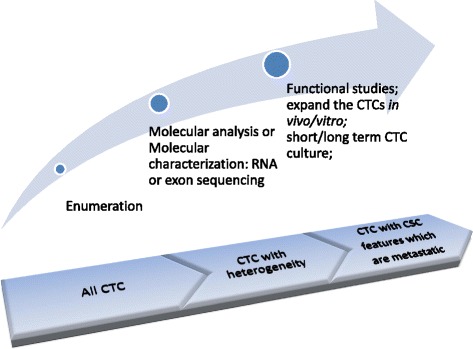
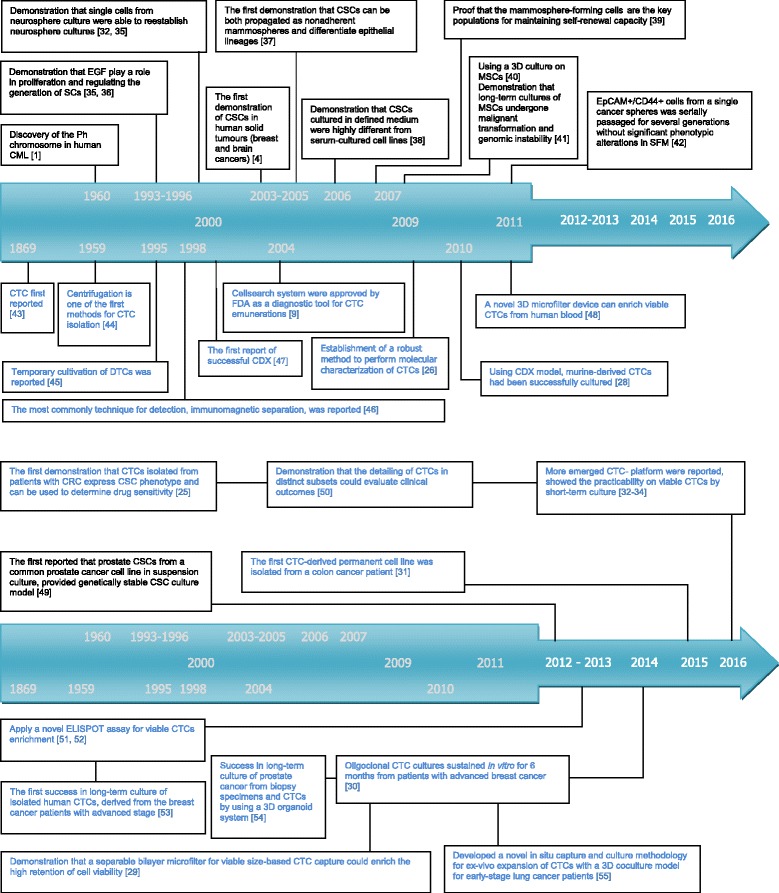
With cancer stem cells (CSCs) became the research hotspot, emerging studies attempt to reveal the functions of these special subsets in tumorigenesis. Although various approaches have been used in CSCs researches, only a few could really reflect or simulate the microenvironment in vivo. At present, CSCs theories are still difficult to apply for clinical remedy because CSCs subpopulations are always hard to identify and trace. Thus an ideal approach for clinicians and researchers is urgently needed. Circulating tumor cells (CTCs), as the method of noninvasive-liquid biopsy, could be detected in the peripheral blood (PB) from many tumors and even could be treated as procurators for CSCs deeper researches from patient-derived sample. However, CTCs, as a diagnostic marker, also raise much controversy over theirs clinical value. Mechanisms causing CTCs to shed from the tumor have not been fully characterized, thus it is unclear whether CTCs represent the entire makeup of cancer cells in the tumor or only a subset. The heterogeneity of CTCs also caused different clinical outcomes. To overcome these unsolved problems, recently, CTC researches are not just depend on enumerations, whereas those CTC subsets that could expand in vitro may play a pivotal role in the metastatic cascade. Here, we retrospect the CTC developmental history and discourse upon the enrichment of viable CTCs in functional assays, probe the further avenue at the crossroad.
Keywords: Circulating tumor cells; Culture; Expansion; Function.
Conflict of interest statement
Ethics approval and consent to participate
Not applicable
Consent for publication
Not applicable
Competing interests
The authors declare that they have no competing interests.
Publisher’s Note
Springer Nature remains neutral with regard to jurisdictional claims in published maps and institutional affiliations.
Figures
References
-
- Nowell P, Hungerford D. A minute chromosome in human chronic granulocytic leukemia. Science. 1960;132:1497. - PubMed
Publication types
MeSH terms
Substances
LinkOut - more resources
Full Text Sources
Other Literature Sources
