


At-risk individuals display altered brain activity following stress
- PMID: 29483659
- PMCID: PMC6046038
- DOI: 10.1038/s41386-018-0026-8
At-risk individuals display altered brain activity following stress
Abstract
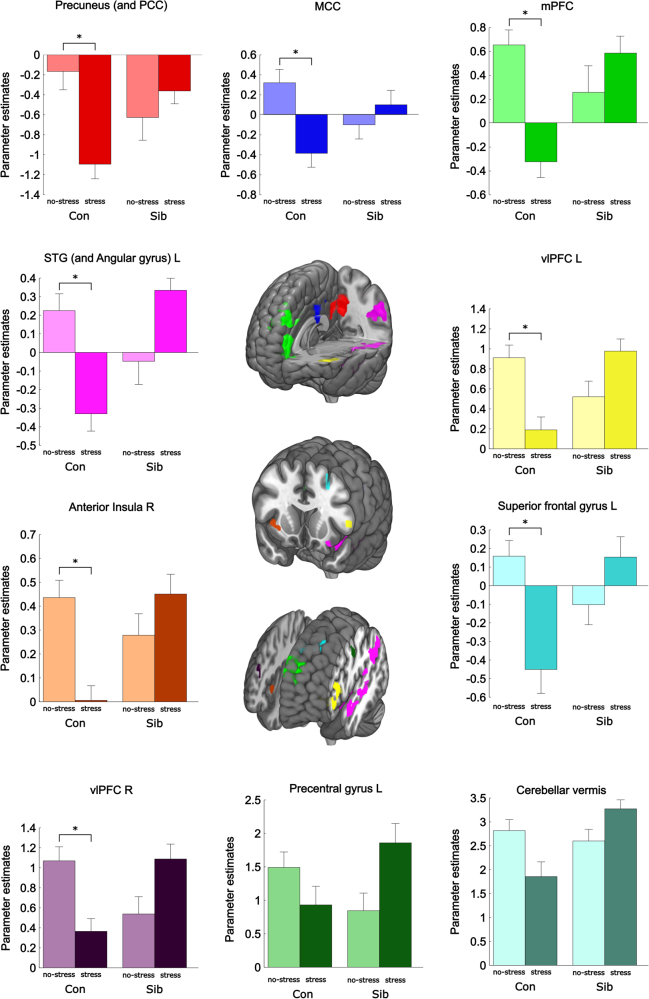
Stress is a major risk factor for almost all psychiatric disorders, however, the underlying neurobiological mechanisms remain largely elusive. In healthy individuals, a successful stress response involves an adequate neuronal adaptation to a changing environment. This adaptive response may be dysfunctional in vulnerable individuals, potentially contributing to the development of psychopathology. In the current study, we investigated brain responses to emotional stimuli following stress in healthy controls and at-risk individuals. An fMRI study was conducted in healthy male controls (N = 39) and unaffected healthy male siblings of schizophrenia patients (N = 39) who are at increased risk for the development of a broad range of psychiatric disorders. Brain responses to pictures from the International Affective Picture System (IAPS) were measured 33 min after exposure to stress induced by the validated trier social stress test (TSST) or a control condition. Stress-induced levels of cortisol, alpha-amylase, and subjective stress were comparable in both groups. Yet, stress differentially affected brain responses of schizophrenia siblings versus controls. Specifically, control subjects, but not schizophrenia siblings, showed reduced brain activity in key nodes of the default mode network (PCC/precuneus and mPFC) and salience network (anterior insula) as well as the STG, MTG, MCC, vlPFC, precentral gyrus, and cerebellar vermis in response to all pictures following stress. These results indicate that even in the absence of a psychiatric disorder, at-risk individuals display abnormal functional activation following stress, which in turn may increase their vulnerability and risk for adverse outcomes.
Conflict of interest statement
The authors declare no competing interests.
Figures

References
Publication types
MeSH terms
Substances
LinkOut - more resources
Full Text Sources
Other Literature Sources
Medical
