


Differential biological effects of dehydroepiandrosterone (DHEA) between mouse (B16F10) and human melanoma (BLM) cell lines
- PMID: 29484102
- PMCID: PMC5821161
- DOI: 10.1080/19381980.2017.1389360
Differential biological effects of dehydroepiandrosterone (DHEA) between mouse (B16F10) and human melanoma (BLM) cell lines
Abstract
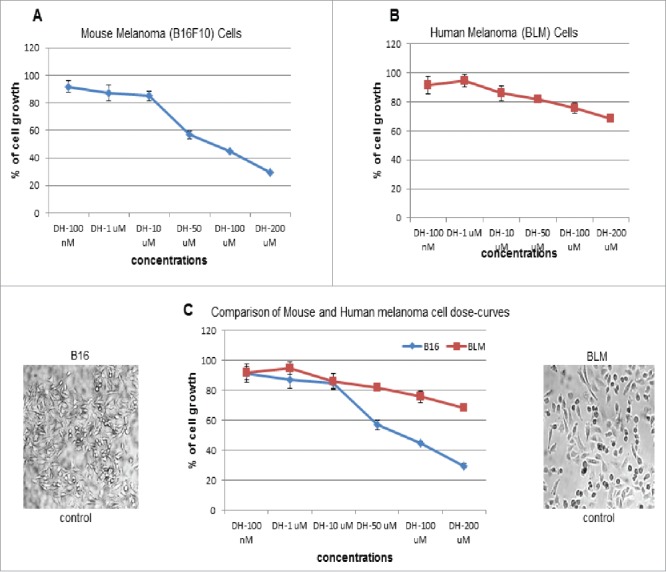
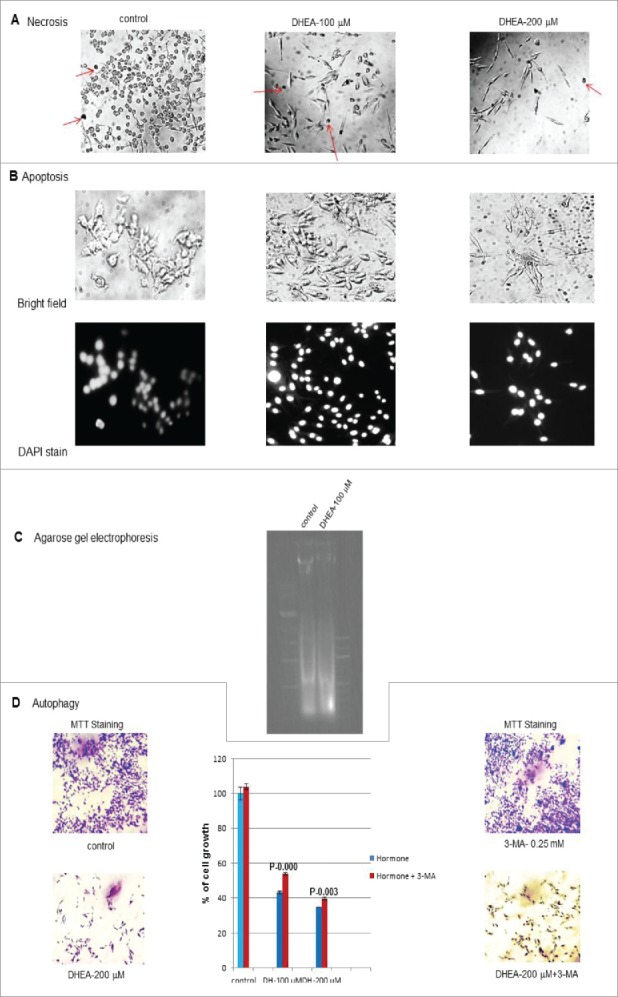
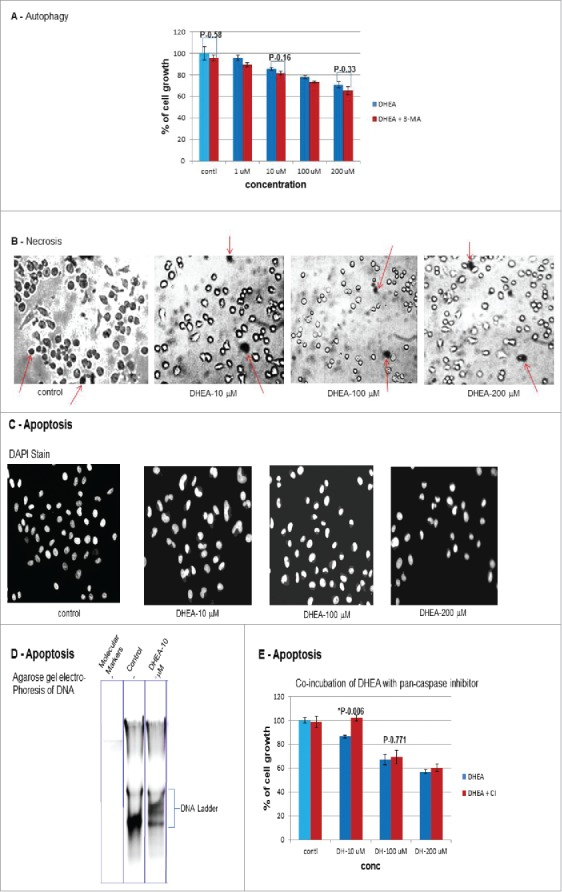
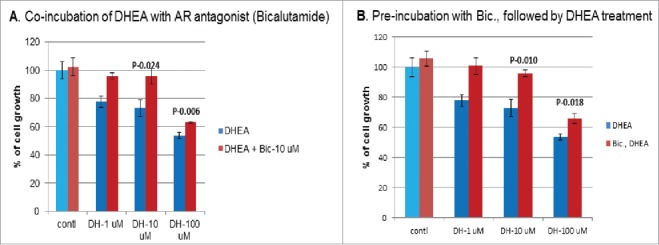
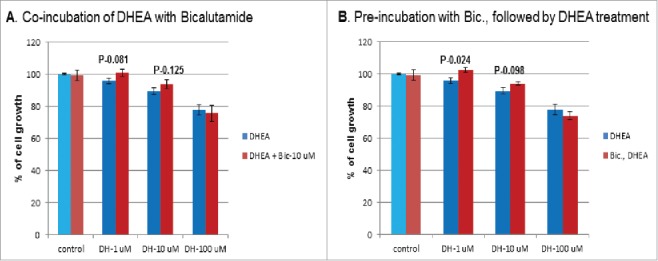
Dehydroepiandrosterone (DHEA) is a weak androgen and had been shown to have anti-cancer, anti-adipogenic and anti-inflammatory effects on mouse and other rodent models, but not on humans, suggesting a systemic level difference between mouse and human. Our previous study on DHEA biological functions involving a variety of cell lines, suggested that the functional differences between mouse and human existed even at the cellular level. Hence, using mouse and human melanoma cell models, in-vitro effects of DHEA on cell growth, mechanism of cell death and mechanism of DHEA action were studied. Results indicated a differential biological effects of DHEA between mouse and human melanoma cell lines. These in-vitro studies also suggested that the differential biological effects observed between these two cell lines could be due to the difference in the way DHEA was processed or metabolized inside the cell.
Keywords: Bicalutamide; DHEA; androgen receptor; apoptosis; autophagy; human melanoma (BLM) cell line; mouse melanoma (B16F10) cell line.
Figures
References
-
- Symington T, Duguid WP, Davidson JN. Effect of exogenous corticotropin on the histochemical pattern of the human adrenal cortex and a comparison with the changes during stress. JCEM, 1956;16:580–98. - PubMed
-
- Kalimi M, Regelson M (Eds) The biological role of dehydroepiandrosterone (DHEA). New York: Walter de gruyter; 1990.
-
- Baulieu EE. Dehydroepiandrosterone: A fountain of youth? JCEM. 1996;81(9):3147–51. - PubMed
LinkOut - more resources
Full Text Sources
Other Literature Sources
