. 2018;35(3):306-352.
doi: 10.14573/altex.1712081. Epub 2018 Feb 23.

Recommendation on test readiness criteria for new approach methods in toxicology: Exemplified for developmental neurotoxicity

Affiliations

Recommendation on test readiness criteria for new approach methods in toxicology: Exemplified for developmental neurotoxicity

Anna Bal-Price et al. ALTEX. 2018.

Erratum in

Abstract

Multiple non-animal-based test methods have never been formally validated. In order to use such new approach methods (NAMs) in a regulatory context, criteria to define their readiness are necessary. The field of developmental neurotoxicity (DNT) testing is used to exemplify the application of readiness criteria. The costs and number of untested chemicals are overwhelming for in vivo DNT testing. Thus, there is a need for inexpensive, high-throughput NAMs, to obtain initial information on potential hazards, and to allow prioritization for further testing. A background on the regulatory and scientific status of DNT testing is provided showing different types of test readiness levels, depending on the intended use of data from NAMs. Readiness criteria, compiled during a stakeholder workshop, uniting scientists from academia, industry and regulatory authorities are presented. An important step beyond the listing of criteria, was the suggestion for a preliminary scoring scheme. On this basis a (semi)-quantitative analysis process was assembled on test readiness of 17 NAMs with respect to various uses (e.g. prioritization/screening, risk assessment). The scoring results suggest that several assays are currently at high readiness levels. Therefore, suggestions are made on how DNT NAMs may be assembled into an integrated approach to testing and assessment (IATA). In parallel, the testing state in these assays was compiled for more than 1000 compounds. Finally, a vision is presented on how further NAM development may be guided by knowledge of signaling pathways necessary for brain development, DNT pathophysiology, and relevant adverse outcome pathways (AOP).

Keywords: developmental in vitro neurotoxicity testing; quality assurance; regulatory toxicology; toxicity screening.


Figures
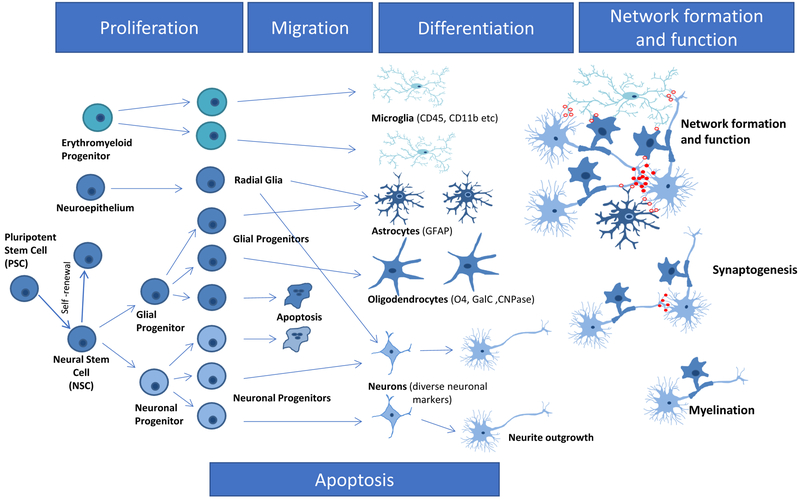
Figure 1:
Figure 1:. Fundamental neurodevelopmental processes relevant for DNT
Several neurodevelopmental processes are essential for nervous system development. These processes known from in vivo studies can be relatively faithfully modelled in vitro. It is assumed that DNT toxicants exert their toxicity by disturbing at least one of these processes. Therefore, disturbances of the processes depicted here in blue boxes are KEs of AOPs relevant for DNT. The figure gives a short overview of nervous system development from simple precursors (left) to complex functional tissue (with cell-cell interactions) on the right-hand side. For a DNT test battery all these biological processes should be covered by one or more test methods. KE: key event; AOP: adverse outcome pathway; DNT: developmental neurotoxicity.
Figure 2:
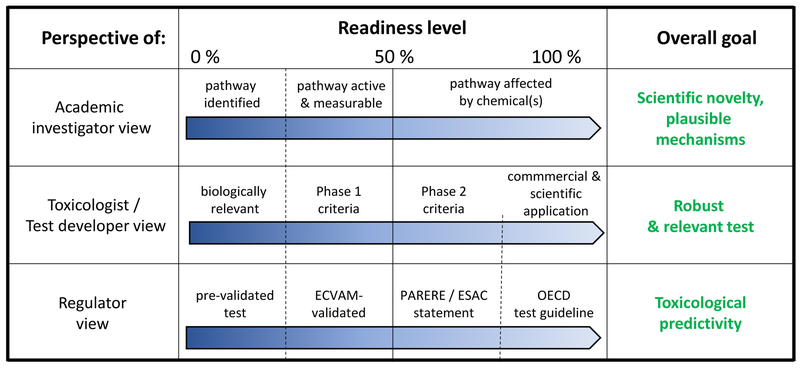
Figure 2:. Different perspectives of DNT alternative methods readiness evaluation.
In the discussion on “test readiness” it is important to note that different fields and stakeholders have their own perspective. Three of these perspectives are outlined. For each of them, examples for increasing grades of readiness and final goals are given. These perspectives are interdependent to some degree: (i) a test that is 100% ready for an academic investigator in basic science can form the starting point for a toxicological test developer; (ii) a test that is considered ready by the test developer may be at the start of regulatory readiness, e.g. with respect to formal validation; (iii) and a test that is at the highest regulatory readiness level (OECD TG) may provide a starting point for academic researchers who want to unravel key mechanisms and pathways that are essential and that biologically explain the test read outs.
Figure 3:
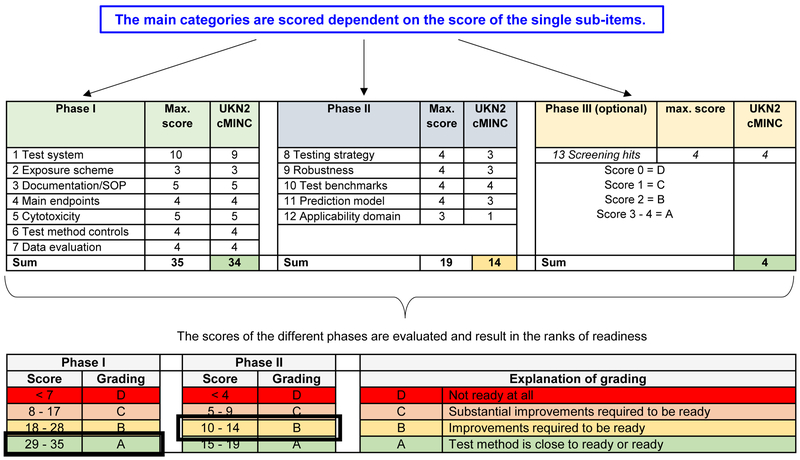
Figure 3:. Scoring system for readiness criteria
Overview of the scoring system for the readiness criteria. The 13 criteria are sorted into three phases. Each areas has various sub-items and the number of points that can be obtained is indicated in Table 2. Phase I (green) includes the basic features of the test method as they would be provided by academic researchers. They include biological plausibility of the test method, features of the test system, and the availability of controls. A high number of points can be obtained for test system description (10 out of 35), as this is very important at early stages of test development. However, still two thirds of the points come from other areas not to be neglected. The second phase (blue) relates to the implementation of a test for practical applications in industry or for regulatory purposes. Here, the relation to a testing strategy, good robustness, and the availability of a prediction model are important. The third phase (yellow) is optional as not each test method is used for a screening approach. Notably, not all points apply to all tests. In the preliminary rating scheme suggested here, these items are then scored positive automatically (labelled in italics in Table 2). Each phase if evaluated independently, and then categorized into one of four readiness classes (A-D). In the figure, an example is given for the rating of the cMINC (UKN2) test method. It would score as ‘A’ (largely ready) in phase I, and as ‘B’ in phase II. For phase III, it would score as ‘A’.
Figure 4.
Figure 4.. Incorporation of ZFE model in a low- and high throughput mode battery of tests.
The zebra fish embryo (ZFE) test may be incorporated in various ways into a DNT test battery, depending on resources, lab automation and the purpose of testing. If ZFE testing allows only low throughput, it may be used as second tier to further examine hits from other in vitro tests by a more complex whole-animal based test. Conversely, ZFE testing available as high-throughput system may be used to identify primary hits that are further characterized and/or confirmed for human relevance by human cell-based in vitro tests. As a third approach, ZFE testing may be run in parallel with in vitro tests to feed data into an overall decision model.
Figure 5.
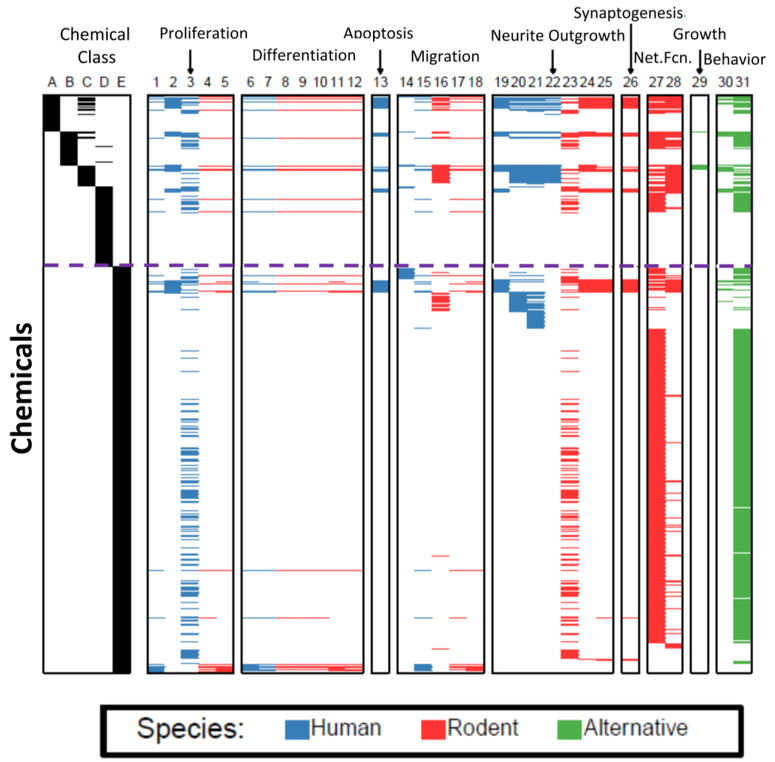
Figure 5.. The current chemical landscape of in vitro DNT testing.
The heatmap plots chemicals as rows and test status as columns. The first 5 columns provide evidence of the class of chemicals relative to evidence of DNT or priority for testing (see main text chapter 5.1). The other columns list assays grouped by neurodevelopmental processes. A brief description of each column is provided below, along with a reference or references, if available. Compounds from columns A-E that have been tested in different assays (columns 1–31), are indicated by a blue (human), red (rodent), or green (alternative species) horizontal line. It should be noted that the information on what compounds have been tested was provided by the laboratories engaged in testing, and that not all of the data for each compound/assay pair have been published. Chemical class columns: A Compounds with evidence of developmental neurotoxicity from multiple laboratories (Mundy et al., 2015); B Compounds with evidence of developmental neurotoxicity from only 1 laboratory (Mundy et al., 2015); C Compounds in the 87 chemical library supplied by the National Toxicology Program; D Compounds subjected to the literature search in Mundy et al., 2015 that did not have evidence of developmental neurotoxicity; E Other compounds. This consists primarily of ToxCast compounds, but also assay positive controls and other miscellaneous compounds. Assay columns: 1 Proliferation in human neurospheres (Baumann et al., 2016); 2 Proliferation in hNP1 neuroprogenitor cells (Mundy et al., 2010); 3 Proliferation in ReNcellCX human neuroprogenitors (Breier et al., 2008; Radio et al., 2015); 4 Proliferation in mouse neurospheres (Fritsche et al., unpublished data); 5 Proliferation in rat neurospheres (Baumann et al., 2016); 6 Neuronal differentiation in human neurospheres (Baumann et al., 2016); 7 Oligodendrocyte differentiation in human neurospheres (Fritsche et al., unpublished data); 8 Differentiation in mouse neurospheres (Fritsche et al., unpublished data); 9 Neuronal differentiation in mouse neurosphere (Fritsche et al., unpublished data)10 Oligodendrocyte differentiation in mouse neurospheres (Fritsche et al., unpublished data); 11 Neuronal differentiation in rat neurospheres (Baumann et al., 2016); 12 Oligodendrocyte differentiation in rat neurospheres (Fritsche et al., unpublished data); 13 Apoptosis in human NP1 neural precursors (Druwe et al., 2015); 14 Migration of human neuroprogenitor cells; 15 Migration in human neurospheres (Baumann et al., 2016); 16 Migration in human neural crest cells (Nyeffler et al., 2017a, Nyeffler et al., 2017b); 17 Migration in mouse neurospheres (Fritsche et al., unpublished data); 18 Migration in rat neurospheres (Baumann et al.,2016); 19 Neurite outgrowth in human hN2 neurons. (Harrill et al., 2010); 20 Neurite outgrowth in human peripheral neuroprecursors (Hoelting et al., 2016); 21 Neurite outgrowth in LUHMES neurons (Krug et al., 2013b); 22 Neurite outgrowth in human iPS-derived neurons. (Ryan et al., 2016); 23 Neurite outgrowth in PC12 cells (Radio et al., 2015); 24 Neurite outgrowth in rat cortical neurons (Harrill et al., 2011a); 25 Maturation of neurites in rat cortical neurons (Harrill et al., 2011b); 26 Synaptogenesis in primary cortical neurons (Harrill et al., 2011b); 27 Neuronal Network Function- Acute (Strickland et al., 2017, in press); 28 Neuronal Network Formation- Developmental (Brown et al.,2016); 29 Feeding, larval development and reproduction in C. elegans (Behl et al., 2016.); 30 Zebrafish behavior- (Cowden et al., 2012: Padilla et al., 2011); 31 Zebrafish behavior 24 hr post-fertilization (Reif et al., 2016).
Figure 6:
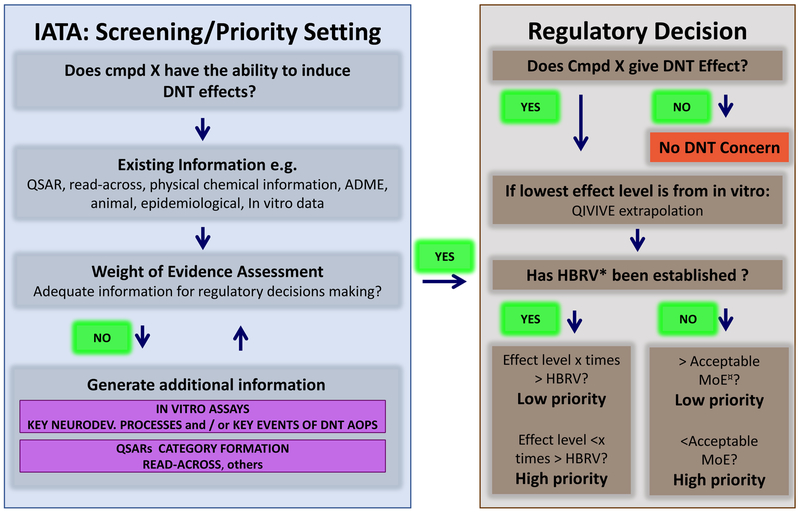
Figure 6:. An integrated Approach to Testing and Assessment (IATA) designed for DNT screening/prioritization purposes
The IATA was designed for screening/prioritization purposes, and it was coupled to a decision tree for the DNT regulatory decision making. The IATA integrates multiple sources of existing information (human data, in vivo, in vitro and non-testing data) and guides the targeted generation of new data when required. If further testing is required, then the battery of in vitro DNT tests that permit evaluations of key neurodevelopmental processes and KE identified in the relevant AOPs, combined with non-testing methods (e.g. QSARs and read-across) are proposed to be included in the DNT IATA for chemical screening and prioritization. KE: key event; AOP: adverse outcome pathway; DNT: developmental toxicity; QSAR: quantitative structure activity relationship; QIVIVE: quantivative in vitro in vivo extrapolation; HBRV: health –based reference value; MoE: margin of exposure.
Figure 7:
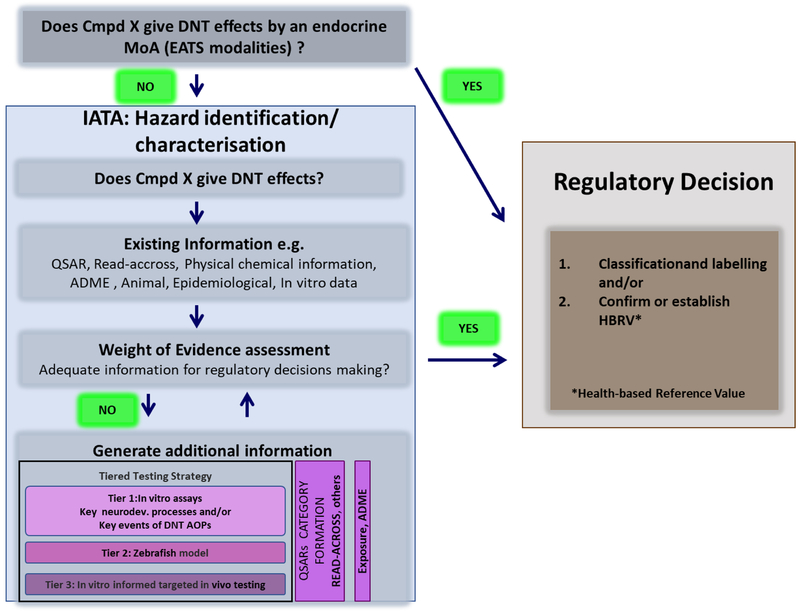
Figure 7:. Incorporation of potential endocrine effects into an IATA for DNT hazard identification/characterization
Before applying the IATA it would be important to determine whether any DNT hazard could potentially be due to an endocrine mediated mode of action. Assays and models are in place (or under development) for regulatory purposes (for estrogen, androgen, steroid and thyroid (EATS) modalities). For the regulatory decision making, any further characterization of DNT effects by the proposed IATA should be integrated with the EATS information. IATA: integrated approach to testing and assessment; DNT: developmental toxicity; QSAR: quantitative structure activity relationship; ADME: absorption, distribution, metabolism and excretion; AOP: adverse outcome pathway. AOP 12: https://aopwiki.org/aops/12 AOP 13: https://aopwiki.org/aops/13 AOP 42: https://aopwiki.org/aops/42 AOP 54: https://aopwiki.org/aops/54

References

    1. Adamo AM, Aloise PA, Soto EF et al. (1990) Neonatal Hyperthyroidism in the Rat Produces an Increase in the Activity of Microperoxisomal Marker Enzymes Coincident with Biochemical Signs of Accelerated Myelination. J Neurosci Res 25, 353–359. - PubMed
    1. Addae C, Yi X, Gernapudi R et al. (2012) All-trans-retinoid acid induces the differentiation of encapsulated mouse embryonic stem cells into GABAergic neurons. Differentiation 83, 233–241, doi:10.1016/j.diff.2012.03.001 (2012). - DOI - PMC - PubMed
    1. Adeleye Y, Andersen M, Clewell R et al. (2015) Implementing Toxicity Testing in the 21st Century (TT21C): Making safety decisions using toxicity pathways, and progress in a prototype risk assessment. Toxicology 332, 102–11. - PubMed
    1. Alépée N, Bahinski A, Daneshian M et al. (2014) State-of-the-art of 3D cultures (organs-on-a-chip) in safety testing and pathophysiology. ALTEX 31, 441–477. - PMC - PubMed
    1. Ali S, Champagne DL and Richardson MK (2012). Behavioral profiling of zebrafish embryos exposed to a panel of 60 water-soluble compounds. Behav Brain Res 228, 272–283. doi: 10.1016/j.bbr.2011.11.020. - DOI - PubMed