


Molecular Survey of Viral and Bacterial Causes of Childhood Diarrhea in Khartoum State, Sudan
- PMID: 29487571
- PMCID: PMC5816574
- DOI: 10.3389/fmicb.2018.00112
Molecular Survey of Viral and Bacterial Causes of Childhood Diarrhea in Khartoum State, Sudan
Abstract
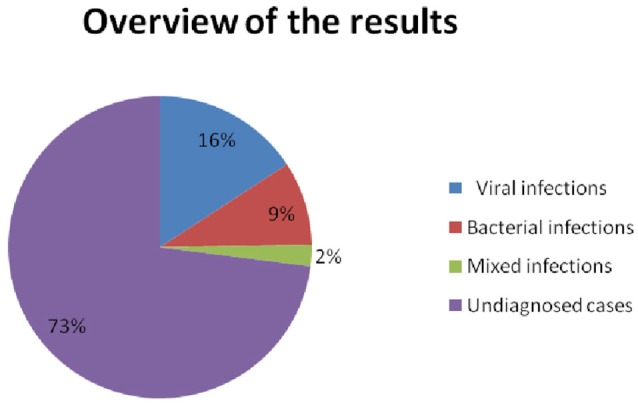
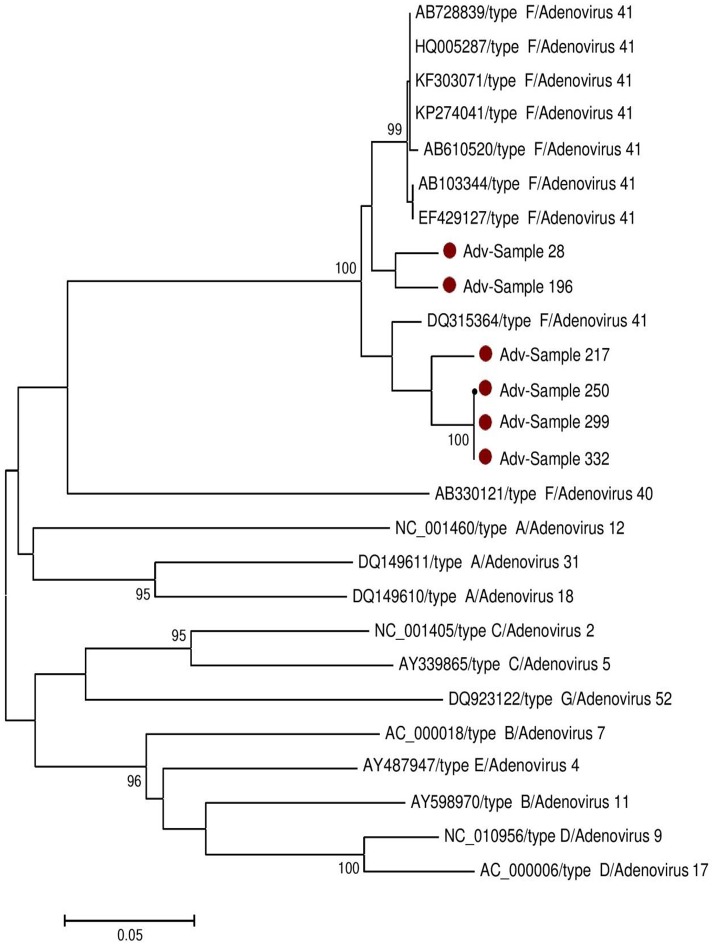
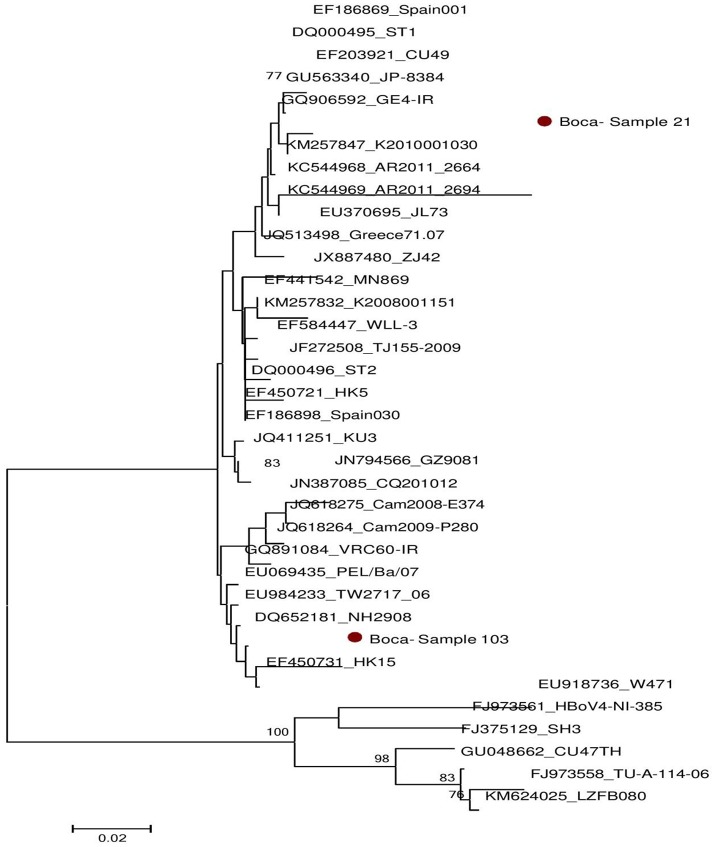
Diarrheal disease is a major public health problem for children in developing countries. Knowledge of etiology that causes diarrheal illness is essential to implement public health measures to prevent and control this disease. Published studies regarding the situation of childhood diarrhea in Sudan is scanty. This study aims to investigate viral and bacterial etiology and related clinical and epidemiological factors in children with acute diarrhea in Khartoum State, Sudan. A total of 437 fecal samples were collected from hospitalized children <5 years old with acute diarrhea, viral and bacterial pathogens were investigated by using two-tube multiplex RT-PCR. The genotypes of adenovirus and bocavirus were determined by sequencing. Viral diarrhea was identified in 79 cases (62 single and 17 co-infections) (18%), and bacterial diarrhea in 49 cases (37 single and 12 co-infections) (11.2%). Mixed infections in both groups totaled 19 samples (4.3%) with more than one pathogen, they were viral co-infections (n = 7, 36.8%) bacterial co-infections (n = 2, 10.5%) and viral bacterial co-infection (n = 10, 52.6%). Rotavirus (10.2%) was predominantly detected, followed by norovirus G2 (4.0%), adenovirus (1.6%), bocavirus (1%), and norovirus G1 (0.9%). Infection with astrovirus was not detected in this study. The Shigella -Enteroinvasive E.coli (EIEC) (8.9%) was the predominantly found bacterial pathogen, followed by Vibrio parahaemolyticus (0.9%), enterohaemorrhagic E.coli (EHEC) -Enteropathogenic E. coli (EPEC) (0.6%) and Salmonella enteritidis (0.6%). V. cholerae, Yersinia enterocolitica and Campylobacter jejuni were not detected in this study. The phylogenetic tree identified adenovirus belonged to genotype 41 and bocavirus belonged to two different clades within human bocavirus 1. Our findings represent the first report that adenovirus 41 is a cause of diarrhea in Sudan and that human bocavirus 1 is the principal bocavirus strain circulating in Sudan. In conclusion, this is the first comprehensive report to elaborate the pathogen spectrum associated with childhood diarrhea in Khartoum State, Sudan. The results obtained in the present study highlighted the current epidemic situation, the diverse pathogens related to childhood diarrhea, and the importance and the urgency of taking appropriate intervention measures in Khartoum State, Sudan.
Keywords: Sudan; detection; diarrhea; multiple pathogens; phylogenetic tree.
Figures
References
-
- Alaaeldeen B. A., Emad A. M., Mohammed Ea I., Hitham E. E., Abualgasim E. A. (2015). The frequency of rotavirus infection among vaccinated and non-vaccinated children with diarrhea in omdurman pediatric hospital, sudan. Am. J. Res. Commun. 3, 96–107.
-
- Ali M. B., Ghenghesh K. S., Aissa R. B., Abuhelfaia A., Dufani M. (2005). Etiology of childhood diarrhea in Zliten, Libya. Saudi Med. J. 26, 1759–1765. - PubMed
LinkOut - more resources
Full Text Sources
Other Literature Sources
