


Western Indian Rural Gut Microbial Diversity in Extreme Prakriti Endo-Phenotypes Reveals Signature Microbes
- PMID: 29487572
- PMCID: PMC5816807
- DOI: 10.3389/fmicb.2018.00118
Western Indian Rural Gut Microbial Diversity in Extreme Prakriti Endo-Phenotypes Reveals Signature Microbes
Abstract
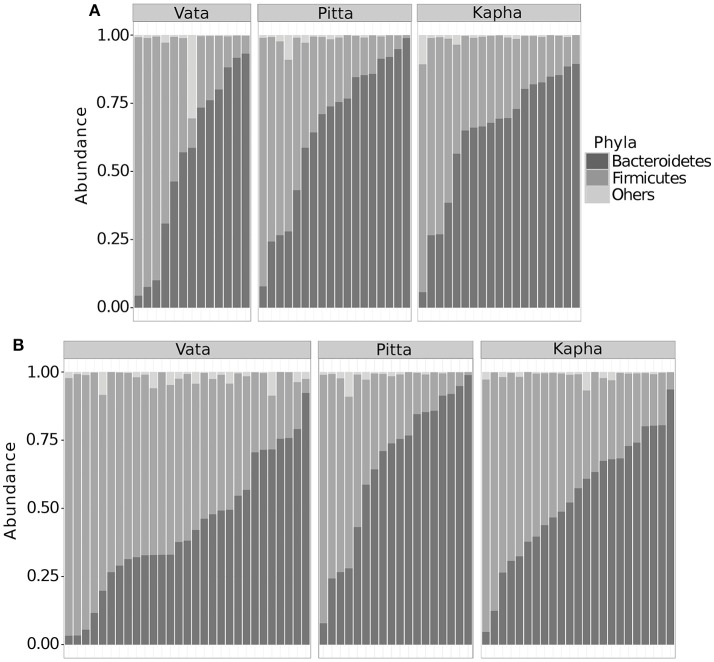
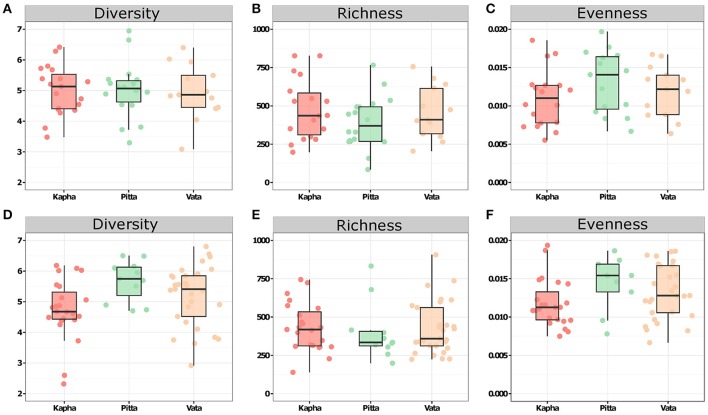
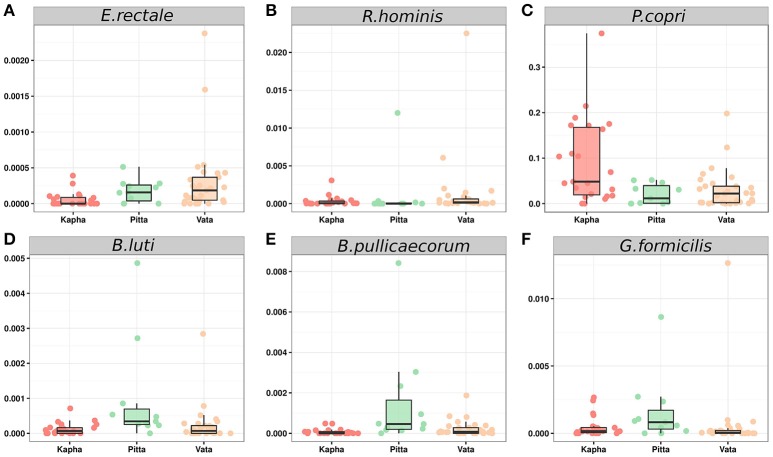
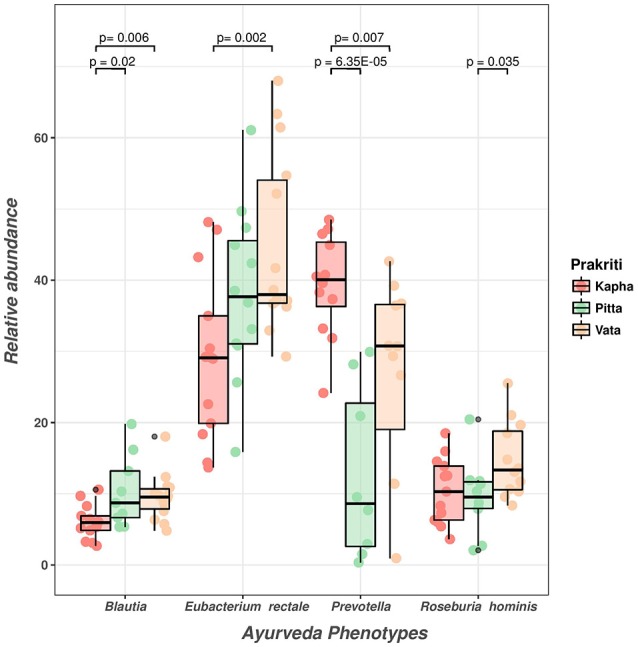
Heterogeneity amidst healthy individuals at genomic level is being widely acknowledged. This, in turn, is modulated by differential response to environmental cues and treatment regimens, necessitating the need for stratified/personalized therapy. We intend to understand the molecular determinants of Ayurvedic way (ancient Indian system of medicine) of endo-phenotyping individuals into distinct constitution types termed "Prakriti," which forms the basis of personalized treatment. In this study, we explored and analyzed the healthy human gut microbiome structure within three predominant Prakriti groups from a genetically homogenous cohort to discover differentially abundant taxa, using 16S rRNA gene based microbial community profiling. We found Bacteroidetes and Firmicutes as major gut microbial components in varying composition, albeit with similar trend across Prakriti. Multiple species of the core microbiome showed differential abundance within Prakriti types, with gender specific signature taxons. Our study reveals that despite overall uniform composition of gut microbial community, healthy individuals belonging to different Prakriti groups have enrichment of specific bacteria. It highlights the importance of Prakriti based endo-phenotypes to explain the variability amongst healthy individuals in gut microbial flora that have important consequences for an individual's health, disease and treatment.
Keywords: 16S rRNA gene; Indian gut microbiome; Prakriti; ayurgenomics; ayurveda; precision medicine.
Figures
References
-
- Aggarwal S., Negi S., Jha P., Singh P. K., Stobdan T., Pasha M. A. Q., et al. (2010). EGLN1 involvement in high-altitude adaptation revealed through genetic analysis of extreme constitution types defined in Ayurveda. Proc. Natl. Acad. Sci. U.S.A. 107, 18961–18966. 10.1073/pnas.1006108107 - DOI - PMC - PubMed
-
- Bhute S., Pande P., Shetty S. A., Shelar R., Mane S., Kumbhare S. V., et al. (2016). Molecular characterization and meta-analysis of gut microbial communities illustrate enrichment of prevotella and megasphaera in Indian subjects. Front. Microbiol. 7:660. 10.3389/fmicb.2016.00660 - DOI - PMC - PubMed
LinkOut - more resources
Full Text Sources
Other Literature Sources
