


Versatile Antagonistic Activities of Soil-Borne Bacillus spp. and Pseudomonas spp. against Phytophthora infestans and Other Potato Pathogens
- PMID: 29487574
- PMCID: PMC5816801
- DOI: 10.3389/fmicb.2018.00143
Versatile Antagonistic Activities of Soil-Borne Bacillus spp. and Pseudomonas spp. against Phytophthora infestans and Other Potato Pathogens
Abstract
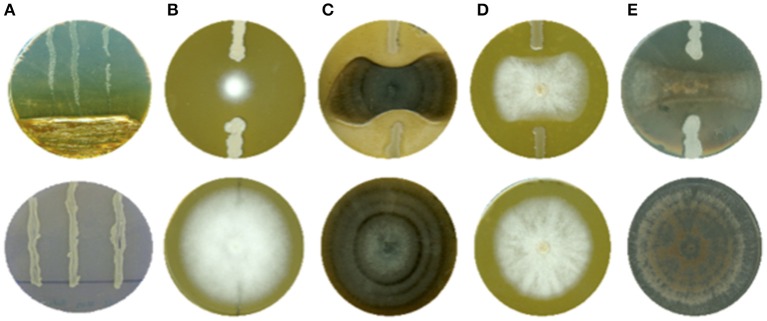
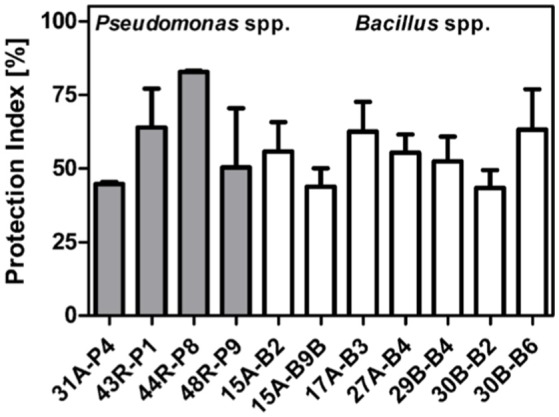
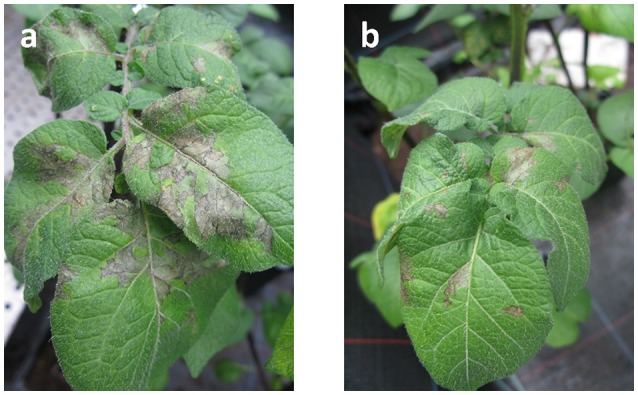
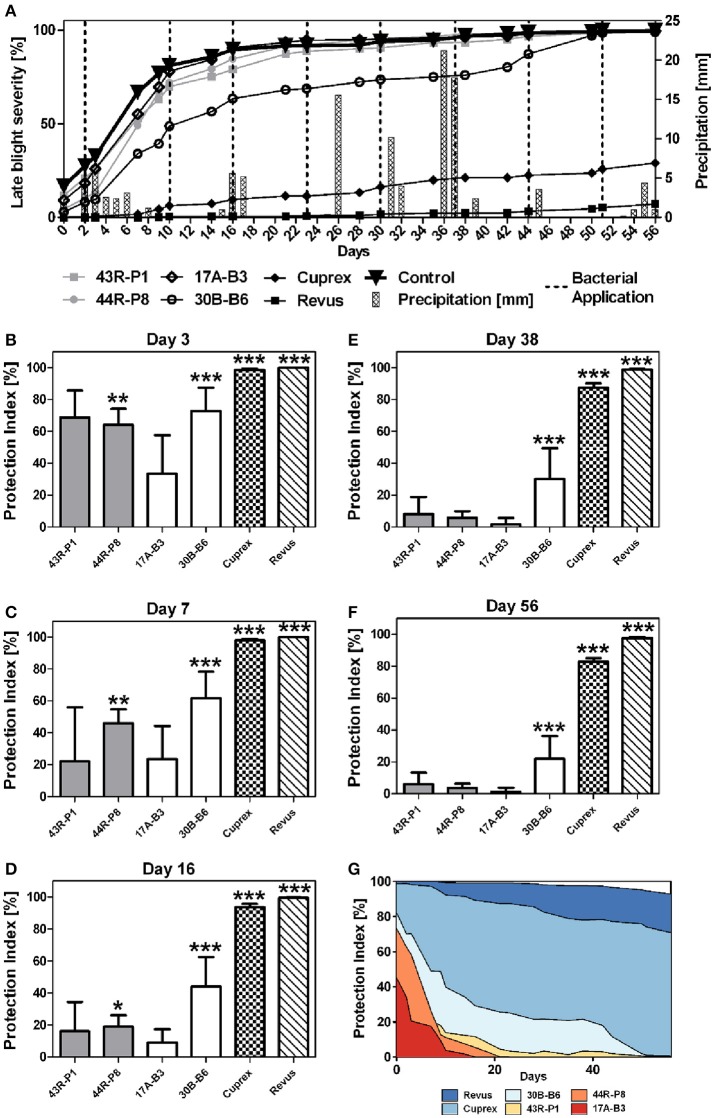
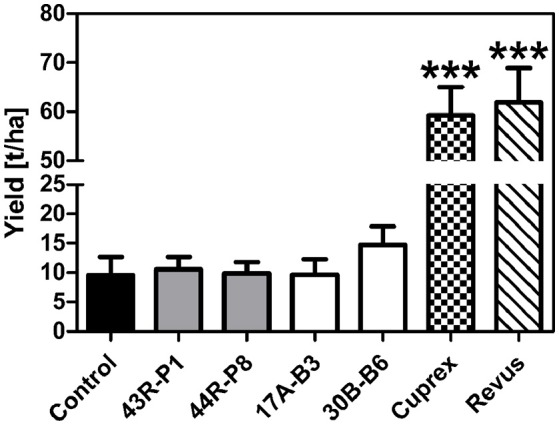
The world potato is facing major economic losses due to disease pressure and environmental concerns regarding pesticides use. This work aims at addressing these two issues by isolating indigenous bacteria that can be integrated into pest management strategies. More than 2,800 strains of Bacillus-like and Pseudomonas-like were isolated from several soils and substrates associated with potato agro-systems in Belgium. Screenings for antagonistic activities against the potato pathogens Alternaria solani, Fusarium solani (BCCM-MUCL 5492), Pectobacterium carotovorum (ATCC 15713), Phytophthora infestans (CRA-W10022) and Rhizoctonia solani (BCCM-MUCL 51929) were performed, allowing the selection of 52 Bacillus spp. and eight Pseudomonas spp. displaying growth inhibition of at least 50% under in vitro conditions, particularly against P. infestans. All 60 bacterial isolates were identified based on 16S rRNA gene sequencing and further characterized for the production of potential bio-active secondary metabolites. The antagonistic activities displayed by the selected strains indicated that versatile metabolites can be produced by the strains. For instance, the detection of genes involved bacilysin biosynthesis was correlated with the strong antagonism of Bacillus pumilus strains toward P. infestans, whereas the production of both bio-surfactants and siderophores might explain the high antagonistic activities against late blight. Greenhouse assays with potato plants were performed with the most effective strains (seven Bacillus spp. and four Pseudomonas spp.) in order to evaluate their in vivo antagonistic effect against P. infestans. Based on these results, four strains (Bacillus amyloliquefaciens 17A-B3, Bacillus subtilis 30B-B6, Pseudomonas brenneri 43R-P1 and Pseudomonas protegens 44R-P8) were retained for further evaluation of their protection index against P. infestans in a pilot field trial. Interestingly, B. subtilis 30B-B6 was shown to significantly decrease late blight severity throughout the crop season. Overall, this study showed that antagonistic indigenous soil bacteria can offer an alternative to the indiscriminate use of pesticide in potato agro-systems.
Keywords: Bacillus spp.; Phytophthora infestans; Pseudomonas spp.; bacilysin; bio-control; lipopeptides; potato diseases; siderophores.
Figures
References
-
- Ahmadzadeh M., Sharifi Tehrani A. (2009). Evaluation of fluorescent pseudomonads for plant growth promotion, antifungal activity against Rhizoctonia solani on common bean, and biocontrol potential. Biol. Control 48, 101–107. 10.1016/j.biocontrol.2008.10.012 - DOI
-
- Ariffin H., Abdullah N., Umi Kalsom M., Shirai Y., Hassan M. (2006). Production and characterization of cellulase by Bacillus pumilus EB3. Int. J. Eng. Technol 3, 47–53.
-
- Bach E., dos Santos Seger G. D., de Carvalho Fernandes G., Lisboa B. B., Passaglia L. M. P. (2016). Evaluation of biological control and rhizosphere competence of plant growth promoting bacteria. Appl. Soil Ecol. 99, 141–149. 10.1016/j.apsoil.2015.11.002 - DOI
LinkOut - more resources
Full Text Sources
Other Literature Sources
Molecular Biology Databases
Miscellaneous
