


Age modifies the risk factor profiles for acute kidney injury among recently diagnosed type 2 diabetic patients: a population-based study
- PMID: 29488059
- PMCID: PMC5964062
- DOI: 10.1007/s11357-018-0013-3
Age modifies the risk factor profiles for acute kidney injury among recently diagnosed type 2 diabetic patients: a population-based study
Abstract
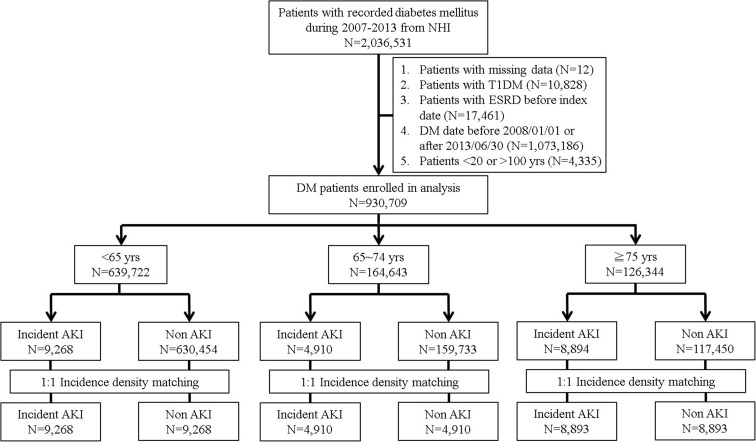
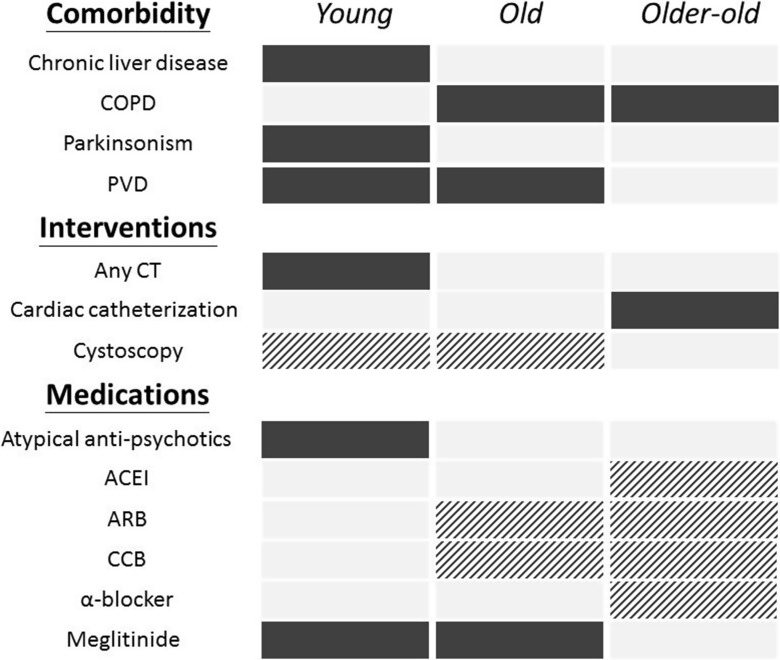
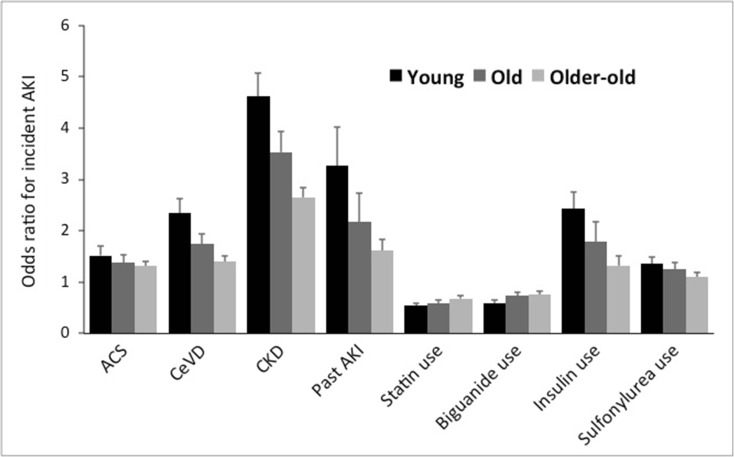
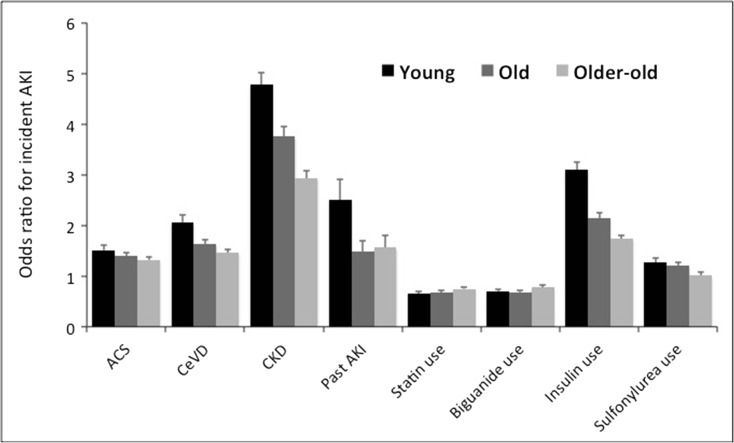
The incidence of acute kidney injury (AKI) rises with age and is associated with multiple risk factors. Here, we compared the risk factors for AKI between younger and older incident diabetic patients to examine the trends in risk alteration for individual factors across different age groups. Between 2007 and 2013, we selected all incident type 2 diabetic adults from the Taiwan National Health Insurance registry, stratified based on age: young (< 65 years), old (≥ 65 but < 75 years), and older-old (≥ 75 years). All factors with potential renal influence (e.g., comorbidities, medications, and diagnostics/procedures) were recorded during the study period, with a nested case-controlled approach utilized to identify independent risk factors for AKI in each age group. Totally, 930,709 type 2 diabetic patients were categorized as young (68.7%), old (17.7%), or older-old (13.6%). Older-old patients showed a significantly higher incidence of AKI than the old and the young groups. Cardiovascular morbidities (hypertension, atrial fibrillation, acute coronary syndrome, and cerebrovascular disease) were shown to increase the risk of AKI, although the risk declined with increasing age. Chronic obstructive pulmonary disease and receiving cardiac catheterization elevated the risk of AKI preferentially in the older-old/old and older-old group, respectively, while the administration of angiotensin-converting enzyme/α-blocker and angiotensin receptor blocker/calcium channel blocker reduced the risk of AKI preferentially in the older-old and older-old/old group, respectively. In conclusion, our findings highlight the importance of devising age-specific risk factor panels for AKI in patients with recently diagnosed type 2 diabetes.
Keywords: Acute kidney injury; Diabetes mellitus; Geriatrics; Risk factors.
Conflict of interest statement
Sponsor’s role
The sponsors have no role in the study design, data collection, analysis, and result interpretation of this study.
Conflict of interest
The authors declare that they have no conflict of interest.
Figures
References
-
- Andò G, Morabito G, de Gregorio C, Trio O, Saporito F, Oreto G. Age, glomerular filtration rate, ejection fraction, and the AGEF score predict contrast-induced nephropathy in patients with acute myocardial infarction undergoing primary percutaneous coronary intervention. Catheter Cardiovasc Interv. 2013;82(6):878–885. doi: 10.1002/ccd.25023. - DOI - PubMed
-
- Arora P, Rajagopalam S, Ranjan R, Kolli H, Singh M, Venuto R, Lohr J. Preoperative use of angiotensin-converting enzyme inhibitors/angiotensin receptor blockers is associated with increased risk for acute kidney injury after cardiovascular surgery. Clin J Am Soc Nephrol. 2008;3(5):1266–1273. doi: 10.2215/CJN.05271107. - DOI - PMC - PubMed
-
- Bell S, Farran B, McGurnaghan S, McCrimmon RJ, Leese GP, Petrie JR, McKeigue P, Sattar N, Wild S, McKnight J, Lindsay R, Colhoun HM, Looker H. Risk of acute kidney injury and survival in patients treated with metformin: an observational cohort study. BMC Nephrol. 2017;18:163. doi: 10.1186/s12882-017-0579-5. - DOI - PMC - PubMed
Publication types
MeSH terms
LinkOut - more resources
Full Text Sources
Other Literature Sources
Medical
