. 2018 Feb 28;13(2):e0192029.
doi: 10.1371/journal.pone.0192029. eCollection 2018.

Middle and Later Stone Age chronology of Kisese II rockshelter (UNESCO World Heritage Kondoa Rock-Art Sites), Tanzania

Affiliations

Middle and Later Stone Age chronology of Kisese II rockshelter (UNESCO World Heritage Kondoa Rock-Art Sites), Tanzania

Christian A Tryon et al. PLoS One. .

Abstract

The archaeology of East Africa during the last ~65,000 years plays a central role in debates about the origins and dispersal of modern humans, Homo sapiens. Despite the historical importance of the region to these discussions, reliable chronologies for the nature, tempo, and timing of human behavioral changes seen among Middle Stone Age (MSA) and Later Stone Age (LSA) archaeological assemblages are sparse. The Kisese II rockshelter in the Kondoa region of Tanzania, originally excavated in 1956, preserves a ≥ 6-m-thick archaeological succession that spans the MSA/LSA transition, with lithic artifacts such as Levallois and bladelet cores and backed microliths, the recurrent use of red ochre, and >5,000 ostrich eggshell beads and bead fragments. Twenty-nine radiocarbon dates on ostrich eggshell carbonate make Kisese II one of the most robust chronological sequences for understanding archaeological change over the last ~47,000 years in East Africa. In particular, ostrich eggshell beads and backed microliths appear by 46-42 ka cal BP and occur throughout overlying Late Pleistocene and Holocene strata. Changes in lithic technology suggest an MSA/LSA transition that began 39-34.3 ka, with typical LSA technologies in place by the Last Glacial Maximum. The timing of these changes demonstrates the time-transgressive nature of behavioral innovations often linked to the origins of modern humans, even within a single region of Africa.


Conflict of interest statement

Competing Interests: The authors have declared that no competing interests exist.

Figures

Fig 1
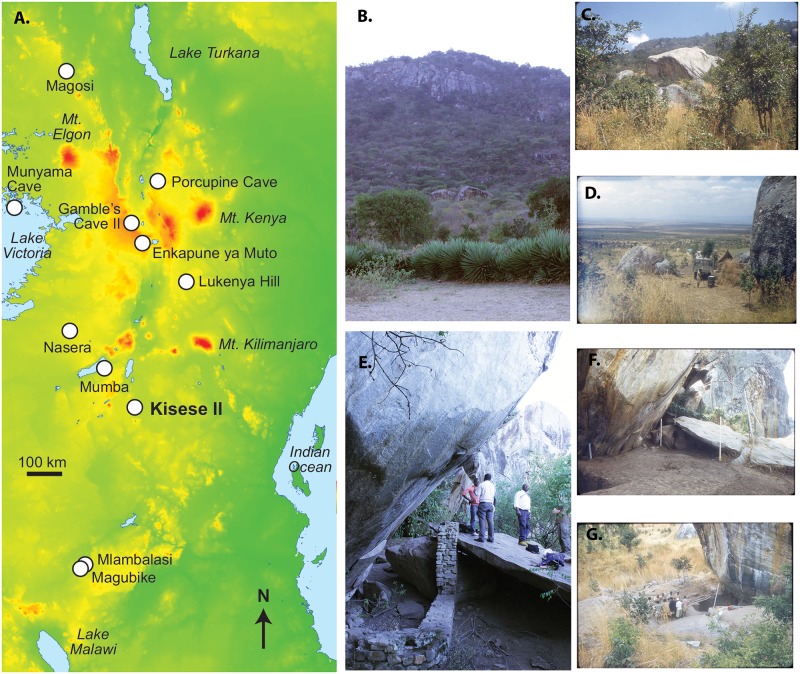
Fig 1. Kisese II in East African context.
(A) Schematic map of East Africa and archaeological sites discussed in text, (B) boulders that form Kisese II below the Irangi Hills as seen in 2015, with arrow pointing to site, (C) view over the Masaai Steppe from Kisese II in 1956, (D) the 1956 Inskeep excavations in progress, (E) view of the shelter in 2015 with retaining wall, and (F) North excavation wall during the 1956 excavation; white labels record spit (level), with spit XX is the base of the excavation at the time the photograph was taken. Spit I (59 cm) and spit II (21 cm) are thicker than the remainder, which are each ~15-cm-thick. 1956 photographs by R. Inskeep (published with permission of J. Charlson, executor of the Inskeep estate), 2015 photographs by C. Tryon.
Fig 2
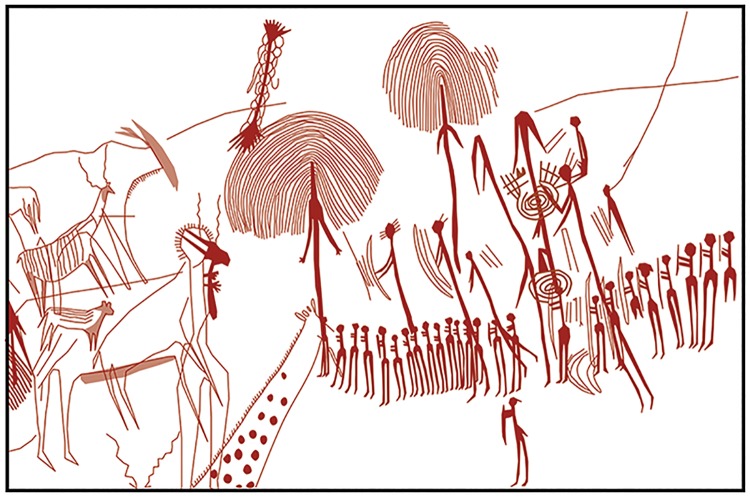
Fig 2. Rock art at Kisese II.
Schematic representation of a portion of the painted rock face at Kisese II, redrawn from Leakey [31].
Fig 3
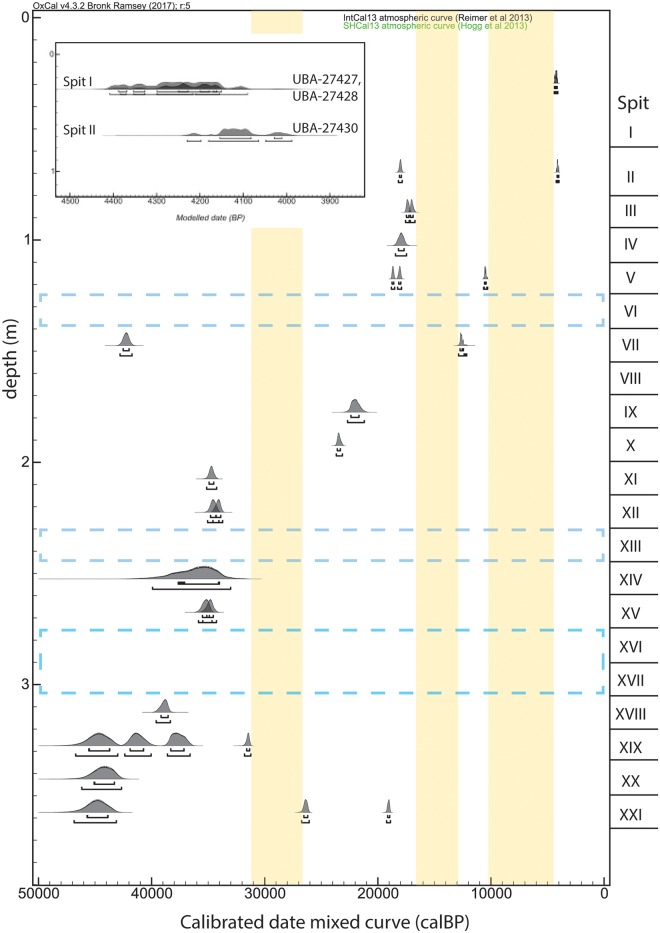
Fig 3. Age-depth relationship of 14C-dated samples.
Calibrated radiocarbon dates are plotted by depth (estimated as midpoint of excavation spit). Blue dashed-line boxes indicate portions of the stratigraphic sequence with no dated specimens. Yellow bars indicate temporal spans with no measured radiocarbon dates. Dates calibrated using OxCal v.4.2 software [65] and a combined IntCal13/SHCal13 calibration curve [66, 67]. The insert shows the youngest dates from Spits I-II.
Fig 4
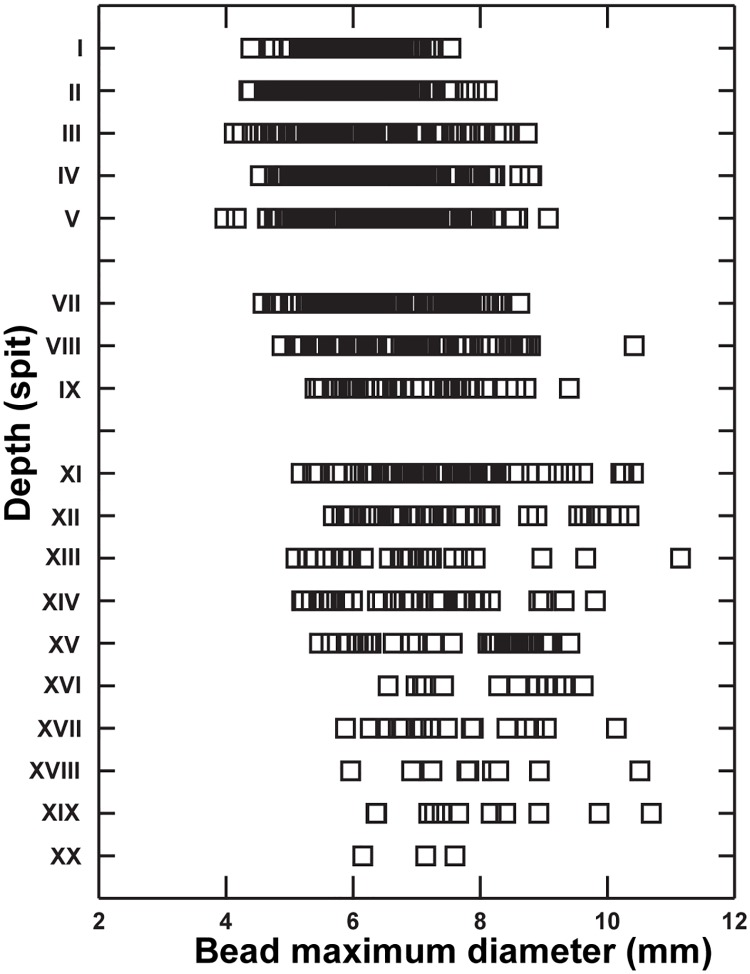
Fig 4. Temporal changes in ostrich eggshell bead size.
Mean bead size (maximum diameter) declines over time at Kisese II in a sample of 1,400 specimens distributed over 20 excavated spits. Each square represents one bead.
Fig 5
Fig 5. Ostrich eggshell beads and ochre.
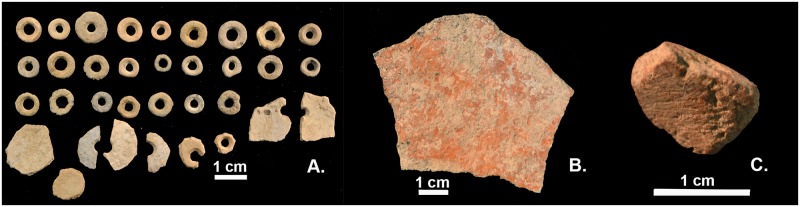
A. Ostrich eggshell beads, bead blanks, and production debris from Kisese II spit XVII at the National Museums of Tanzania, showing diversity of production methods, B. ochre ‘palette’ from spit III and C., ochre piece with striations from use (spit VI). Photographs by C. Tryon and K. Ranhorn.
Fig 6
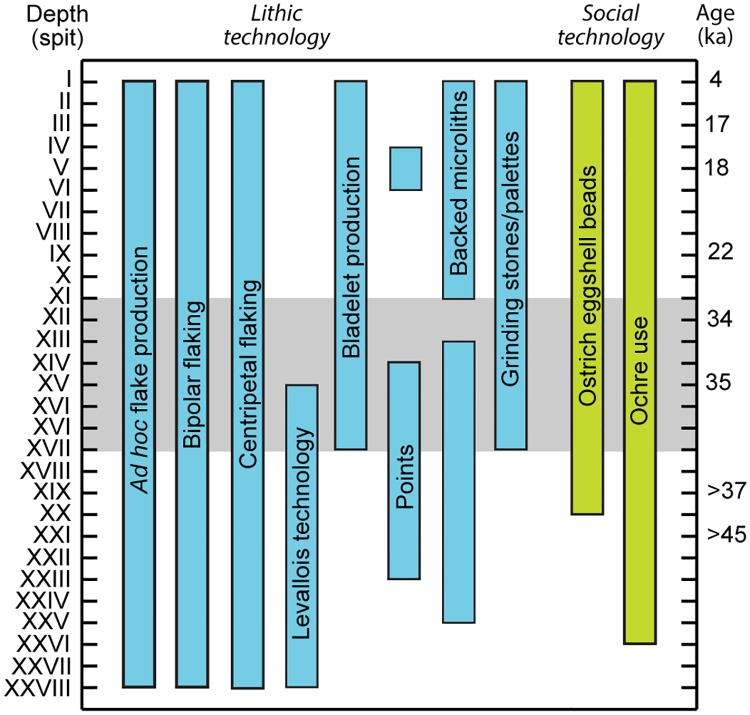
Fig 6. Synthesis of temporal trends of archaeological change at Kisese II.
First and last appearance datums for particular artifact types or technologies are reconstructed from archival and published data as well as new analyses of material stored at the National Museums of Tanzania in Dar es Salaam. Grey shading arbitrarily denotes an interval with multiple changes that may record the Middle/Later Stone Age transition.
Fig 7
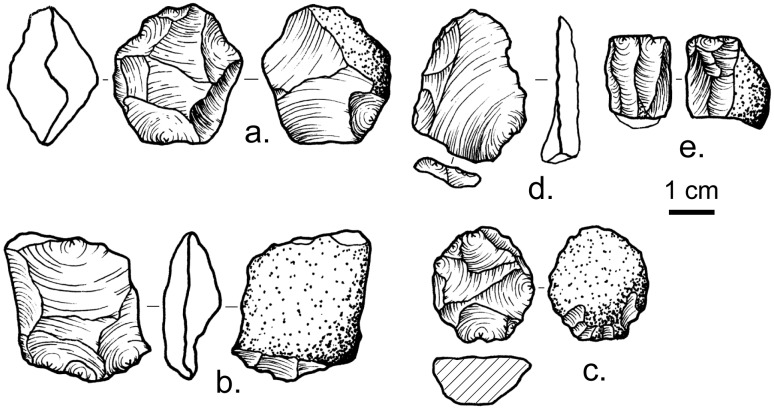
Fig 7. Lithic artifacts from Kisese II.
a., discoidal core from spit XVIII, b.-c., recurrent Levallois cores from spits XIX and XX, respectively, d., retouched flake, possible Kombewa flake from split-pebble core from spit XVI, e., single platform bladelet core from spit XV. All artifacts are quartz, except c., which is chert. Illustrations are 1:1 scale.

References

    1. McDougall I, Brown FH, Fleagle JG. Stratigraphic placement and age of modern humans from Kibish, Ethiopia. Nature. 2005;433:733–6. 10.1038/nature03258 - DOI - PubMed
    1. McBrearty S, Brooks A. The revolution that wasn’t: A new interpretation of the origin of modern human behavior. J Hum Evol. 2000;39:453–563. 10.1006/jhev.2000.0435 - DOI - PubMed
    1. Tryon CA, Faith JT. Variability in the Middle Stone Age of Eastern Africa. Curr Anthropol. 2013;54(S8):S234–S54. 10.1086/673752 - DOI
    1. Groucutt HS, Petraglia MD, Bailey G, Scerri EML, Parton A, Clark-Balzan L, et al. Rethinking the dispersal of Homo sapiens out of Africa. Evol Anthropol. 2015;24(4):149–64. 10.1002/evan.21455 - DOI - PMC - PubMed
    1. Timmermann A, Friedrich T. Late Pleistocene climate drivers of early human migration. Nature. 2016;538:92–5. 10.1038/nature19365 - DOI - PubMed

Publication types

Substances

LinkOut - more resources